


Gaming
Gaming
What next for Dota 2 after Arteezy hits 9K MMR?
We look at how Valve can improve quality of life for the very best players in the Dota 2 scene.
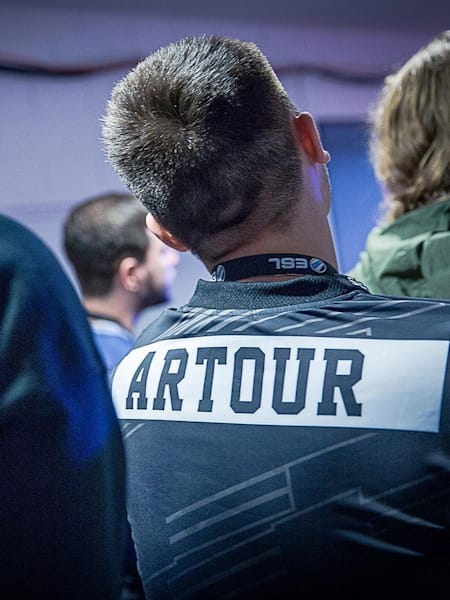
We recently saw Team Secret’s Artour ‘Arteezy’ Babaev become the second player to reach 9,000 MMR. Of course, he wasn’t quite the first with two-time Major winners OG’s very own Amer ‘Miracle-’ Barkawi winning the race while OG were competing at the Epicenter LAN in Moscow in May. That, however, doesn’t make the achievement any less impressive.
As we’ve found out from players who sit atop the public leaderboards, such as w33 and Miracle-, playing public games is of course one of the best methods of practice. Professional players looking to perfect their mechanics and train on heroes will take to Valve’s matchmaking servers in order to do so. Not only that, but for aspiring professionals pub games and climbing the Valve leaderboard are the best way to be noticed as a player and get their chance of entering the professional scene. The last three Major winners (OG twice and Team Secret) have featured players who were originally scouted through their exemplary performance in pub games.
However, with extremely high MMR there comes problems. It may be that Valve need to change something to accommodate the best talent in the scene, because when a certain MMR is reached then public matches become extremely hard to balance.
The first, and arguably biggest, downside to sitting atop the leaderboards is the wait time for a game. While the majority of the community will wait three to four minutes until the queue pops and a game of Dota is underway, the Valve matchmaking struggles to create balanced games with players right at the top of the scale.
The natural progression would be for players like Miracle- and Arteezy to aim for a staggering 10,000 MMR, but queue times are excruciatingly long with Arteezy’s stream showcasing just how long the queue can take. Artour would often stream for an hour before he could find a game – only for other players to dodge him and cause his queue time to restart.
The problems with the matchmaking when we analyse the situation of the very best players are clear to see. Obnoxiously long queue times and barely balanced games are two problems that the top players should, in an ideal world, not have to deal with. There are current workarounds that top-tier players use, but again these are less than ideal and Valve should potentially look at some alternative methods.
Currently several top-tier public games may have a statistical outlier which, although the team average is the same, leads to a skew in overall team balance. If a 9,000 MMR player finds a game with an average MMR across the team of 6,000 it means the other four players are likely to have (in an overly simplified world) have an MMR of 5,250. Should the other team have a team of five 6,000 MMR players, their five players should all be significantly stronger than the four on the team of the extremely high-levelled player. It often comes down to if the likes of Miracle- or Arteezy can carry his team to victory over the other team. It’s a difficult conundrum to have and will always happen where the scale of improvement has no limit.
The current solution used by many players is to create smurf accounts. Due to the cap on calibration at approximately 5,000 MMR you will see professional players breeze through the 5,000 ranks without much resistance. Gone are the days where 6,000 MMR was considered a particularly high MMR, with many players breaching 7,000 or 8,000 MMR now. Typically a win provides around 25 MMR, so having a pro player smurfing can ruin the experience of a normal player just trying to climb the ladder. Clearly it remains the best alternative at the moment, but it’s an issue that Valve may need to address in the future.
Through the emergence of the FaceIT Pro-League we saw a reasonable solution by a third party provider. Professionals were eligible to enter the league and would be matched with other established players in the professional scene. The issue here is availability of players and the fact it is not wholly inclusive of players looking to make a name for themselves. Add in the fact that it’s Captain’s Mode so the scope for experimentation is limited and again it’s a system that is not without fault.
Arguably the best solution may be a clean wipe, or seasonal MMR system, where players' MMR is reset to a certain benchmark and recalibration occurs. Although it may eliminate the chance for record-breaking MMR it would help to bring a constant balance to the matchmaking system, where queue times are not extremely high and games are still competitive.
Another would be to implement a divisional format as seen in League of Legends, where once you reach the top tier you are in a player-pool with everyone else who has reached that tier. Many players have argued that getting anything above 7,000 MMR does not ultimately come down to greater mechanical ability, simply the will to grind the matchmaking system.
At the end of the day, a solution is needed for the players at the top end of the spectrum. As Miracle- told us, there is little or no incentive to try and continue climbing due to the queue times. Either we must wait until people reach the same staggering heights of 9,000 MMR for public matchmaking to be feasible, or Valve must look seriously into a system to improve the quality of life for the top talent in the Dota scene.
For more eSports coverage, follow @RedBulleSports on Twitter and like us on Facebook.
