
Ironman
What is 'Psychological Flexibility' and how can it help you succeed?
Psychological flexibility can have a huge impact on every aspect of our lives. In episode 17 of Mind Set Win, host Kate Courtney explains how it’s a mindset we can strengthen and develop over time.
Part of this story

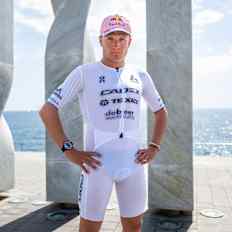

Completing an Ironman-distance triathlon in sub-seven hours like Kristian Blummenfelt takes more than just a mind-blowing level of physical prowess. It requires a powerful mental approach that enables you to respond productively to the various scenarios outside your control that materialise on the day.
As an Olympic and IRONMAN world champion who’s dominated the sport of triathlon, the ground-breaking Norwegian has developed a flexible mindset that gives him the best possible chance of success over multiple race distances.
And as we discover in his appearance on Mind Set Win it’s an approach that’s not just applicable in the world of sport, but life in general as we can never fully predict exactly what’s coming around the corner that could derail our performance in our daily tasks.
When these challenging situations arise, host Kate Courtney explains how clinging to a fixed goal can become a hindrance, not a help, and it’s by adapting that we’re able to move forwards.
“Adjusting to what is happening in the moment doesn’t mean giving up on a good performance,” she says.
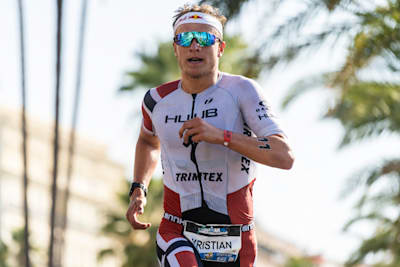
Kristian Blummenfelt triumphed in Utah
© Kevin Sawyer/Red Bull Content Pool
Episode 17 exercise
Listened to the episode? Here's a recap of the exercise to action.


Courtney outlines how preparation is key in starting to develop a flexible mindset and invites us to try an exercise to help us kickstart our learning.
The next time an important moment arises, maybe in the classroom or a discussion with your boss, prepare in advance by setting specific but flexible goals that create room for more than one outcome.
Here are the three levels of goals that Courtney suggests in the episode:
- Bronze – an outcome in line with your previous achievements and expectations, and in line with your ability.
- Silver – this goal is a challenge that both excites and scares you a little, but it seems a realistic achievement even if things don’t go perfectly.
- Gold – a big reach and a really meaningful accomplishment. This outcome requires everything to go perfectly to plan in terms of performance and circumstances on the day.
Having these in your mind and preparing for multiple outcomes can help you respond productively in the moment. Allowing yourself to pivot your approach can also release pressure and help you stay focused in the long term.
“Kristian’s story demonstrates the importance of maintaining flexibility and being willing to adapt in order to keep moving towards your goals.” Courtney says.
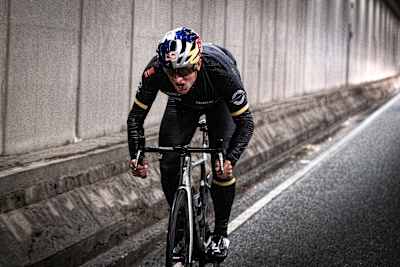
A typical lung-busting Kristian Blummenfelt training ride
© Daniel Tengs/Red Bull Content Pool
Whenever Blummenfelt stands on the start line of a race, he knows people expect him to compete to inspiring levels regardless of the conditions or how well his rivals perform.
Being able to react positively to actions beyond his control like this has helped the 29-year-old maximise his efforts across the brutal swim, bike and run distances.

Blummenfelt claimed his first IRONMAN World Championship title in May 2022
© Daniel Tengs/Red Bull Content Pool
In a world championship, everyone is in their best shape, but they’re also trying to maximise your weaknesses. If you do an IRONMAN just in your comfort zone, it’s easy to do a fast time, but if people push you out, that’s what can break you

Another key part to his greatness is his unrelenting discipline and commitment to leaving no stone unturned in pursuit of finding his limits. Something which brings us back to preparation.


Blummenfelt reveals that he frequently trains between 25 and 30 hours a week which prepares him not only physically, but gives him the confidence mentally to change course and adjust on race day as well.
“We’re always evolving the training philosophy, trying out new programmes and analysing the results in the lab,” he says.
“Sometimes it’s just about trusting the process and keeping on going, but other times you have to make some changes.”
Find out more – including simple exercises to do at home – in Mind Set Win.
Part of this story