
Cycling
The off-road riders shaking up women’s road cycling
Kate Courtney is the latest female star to make the jump from mountain biking to road cycling, but does racing across multiple disciplines actually give riders a competitive advantage?
Part of this story
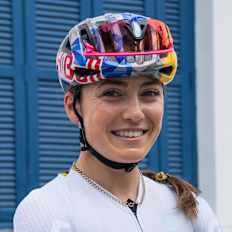






Most professional road cyclists hone their craft on asphalt, spending hours in the saddle from a young age as they build their endurance base, finesse their racing skills and put in the training time required to make it at the top of the sport.
Historically, track cycling was one of the other main development pathways – the hours spent going round the walls of the velodrome a good substitute for those spent on the road.


But in modern women’s cycling, there is a new, off-road-leaning trend.
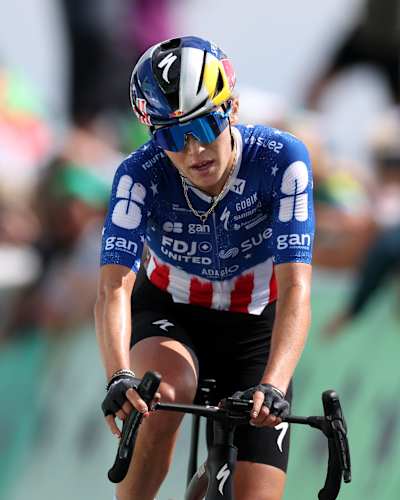
Kate Courtney – the 2018 UCI Cross-Country Olympic and 2025 Marathon Mountain Bike World Champion – is the latest rider to show it’s possible to switch the rough stuff for the smooth. After winning the USA road national title in June, she joined FDJ UNITED-SUEZ the following month and has already begun adapting to Women’s WorldTour racing.
But the American is just one of many riders who have cut their teeth in disciplines like mountain biking, cyclocross and gravel before making an impact on the road.
01
A new wave of multi-discipline stars
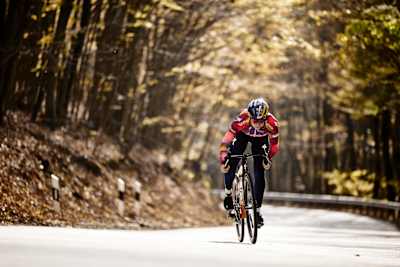
Kata Blanka Vas combines road cycling with cyclo-cross
© Ádám Bertalan/Red Bull Content Pool
Kata Blanka Vas started her career in cross-country mountain biking and cyclo-cross and still competes in the latter, finishing fourth at the most recent UCI Cyclo-cross World Championship in January 2026. But the Hungarian has carved out a road career as a one-day specialist in the Women’s WorldTour since 2021, picking up stages at the 2024 Tour de France Femmes and 2023 Giro d’Italia Donne.
Zoe Bäckstedt is another who has translated her race-winning cyclo-cross efforts into becoming a time-trial specialist on the road, finishing fourth in the individual time trial stage at this year’s Tour de France Femmes, while she played a key support role for CANYON//SRAM team-mate Kasia Niewiadoma’s tilt at a second yellow jersey.
Elsewhere, Puck Pieterse (who returned to mountain biking at the 2026 UCI World Cup in Les Gets, France) won the overall mountains classification for the best climber at the Tour de France Femmes.

Zoe Bäckstedt is another to bring a cyclo-cross skillset to the road
© Luc Claessen/Getty Images
It’s hard to overlook last year’s yellow jersey winner, Pauline Ferrand-Prévot, as well, who has claimed UCI World Championships in cyclo-cross, gravel, mountain bike and road during her storied career.
But does this versatility give riders a benefit when competing across multiple disciplines? Or can trying to compete across too many arenas actually negatively impact their performance?
02
The physiological benefits of switching disciplines
Training as a professional endurance-focused cyclist – regardless of discipline – means that those making the switch aren’t starting from scratch.
Just being a professional cyclist for 10 years gives you a solid base

Speaking to Velo about her move from mountain bike to road, Courtney said: “There’s a lot that translates across disciplines in terms of physiology. Just being a professional cyclist for 10 years gives you a solid base, but there are a lot of areas that we haven’t explored.
“I’m excited to see what transfers, but also what hasn’t necessarily been developed. I have a pretty good idea of what my two-minute power is after years of racing on the mountain bike World Cup, but I’ve only really done two stage races: Cape Epic in 2018 and earlier this year. So to see how my body responds, to benefit from the knowledge and expertise of such a world-class performance team, is exciting. It’s nice not to have to know yet what that exploration will reveal.”

Kate Courtney has spent most of her career on a mountain bike
© Bartek Wolinski/Red Bull Content Pool
The Tour of Britain, where she finished 11th in the overall standings, was her second road-cycling stage race and shows that a career in cross-country mountain biking – where long hours of easy riding on the road bike are a critical component of training anyway – can form the physiological foundations to have a successful career on the road.
But road cycling is much more than simply being able to lay down the power, hour after hour.
03
The transferable skills of off-road racing
Bike handling skills, technical abilities like cornering and descending and being able to adapt to racing conditions and tactics are also critical aspects of winning in road cycling.
While years of racing on the road will prepare riders for the cut and thrust nature of racing within a peloton, and using team tactics to support the team’s main hope in a race, those with off-road experience have a few extra strings to their bow.
Competing in muddy, changeable conditions in cyclo-cross or mountain bike helps to finesse a rider’s bike handling abilities, where incorrect line choice or a poorly timed slip can be the difference between a win and a loss. When applied to the road bike, this enables riders to contend with difficult terrain like cobbles or gravel, or navigate crosswinds without it negatively impacting their performance.

Courtney is now transferring her skills to the road
© Jan Kruger/Getty Images
On corners and descents, this technical ability and innate confidence to keep the bike upright comes into its own too, enabling riders from an off-road background to push themselves more than their competitors, save mental and physical energy on a technical descent, or seize upon more opportunities to launch a decisive move.
Finally, while there are teams in mountain bike, cyclo-cross and gravel, they are much more individual sports with less focus on team tactics and more emphasis on a rider’s ability to read a situation and make instinctive decisions. This skill becomes a real benefit in road cycling where it’s important to be able to make split-second calls on whether to follow an attack or launch one of your own, particularly if a team’s original race plan has been derailed or riders are competing without a team radio.
04
The challenges of a multi-discipline career
Juggling off-road and road disciplines isn’t a sure-fire way to success though, and it’s important for riders to find a balance to get the most out of their potential.
Courtney herself has hung up her mountain bike while she pursues her road cycling ambitions, while Ferrand-Prévot also retired from off-road disciplines at the end of 2024 to focus solely on her main goal – winning the Tour de France Femmes.

Road cycling places unique demands on its athletes
© Matt McNulty/Getty Images
Some riders try to combine the two throughout the season, although with mixed success – Puck Pieterse for example is having one of her best seasons yet on the road, but has struggled to emulate her best form on the mountain bike, where she has picked up one UCI XCC World Cup win this year from the four rounds she has started.
A lot of this is down to scheduling – the biggest road races clashing with the summer mountain bike season – but road is also unique in the demands it places on its athletes, requiring specific training to be able to race hard for three-to-four hours at a time before finishing with a sprint. In mountain bike and cyclo-cross, most races are over after 90 minutes, while efforts are more intermittent and require riders to repeatedly produce short, sharp surges.


05
Where the competitive advantage lies
Overall, the likes of Courtney, Vas and Backstedt making the switch to road and succeeding shows that there is a path for off-road-focused riders to follow into women’s road cycling, and that there are competitive, skill-based advantages that come from a rider spending their formative years on the rough stuff.
But the demands of road cycling mean that those who can master multiple race formats simultaneously are likely to remain outliers rather than the approach being a guaranteed route to success.
About the author
Part of this story