
Gaming
Gaming
Is the 10-ban system making the LCS even better?
Is the 10-ban system working its magic on pro League of Legends?
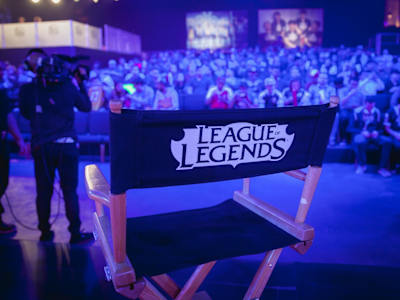
The Spring Split in Los Angeles
© Riot Games
Increasing the number of bans is supposed to broaden narrow champion pools; a common criticism of a professional scene which bows to the changing winds of the metagame. It’s also hoped that the new, more complicated phase will add a new layer of tactical depth, and thereby excitement, to the least thrilling segment of each match.
Three weeks is a narrow window in which to make any definitive judgements. Coaches and players are still acclimatising to Riot’s latest experiment, but with nine days of battles behind us, patterns are beginning to emerge.
The pick/ban phase has always been used to remove god-tier champions from the field and, under the new system, it appears that certain champs are suffering the equivalent of a permaban. LeBlanc, Jayce, and Camille are all incredibly strong right now, and now that teams have the luxury of two extra bans each after the initial set of three, we’re seeing these same names come up again and again. Camille suffered a near 100 percent ban rate across the globe during the first week of the season, and though she’s now slipping through the net more often since the shift to patch 7.2, both LeBlanc and Jayce are almost guaranteed bans.
It’s difficult to know whether this pattern will prove more, or less predictable than in previous years. After all, Lulu and Kalista rested at around 90 percent P/B rates at the end of the 2016 Spring Split, and it’s too early to call whether the trio above will achieve even higher rates of contention by the end of Week 10 this year.
What risks happening, however, is that the first six bans are used to isolate meta picks ad nauseum, while the second two bans are consistently used to interrupt the opposing team’s nascent composition. For the first week, this was the oft-repeated pattern of events, and though it appears to be loosening up slightly, it doesn’t show any sign of shaking its current shackles.
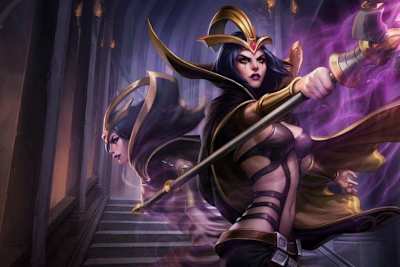
LeBlanc is now a guaranteed ban
© Riot Games
Another factor which could be affecting the predictability of each team’s pick is the reduced time allotted for each ban. The addition of four extra bans had the potential to extend the process by four minutes, so in response Riot has reduced the countdown timer for each decision to 30 seconds.
In the case of Misfits and Giants! Gaming, the pressure of such a short consultation time has resulted in them forfeiting their ban by failing to select a champion. Banning strong meta champions, especially in the first group of eliminations, is almost always a solid choice. Making hasty decisions within 30 seconds risks giving away a god-tier champ to your opponent. The pressure is already beginning to show in the first weeks of the season. When Worlds approaches, it will only become more difficult.
But what viewers want and what players want aren’t necessarily aligned. Spectators crave unorthodox decisions, compositional upsets, and surprising pocket picks. In theory, 10 bans should create circumstances where odd choices are more likely by placing a greater emphasis on champion diversity.
Within the EU LCS, certain roles have, without a doubt, received their fair share of unexpected champions. G2 Esports rocked out Miss Fortune as a support for Ashe in their first tangle with Fnatic. We’ve also witnessed the return of Zac, Thresh, and even Illaoi, to the Rift, with IgNar of Misfits delivering delightful (and unexpected) hooks.
Does it feel diverse? Yes. Does it feel significantly more diverse? Not really. The truth of champion diversity will make itself known at the when the Spring Split is complete.
The 10-ban system is an experiment which probably won’t be seen in non-professional play unless it delivers on Riot’s original dream: more champions, more excitement. For the moment, the jury is still out, and could remain so until Worlds 2017.
What will happen when two world-class teams face one another and are forced to choose between banning meta champs and terrifying pocket picks? Will teams dare expend five bans trying to keep the likes of Faker, Smeb and Bjergsen under control by banning out their entire champion pool? It’s here that the potential choices will become labyrinthine and a new, more theatrical draft could enter the fray.
For more eSports coverage, follow @RedBulleSports on Twitter and like us on Facebook.
