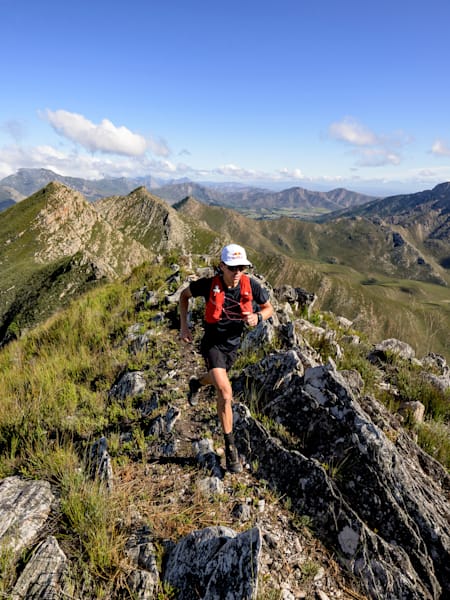
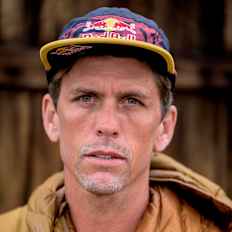
Sometimes the greatest adventures start by accident. In Cape Town, cradled by the rugged slopes of Table Mountain, Ryan Sandes's unexpected journey to ultra trail running legend began quite by chance.
Back in 2006, during his final year at university, Sandes had intended to join a weekend getaway with friends to run a half-marathon. Yet, as often happens, fate intervened. Finding the half-marathon entries fully booked, he impulsively signed up for the full marathon instead, just because he didn’t want to miss out on that weekend. Despite his friends' skepticism about his endurance, he not only completed the race, but found profound enjoyment in the challenge.
Ultimately, it's not the numbers but the experiences that are remembered
This spontaneous marathon was merely the first step in a journey that would redefine Sandes’s life. Living on the back slopes of Table Mountain, he found himself drawn increasingly to the trails. It wasn't long before his adventurous spirit yearned for more than the corporate grind he had entered after university. In pursuit of adventure, a simple Google search for "extreme trail races" led him to the Racing the 4 Deserts series – a decision that would catapult him into the annals of ultra running history.
Inspired by Dean Karnazes's exploits in the same series, Sandes threw himself into the gruelling discipline of ultra trail running, starting with the Gobi Desert race in 2008. Fifteen years on, having run more than twice the Earth's circumference, Sandes now boasts one of the most impressive resumes in ultra running history. Judge for yourself.
02
Ryan Sandes's record-setting achievements
First person to win an ultra on each of the seven continents
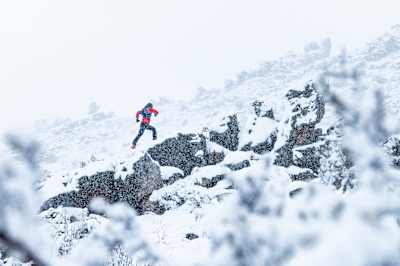
Ryan Sandes has faced extreme temperatures ranging from 52°C to -18°C
Ryan Sandes is the first person to win an ultra marathon on each of the seven continents. His series of victories began in 2008 with first-place finishes in the Gobi March and the Sahara Race. These six-day, 250km stage races took him through the extreme conditions of China's Gobi Desert and Egypt's Sahara Desert. The momentum continued in 2009 with a win at the Jungle Ultra Marathon in the Brazilian Amazon, a five-stage, 230km race that tested competitors through dense rainforest and humid conditions.
In 2010, Sandes conquered the Gore-Tex Transalpine-Run, spanning eight days and crossing the mountainous terrain of Germany, Switzerland, Austria and Italy. That same year, he secured a win in the 250km Last Desert Challenge in Antarctica's unforgiving ice fields. His ultra running achievements continued with a victory at the Leadville Trail 100 in Colorado in 2011 and concluded with The North Face 100 in Australia in 2012, completing his seven-continent run. Sandes modestly noted, “After winning races on five continents I decided that it would be a cool mini goal.”
First competitor to have won all four of the 4 Deserts Ultramarathon Series
Running in the desert is no problem for Ryan Sandes
In 2010, Ryan Sandes achieved another notable milestone, becoming the first ultra runner to win all four of the 4 Deserts races. Each of these races is a six to seven-day, 250km self-supported footrace, taking competitors through some of the most inhospitable deserts on the planet. At the time Sandes completed this challenge, that included the Atacama in Chile, the Gobi in China, the Sahara in Egypt, and Antarctica. At that point, only 81 individuals had finished all four races, and only 11 of those within the same calendar year; Time magazine recognised it as one of the 10 most demanding endurance races in the world.
Fastest known time on the iconic Great Himalaya Trail and the Drakensberg Grand Traverse
Alongside his running partner Ryno Griesel, Sandes has set multiple records
Ryan Sandes, along with his running partner Ryno Griesel, also set astonishing records on some of the world's most challenging mountain trails. In 2014, they marked their first significant record together by setting the fastest known time (FKT) on the Drakensberg Grand Traverse (DGT). This 209km unmarked and self-navigated route stretches across the main Drakensberg escarpment between South Africa and Lesotho, encompassing a grueling 9,000m of elevation gain. In a video dedicated to his world-record attempt in the Drakensberg, Ryan Sandes reflected on the unique demands of the route: "If you're a good runner, you can run fast, but that doesn’t really count in the Drakensberg. This challenge takes the mental side to a whole new level.”
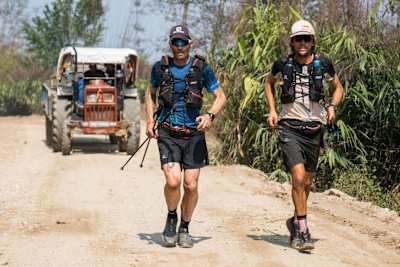
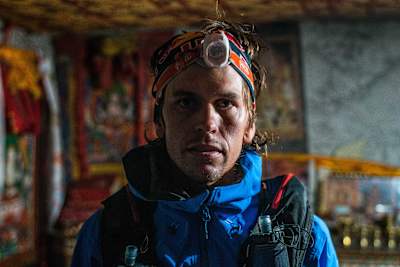
Their most groundbreaking achievement came in 2018, when Sandes and Griesel set a new FKT on the Great Himalaya Trail (GHT), one of the ultimate tests in ultra running. They covered the 1,504 km route, which winds through the extreme altitudes of the world's highest mountain range, in 24 days, 4 hours, and 24 minutes—shattering the previous record by three days. Reflecting on this epic journey, Sandes remarked, "That is, without question, the most wild and craziest journey I've ever done."
If you're a good runner, you can run fast, but that doesn’t really count in the Drakensberg
Among Sandes's prestigious ultra running victories, his triumph at the 2017 Western States Endurance Run stands out as a highlight. The Western States Endurance Run is one of the oldest and most challenging 100-mile (161km) trail races in the world, weaving through California’s Sierra Nevada Mountains. Sandes completed the race in a time of 16 hours, 19 minutes and 37 seconds. This victory at Western States solidified his reputation as one of the top ultra-distance runners globally. “All my training has been carefully planned to mimic the Western States”, he explains in a full documentary dedicated to Ryan’s performance, which you can watch below.
8 min
100 miles out west
Will Ryan Sandes's extreme training help him win the Western States 100-Mile Endurance Run in record time?
Another significant milestone in Ryan Sandes’ career was his victory at the 2011 Leadville Trail 100. Set in the heart of the Rocky Mountains of Colorado, the Leadville Trail 100 is one of the most demanding ultramarathons in the United States. Sandes completed this arduous 100-mile race in a time of 16 hours, 46 minutes, and 54 seconds.
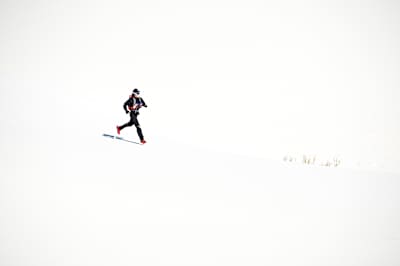
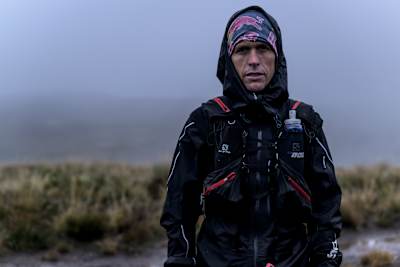
Sandes's ultrarunning career is not only marked by his victories but also by some truly unique and daunting experiences. Throughout his adventures, Sandes has run at elevations as high as 5,550m above sea level and faced extreme temperatures ranging from 52°C in searing heat to -18°C in biting cold. He’s been lost 44 times during races. His journeys have brought him face-to-face with nature's wild side, including encounters with six bears and experiencing two hallucinations due to extreme fatigue. Reflecting on his journey, Sandes muses, “Ultimately, it's not the numbers but the experiences that are remembered."
An ultra run is any footrace longer than the traditional marathon distance of 26.2 miles (42.195 kilometers). An ultra trail run is an ultramarathon that takes place primarily on trails, often through rugged and challenging terrain. Ultra trail runners cover mountains, forests and deserts - running on dirt paths, rocky trails, and sometimes even off-trail sections. Typically, ultramarathons range from distances of 50 kilometers (31 miles) up to 100 miles or even longer. Some popular ultra distances include 50k, 50 miles, 100k, 100 miles, and beyond.
Love running? Watch Japanese mountain runner Ruy Ueda embark on a challenge to run himself into the record books by setting the new fastest-known time for running all of Mount Fuji’s main trails in one stroke for free on Red Bull TV.
23 min
Mount Fuji in One Stroke
Ruy Ueda aims to set the new fastest-known time for running all of Mount Fuji’s main trails in one stroke.