
Rally Raid
A brief history of the world's toughest rally raid events
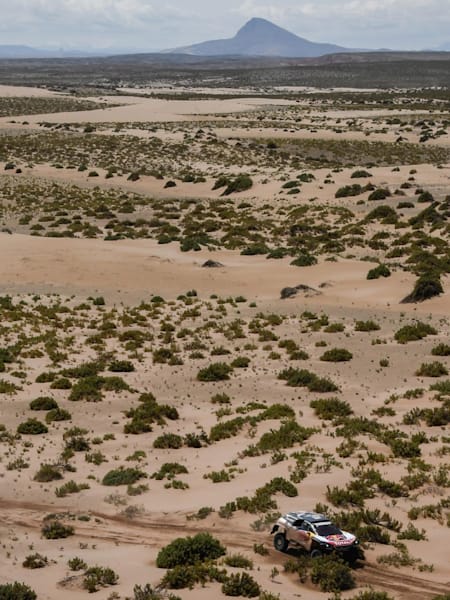
For rally raid fans, the most wonderful time of the year is the Dakar Rally. Ahead of the 2019 event in Peru, we take a look at the history of the world's toughest rally raids.
Part of this story







Like the Indianapolis 500, the 24 Hours of Le Mans, and the Monte Carlo Rally, the Dakar Rally is one of the jewels in the global motorsport crown. For four decades it has offered a unique and formidable two-week multi-terrain challenge for manufacturers, support crews, riders and drivers of two and four-wheeled machinery.
When it comes to marathon rally raids, the Dakar Rally might get all the headlines, but it's just one of many epic events that have attracted professionals and amateurs to go off the beaten track and take on the seemingly impossible for over 100 years.
With Dakar 2019 just around the corner, we look back at some of the key events in the history of off-road endurance races, and how we got to where we are today.
Peking to Paris Race
First event: 1907
Distance: 14,994 kilometres
Number of competitors: 11
"What needs to be proved today is that as long as a man has a car, he can do anything, and go anywhere," said the French newspaper Le Matin when it issued the Paris to Peking challenge in the first decade of the 20th century.
This is the granddaddy of all endurance races. The Peking to Paris Race started on June 10, 1907, outside the French embassy in Peking (now Beijing, of course), and although 40 entrants signed up, only five cars and 11 competitors made it to the start.
The motor car itself was barely a couple of decades old, and yet competitors were required to negotiate the vast Gobi Desert, the Siberian wilderness, and routes that had previously only ever been attempted on horseback.
The race was won by the Italian Prince Scipione Borghese, driving a 40bhp Itala. It took him and journalist Luigi Barzini Sr two months to cross China, Russia, Poland, Germany and Belgium, reach Paris, and complete a race that even today is audacious in scope and execution.
Safari Rally
First event: 1953
Distance: 5,000-plus kilometres
Classes: Cars
Number of competitors: 200-plus
Incredibly, this car and body-breaking event, originally named the East African Coronation Safari, was once part of the World Rally Championship. It was so challenging it was considered to be the equivalent of winning three events.
Traversing Kenya, Uganda, and modern-day Tanzania, the event featured constantly changing weather extremes, floods, heavy rocks in the road, and spectators dangerously close to the action. Crews used helicopters to help warn drivers of hazards, such as oncoming traffic and unsuspecting giraffes.
Unsurprisingly, local knowledge was key to success, and Kenyan driver Shekhar Mehta triumphed the most times, with Finnish WRC legend Hannu Mikkola also winning this extreme rally event.

27 min
ABC of... Rally Raid
Find out what it takes to compete in one of the most arduous races on the planet.
Baja 1000
First event: 1967
Distance: 1,000-plus kilometres
Classes: Motorbikes, cars, trucks, VW Beetles
Number of competitors: 300-plus
The epic endurance event that is today known as the Baja 1000 is the longest non-stop point-to-point race in the world, and it all started in the early 1960s after Honda started using the tough terrain of the Tijuana to La Paz highway to test their new CL72 scrambler.
By 1967, the route had become an 1,400km off-road race attracting the likes of F1 world champion Mario Andretti, movie legends Steve McQueen and James Garner, and thousands of other high-profile and amateur thrill-seekers alike.
This epic Wild West rally raid takes place every November, blasting across the beaches, mountains and riverbeds of the Baja Californian Desert, and is infamous for featuring boobytraps built by fans that can catch out crews and riders.

3 min
Introducing X-raid's MINI JCW Buggy
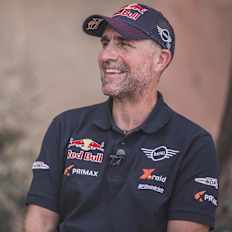
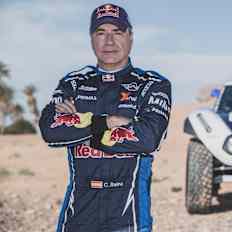
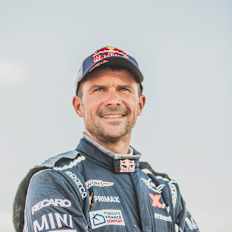
Carlos Sainz, Stéphane Peterhansel and Cyril Despres enjoy their first drive in the X-raid MINI JCW Buggy.
London to Sydney Rally
First event: 1968
Distance: 11,265 kilometres
Classes: Cars
Number of competitors: 100
In late 1967, the UK's Daily Express newspaper decided to create and sponsor an implausible-sounding race from the United Kingdom to Australia. The London to Sydney Rally visited England, France, Italy, Yugoslavia, Bulgaria, Turkey, Iran, Afghanistan, Pakistan, India, and 4,184km of Australian roads.
100 cars left London in late November, 1968, and entrants included rally aces Paddy Hopkirk, Roger Clark, and F1 driver Lucien Bianchi, but it was Andrew Cowan who was the first of 56 finishers. He arrived in Sydney on December 18, at the wheel of a Hillman Hunter.
Cowan would repeat his triumph at the next running in 1977, and the event would be repeated in various forms in 1993, 2000 and 2004. In 2014, the event was run in reverse, beginning in Sydney and finishing in London.
Dakar Rally
First event: 1978
Distance: 80,000-plus kilometres
Classes: Motorbikes, cars, quads, trucks
Number of competitors: 500-plus
Back in 1977, French motorcycle racer and thrill-seeker Thierry Sabine got lost in the Ténéré region of the Sahara Desert. Rather than panic, Sabine decided this slice of sandy wilderness would be the perfect place for his own event, and the Paris–Dakar Rally was born.
Starting in Europe, between 1978 and 2007 the event mushroomed into a massive world-renowned event, attracting motor racing royalty like Ari Vatanen and Jacky Ickx, and from the late 1980s manufacturers like Toyota, Mitsubishi and Peugeot-Citroën.
Due to potential security threats in Africa, the event has been held on South American soil since 2009, with stages being held in Peru, Paraguay, Argentina, Chile and Bolivia. It remains one of motorsport's most gruelling challenges.
Silk Way Rally
First event: 2009
Distance: 6,500-plus kilometres
Classes: Cars, trucks
Number of competitors: 300-plus
Originating as part of the Dakar Series, the first Silk Way Rally took place in 2009, starting in the Russian city of Kazan, and ending 4,500km later in Ashgabat, Turkmenistan.
The first event was won by former World Rally Champion Carlos Sainz, who repeated this feat in 2010.
The Silk Way has grown into a monster challenge, and attracts big names such as former Dakar winners Jean-Louis Schlesser and Cyril Despres, and manufactures from Team Peugeot Total, Toyota, Volkswagen and the mighty KAMAZ trucks.
In 2018, the event was split in two, with a Russian leg beginning in Moscow and ending in the southern port city of Astrakhan, and a Chinese leg taking place in September.


Part of this story