




Skateboarding
Skateboarding
Vert skating vs street skating: a comprehensive comparison
While they have some similarities, vert and street skating are generally different approaches to skating. Find out what makes them unique disciplines.
Whether you ride to work or shred at a skatepark, skating is a go-to hobby and mode of transportation for many. "It's just me and my board having fun," says professional skateboarder Jamie Foy. "Every day, I'm thinking of something new to try or something that hasn’t been done before."
But not all skating is the same. There are several types of skateboarding – and vert skating and street skating are two of the most popular types. Below, you'll learn all about vert skating versus street skating and how to get started with both.
01
What is vert skating?
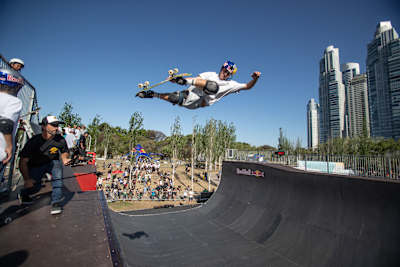
Alessandro Mazzara shows what vert skating is all about
© Gustavo Cherro/Red Bull Content Pool
Vert skating, short for vertical skating, is the practice of riding your skateboard on near-vertical surfaces like ramps or half pipes. It involves picking-up enough speed to launch yourself into the air, perform tricks and land smoothly.
You feel your body rushing through the wind during this gravity-defying experience. You also hear the quiet as your wheels leave the ramp and then feel them making contact with the surface again.
Once you've upped your vert skating skill level, you might decide to enter a contest and try your hand at advanced tricks. Before you get there, though, you’ll need to start with the basics. You’ll need:
- Elbow and knee pads to protect your joints if you fall or slide on the ground.
- A well-fitting helmet that doesn't move when you put it on.
- Grippy shoes that provide support and balance on your board.
- The right wheels that measure between 56mm and 58mm in diameter, with a hardness level (durometer) between 95a and 100a.
- A ramp or incline where you can practice your vert skating skills.
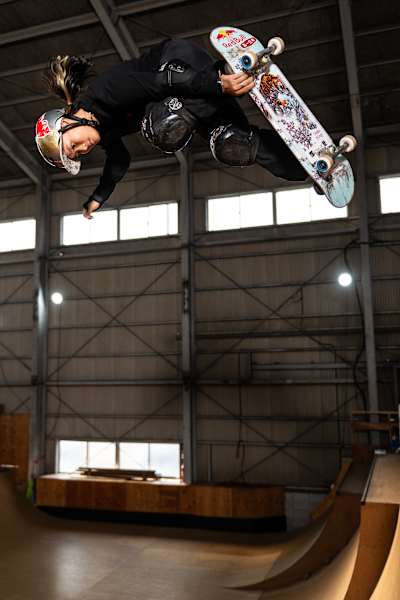
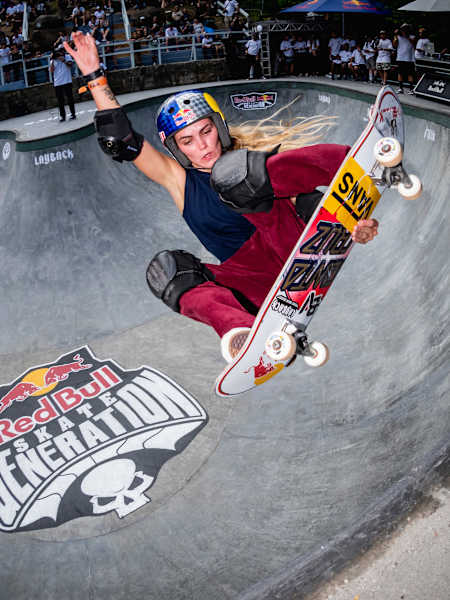
Sakura Yosozumi sends it on her hometown vert ramp
© Jason Halayko/Red Bull Content Pool
What's the history of vert skating?
Vert skateboarding dates back to the mid-1960s and empty backyard swimming pools in California were the original vert ramps. Skaters would start at the bottom of a pool, push-off on their boards to pick-up speed and roll up the bowled ends.
As skateboarding's popularity increased in the mid-'70s, more people started vert skating in pools. Over the years, skate parks added bowls and ramps, so skaters could practice in spaces designed for this type of skating. Since then, vert skating has evolved into the execution of technical skills on the smoothest of surfaces.
Several notable names helped make vert skating as popular as it is today. Tony Hawk created dozens of vert tricks and is known as one of vert skating's originators. He was also named the top vert skater for 12 consecutive years. Bob Burnquist was also instrumental in popularising vert skating – in fact, he was the first skater to land a MegaRamp 900.
What are the techniques used in vert skating?
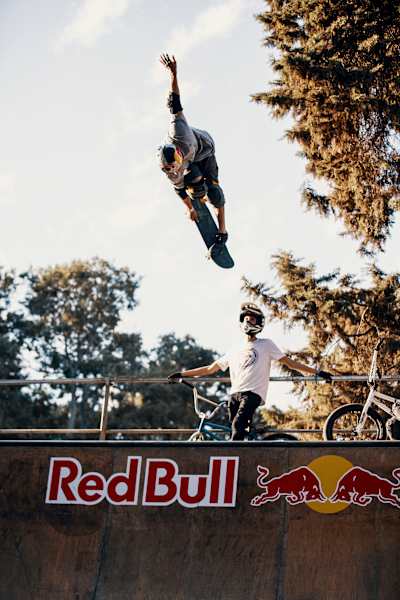
Few people have vert skills down better than the legendary Sandro Dias
© Alfred Jürgen Westermeyer/Red Bull Content Pool
Below are some of the top techniques practiced in vert skating.
- Fakie Ollie: One of the most basic vert tricks, a Fakie Ollie is essentially a backwards Ollie. During a Fakie, you pop your board down into the ramp in the direction you'll be heading.
- Nollie: For this Ollie variation, you'll use your front foot to snap down the nose of your board and pop up the tail. You complete a 180-degree rotation to head back down the ramp.
- Powerslide: Skate up the ramp and lean slightly backwards to take most of the weight off your front wheel. From there, you slide your board across the surface, pivot and then skate back down the ramp.
- McTwist: For this aerial move, you'll rotate 540 degrees while grabbing the frontside of your board between your feet to perform a Front Flip.
- 900: This is a 900-degree spin (2.5 revolutions) performed mid-air after launching from a ramp. Because of the balance and timing it requires, this trick is one of the most difficult to perform.
02
What's street skating?
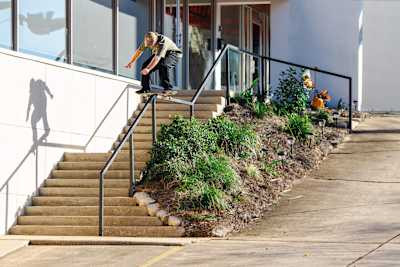
Jamie Foy nails a rail in Los Angeles
© Anthony Acosta/Red Bull Content Pool
In this skating discipline, you perform tricks on the rails, ledges, stairs, curbs and other street furniture. It's especially popular in urban areas since it involves getting creative with what's around you. It’s also more difficult than park skateboarding since it requires extra technicality – you're skating on surfaces that weren't made for skateboards after all.
Street skateboarding is often associated with freedom and self-expression. You're finding new ways and places to ride your board. While your board is your main piece of equipment in street skateboarding, there are some other items you’ll want to grab, too.
- A good helmet to protect your head – concrete and metal are hard!
- Pads that protect your elbows and knees if you slide or fall on unforgiving concrete.
- Good skate shoes that give you maximum control of your board as you’re grinding and sliding.
- The right wheels with a diameter between 52mm and 54mm and a hardness level (durometer) of at least 99a.
What's the history of street skating?
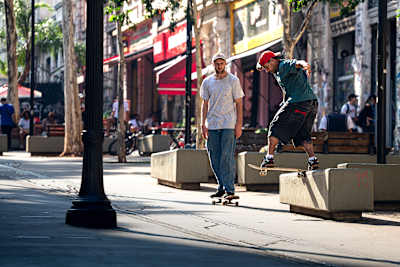
Anything is an obstacle on the streets
© Diego Sarmento/Red Bull Content Pool
Street skating began as skaters ventured outside of their dedicated, traditional spaces (empty swimming pools and skate parks) and into public areas. In 1978, Alan Gelfand first performed the Ollie, a revolutionary trick that launched the beginning of street skating. Through this manoeuvre, skaters could pop their boards off the ground an onto common outdoor areas like handrails and benches. Rodney Mullen popularised the Ollie on the street and skaters widely adopted the trick in the '80s.
Street skating gained even more popularity in the '90s, when skaters trained to compete in the annual X Games. The Street League contest of the 2010s later sparked a greater sense of interest and competition among skaters. The tournament continues to introduce innovations in street skating.
What are the techniques used in street skating?
While you can perform variations of many vert tricks on the street, there are some other tricks and techniques you can try, too. Below are some of these techniques.
- Ollie: The most foundational skateboarding technique, the Ollie involves popping your board into the air so you can jump onto a surface.
- Kickflip: This simple trick is where you jump and kick-off your board to flip it 360 degrees before landing back on it.
- Grinding and sliding: There are dozens of grinds and slides, and they involve sliding your board or its trucks across a surface. The Frontside 50-50 and Boardslide grinds are two simpler types, while the Frontside Feeble and Backside Crooked grinds are more advanced.
- Boneless: This trick involves picking up some speed on your board, then grabbing the middle of your board with one hand. From there, you place one foot on the ground to start a jump and bring your board in front of you. You then plant your foot back on your board to land and continue riding.

Aldana Bertran popping an Ollie on the streets of Buenos Aires
© Gustavo Cherro/Red Bull Content Pool

Big air on vert ramps means plenty of time for big, extended tricks
© Dakota Mullins/Red Bull Content Pool
03
Comparing vert skating and street skating
Now that you have a better understanding of vert and street skating, here are the core differences between these styles of skateboarding.
- Terrain: To skate vert, you'll need a special ramp or bowl. With street skating, you'll make use of your local environment.
- Required skills: Most vert techniques require accurate timing for aerial tricks. For street skating, you need to exercise quick precision to pop your board from the ground onto a rail or ledge.
- Physical risk: When you're street skating, you might find yourself on cracked or uneven pavement. You may also come into contact with concrete or pointed edges. The surfaces used for vert skating are generally a bit more forgiving. However, when you're performing tricks and flips so high in the air, there's the risk of miscalculating a landing.
- Fashion trends: Loose pants, jackets and bold hair colours and styles are all characteristic of street skaters. Vert skaters, on the other hand, often base their clothing choices on their protective gear, as their aerial flips and tricks call for it. Shorts or straight-legged pants that aren't too baggy for skate pads to fit over are common.
- Accessibility. Although in some areas it's illegal to skate in public spaces, you can often easily find a rail, bench, or ledge for practice. Vert skating, however, requires a dedicated skate park nearby.
Finding your skating style
While they have some similarities, vert and street skating are pretty different approaches to skateboarding. Now that you know more about them, you can choose a skate location and pick out some skills you want to try. Most importantly, you shouldn't feel you need to stick to one style of skating. Grab your board and gear, and express yourself to the fullest.
04
Watch Sandro Dias make vert skating history at Red Bull Building Drop

21 min
Red Bull Building Drop highlights
Skateboarder Sandro Dias sets two world records descending from a 22-storey building in Porto Alegre, Brazil.
On Thursday, September 25, vert skating legend Sandro Dias completed an unprecedented feat in skateboarding history: riding down the sweeping curve of a towering building in Porto Alegre, Brazil, during Red Bull Building Drop.
Beginning with a 30m drop – already higher than a standard mega ramp – Dias gradually worked his way up to a groundbreaking 70m descent from the roof of the iconic Centro Administrativo Fernando Ferrari (CAFF) building. With Guinness World Records™ officials present, this global event showcased the evolution of skateboarding to inspire skaters around the world.
Watch Dias make history in the highlights video above.
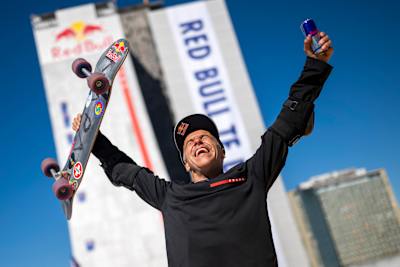
Job done and two world records broken by the skating legend
© Joerg Mitter/Red Bull Content Pool
