




Gaming
Gaming
The 10 greatest games in 10 years of the iPhone
As Apple’s smartphone ends its first decade, we look back at the most influential iOS titles so far.
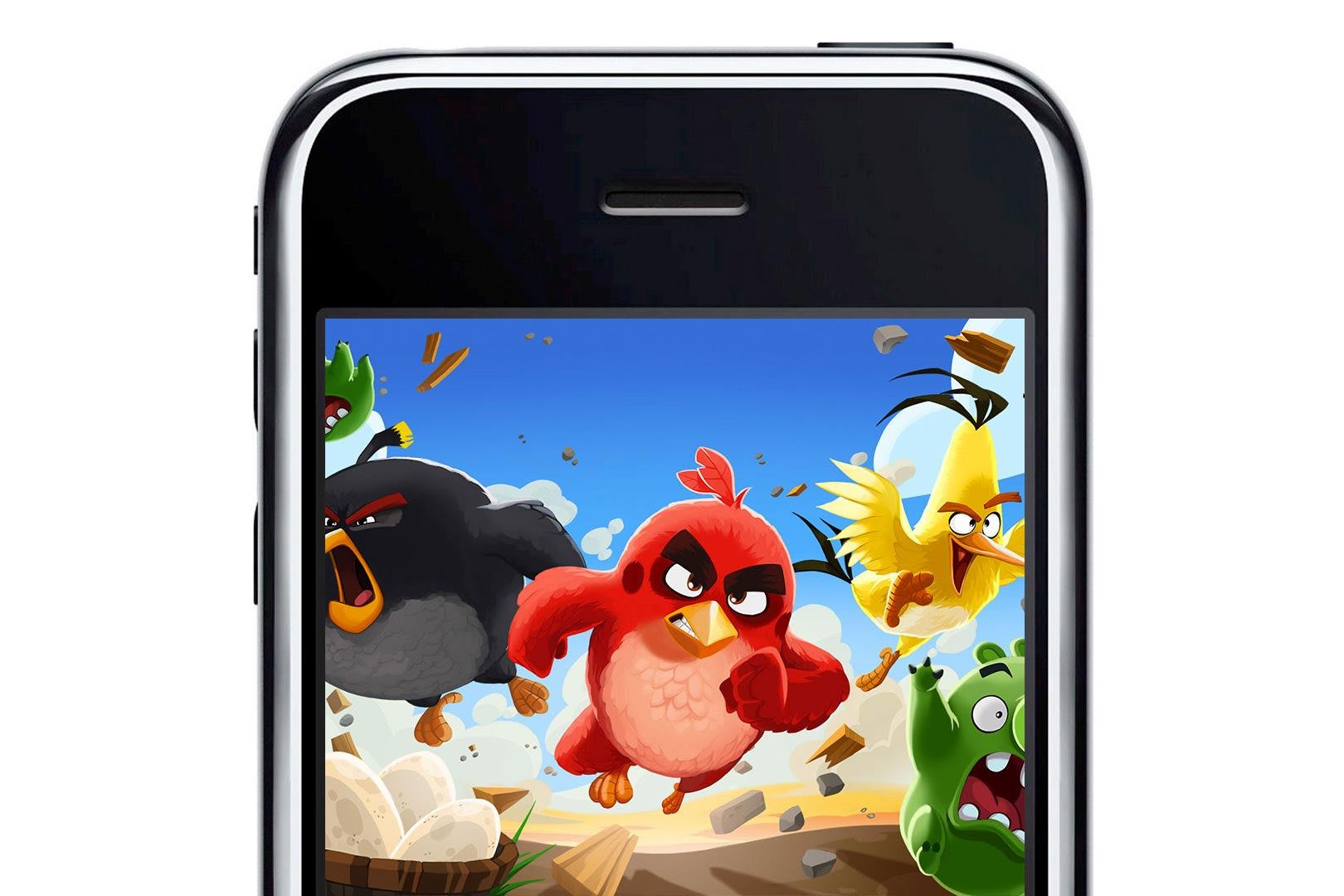
Can you believe the iPhone is 10 years old?
© [unknown]
How time flies when you’re having fun. This week, Apple’s iconic iPhone reached a milestone: it’s been ten full years since Steve Jobs first stood on stage and unveiled the smartphone, and thus changed the mobile market forever. With its beautiful operating system and finger-friendly capacitive touchscreen – but no 3G connectivity – pundits weren’t quite sure to make of it at first, but ten models later and more than a billion units sold, it’s hard not to call the iPhone the greatest technological innovation of the 21st century so far.
The iPhone is more than a phone, and that’s true now more than ever. It’s a computer, and one that’s proved ideal for playing games. With the creation of the iTunes App Store in 2008, Apple has helped make one of the most thriving markets for gaming. To celebrate, we’ve picked 10 of the most important, most influential and downright fun iOS games. Happy birthday, iPhone, and here’s to another ten years of worn-out thumbs and eye-watering phone bills from in-app purchases.
Angry BirdsReleased: 2009
Angry Birds is one of the most addictive games we’ve had the pleasure of playing, but it was also a game changer. Unlike a lot of mobile games of the time, it packed in user-friendly controls (swipe back and release) that didn’t cover half of the display with an infuriating onscreen D-pad and buttons. It was fun and easy to get to grips with and, much like Fruit Ninja, which launched around the same time, practically anybody could pick up the phone and play. What’s not to like about catapulting an irate ball of feathers into a perilous tower of thieving pigs? The blend of fun and simplicity proved such a captivating mix that Angry Birds became the first mobile game to hit a billion downloads, sparking a flurry of merchandising opportunities from toys to clothes, and it even resulted in a movie. It’s that first game we’ll always remember the most fondly, however.
Doodle JumpReleased: 2009
Angry Birds may have reminded developers that the iPhone’s glass touchscreen was a new control interface, but 2009’s Doodle Jump was the game that showed you didn’t even need to use it to have fun. If Canabalt is a horizontal endless runner, Lima Sky’s Doodle Jump is an endless jumper. As the adorable Doodler, you have to keep on hopping between platforms up a sketchbook-inspired level, grabbing rocket pack boosters, and dodging fourth-wall-busting tears in the page and hungry aliens. The game’s genius is in its controls: no gaming handheld before the iPhone ever featured an accelerometer, meaning the game is almost entirely controlled by you tilting left or right, an approach we’ve seen countless developers use since. (See Sega’s own Sonic Jump as a prime, polished example.)
CanabaltReleased: 2009
We toyed with putting Temple Run in here – certainly more people will have played Imangi Studios’ endless runner – but we couldn’t ignore the OG endless runner from Semi Secret Software. It created an entire genre now associated almost exclusively with the iPhone, even if it started life as a Flash game for PC web browsers. Canabalt’s simple controls (jump as buildings crumble around you), stunning apocalyptic artwork and eerie soundtrack combined to capture gamers’ imagination in a way that has sparked a host of imitators, through Temple Run to Rayman Fiesta Run and even Nintendo’s Super Mario Run. When Nintendo apes your idea, you know you’re onto something.
Cut The RopeReleased: 2010
Has Cut The Rope inspired imitators? Not really. Has it spawned a multimedia franchise, spawning movies, merchandise, spin-offs and sequels, like Angry Birds? Well, it had a web cartoon series, but again, not really. What it was, and remains, however, is one of the most absurdly polished, charming and thoughtful puzzle games we’ve ever played, using little more than gravity, cute artwork and whoopee cushions to swing its way into our top ten favourite iPhone games of all time.
Real RacingReleased: 2009
Plenty of gamers around the world never would have expected that puny little iPhone in your pocket to be capable of outputting console quality-esque graphics. But the Firemint studio showed everyone when it released Real Racing in 2009, a gorgeous racing game that looked a lot better than many games you’d play on your home TV. With a host of control options, slick cars and imaginative tracks, the game was released to critical acclaim and was followed-up by a sequel two years later with licensed cars and even better visuals.
Real Racing proved that Apple’s smartphone is more than capable of providing you with AAA-worthy gaming experience. It was bolstered by Chair Entertainment and Epic Games’ 2010 action title, Infinity Blade, which runs on the same engine as Gears of War and looked just as jaw-dropping. Take that, consoles.
Tiny WingsReleased: 2011
Canabalt may have kickstarted the modern endless runner genre, but there have been some stand out titles that have innovated further on the 2009 classic. Tiny Wings, for example, hit iPhones in 2011, and was instantly lauded for its simple gameplay and gorgeous presentation, and was even voted as the best iPhone game of the year thanks to its one-finger operation. Just press and hold on the screen to get your tiny little bird ready to jump, and let go of the screen to make him jump off the many hills that are littered through the game. It’s a simple premise, and surely an inspiration for Dong Nguyen’s infuriatingly difficult Flappy Bird, which paved the way for even more copycat clones and phone-smashing moments.
Crossy RoadReleased: 2014
Take one-part Frogger, one-part endless runner and give it a 3D twist with voxel graphics, and you have Hipster Whale’s absolute monster of a game: Crossy Road. Released in late 2014, Crossy Road took the world by storm, thundering up the App Store chart with its cute, colourful and whimsical graphics, quick and addictive gameplay and – at the time – a unique business model that has since been copied almost to death.
Razor-fast reactions were needed for you to successfully achieve the game's titular aim, while you dodge cars, hop over rivers, pick up coins and register a high score. Those coins help you unlock the part that made Crossy Road even more addictive – collect enough coins and you could pop ‘em into a digital vending machine, which would spit out a new character for you to play as, making you play even more. More character packs and different settings followed, and you could buy new characters with real money. Before you knew it, you’d sunk a decent chunk of change and time into the game. Worth it, we reckon.
Monument ValleyReleased: 2014
As the App Store and wider mobile games market matured into the 2010s, it became much harder for developers to sell standalone games experiences. If it’s not free to play, or a multiplayer game as service, most players aren’t interested. Standing out like a beacon of hope, however, is Ustwo’s stunning, MC Escher-inspired puzzle game. It’s a calm, meditative experience that still manages to mess with your head thanks to the physics-defying platforming and some seriously creepy crows. It’s also proven a stunning commercial success, with the original game and Forgotten Shores expansion earning almost $15m in just two years for the tiny team. Indie devs take note: high-quality single-player games on mobile can still be made.
ThreesReleased: 2014
Less is more when it comes to a lot of mobile games, and few understood this better than the developers of Threes. Heralded as Apple’s Game of the Year in 2014, the straightforward numbers matching game was a testament to simple, creative and bold design, with addictive gameplay that was quick enough to play on a short commute, or you could dig in and keep your momentum going for a longer journey. Of course, like many other games, it was quickly cloned and copied, with many free versions launched in the App Store, but the three-man dev team were adamant to stick to Three’s 'premium' nature – which had a fairly low price tag of $2.99 – in the face of the mobile gaming industry’s reliance on freemium or dollar-priced titles. Support it – it’s more than worth the cup of coffee you’d otherwise spend your money on.
Pokémon GOReleased: 2016
Pokémon GO is unusual even in this amazing lineup as it's one of the first titles to incorporate augmented reality to fantastic effect. It's gained a cult following across a huge age range and by some metrics, it’s the biggest, most successful game of all time. The game uses GPS to help players locate, capture and train virtual Pokémon, overlaying the digital world with the real world, causing players to wander blindly up and down streets while unable to look away from their phones. Before Pokémon GO, it was difficult to imagine kids, teenagers, hipsters, business people – basically anybody with a smartphone – congregating to play a mobile game together, but now it’s difficult to imagine life without Pokémon GO. It’s truly a game that transcends class, age and pretty much anything else.
