Ever wondered how to get into the endurance sport of ultrarunning? Robbie Britton tells you how.
Written by Pip Stewart and Robbie Britton
5 min readPublished on
First off, what is an ultra marathon? Essentially it's any distance longer than a marathon (26.2 miles/42.2km), and you can even go the extra mile (or 50) and aim for 24-hour marathons.
Meet Robbie Britton, a Team GB ultra marathoner who specialises in 24-hour endurance events. It's fair to say that what he doesn't know about the pain of ultrarunning probably isn't worth knowing.
We caught up with him to find out how to get into the sport. From the creative use of duct tape to advice on how to avoid running like John Wayne, here are Robbie's top tips when it comes to running for hours and hours (and hours).
Just sign up if you want to give it a go. There’s a big stigma around the sport – the idea that you’re superhuman – but it’s not like that! Anyone can do it. If we all had to cover 100 miles today to save our lives, we could do it. It wouldn't be pretty, but it would be possible.
Ultrarunning is not about going fast but about being efficient. It’s about not slowing down but eating and drinking lots. Find your own pace, whatever that is. Everyone has a pace that they can move at. It could be walking, a gentle jog or a run-walk. Just sign up to something and then do the training.
The Ultrarunning Community group on Facebook is about 18,000 strong. You go on there with questions, and although you may get a few sarcastic answers you’ll also get some decent ones. They're a fantastic community who are welcoming and open to anyone. If you ask for a race recommendation, people will tell you. We’re not an organised group, but we’re there for you.
There’s a German website called DUV Ultra Statistics that has everyone’s results and a list of races. If you want to do mountain races there’s one called Run the Alps and they’ve got loads and loads of different mountain races. Run 247 is pretty good too, they’ve got a lot of events.
5. Build up to the run
Courtney Atkinson and Ali Najem battling for first
Building up is always sensible. Before you do a marathon you’ll do a 5k, 10k and then half-marathon, it's the same with an ultramarathon. Don’t be held back by people’s preconceptions. If you train and are sensible on your first one, you can run-walk it. Nothing in the world of ultras is impossible. If you do push harder, your body is probably capable of it but you're running a greater risk of injury.
If you do take on an ultra for the first time it’s not just about preparing the body, it’s the experience. It’s knowing when to drink, how to pace, how to deal with blisters and chafing, having the right kit – these are things you should learn on a 10k, a half or a marathon.
When I first started I made a lot of mistakes and I learned from them. If you want to jump up faster, talk to people, get advice and listen. You'll make mistakes on your training runs and learn from that. The biggest thing about being an experienced ultrarunner is not about doing lots of runs but about learning from them. You can learn a lot from getting stuff completely wrong!
8. Road test your gear
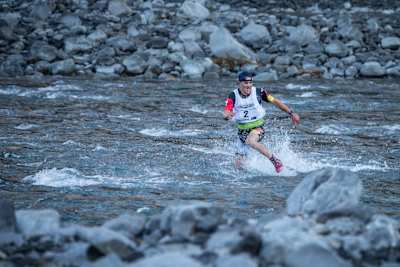
Braden Currie runs through river in Coast to Coast
I often use duct tape – that’s one moment of pain rather than an hour's worth. Test everything first, especially with your bottom half of clothing. Running with chafing is debilitating. You’ll run like John Wayne and go all over the place, as your muscles won’t be used to that. You’ll cry and look rubbish.
Break things down into what’s manageable. If you’re at the start line do the first kilometre and see how you feel. Then do the second and the third kilometre – build it like that. Break the run down with checkpoints, milestones, personal bests – once you’ve gone past your furthest ever distance each step after that is a PB, no matter how long it takes you. When it gets tough, run to the next lamp-post or tree, or chase the person ahead of you. I never look at running the whole 24-hour race – I mentally just tell myself to run for one hour. Even when I’m absolutely shattered I know I can run for an hour, so I just do that, then think about the next one.
For a 24-hour race my fuel strategy's to take on food every kilometre. I make my own moist rice cakes at home and mix them with different fruits. If you're doing a trail race in the middle of nowhere you have to take your own food. I’ll take things like sweets or jelly shots for runners. I’m giving you all my secrets now! A lot of people in the second half use drinks. If your body is struggling to take stuff in, you just need to make sure you have enough carbs too. Something like the flat Red Bull is having a gel. It’s got the liquid and the caffeine. Just keep the fuel trickling in and keep moving.