

Red Bull Motorsports
Motoring
6 sports that could make you an ace racing driver
Looking to become a great racer? Here’s why skiing, squash and even shooting might be just as important as karting.
Did you ever notice how racing drivers seem to be annoyingly good at other sports? Well, turns out that’s probably not a coincidence.
Skills learned while playing sports as a kid can prove vital when it comes to learning to drive a racing car. Fitness, balance, competitiveness, discipline, hand-eye coordination… The younger you get these skills and traits down, the easier the transition to being a racing superstar will be.
We’ve chosen six sports which have helped successful racing drivers get on their career paths when they were young (we’ve left off karting because that’s almost a given for racing drivers today). Take up at least one of them, and one day you could end up being F1 world champion!
1. Squash
Good for: Concentration, heat training, competitiveness
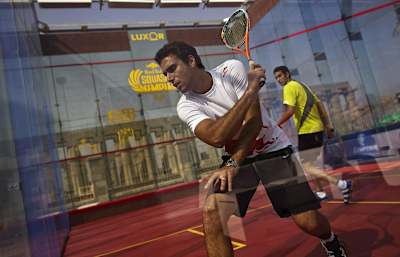
Squash trains you for the heat of battle
© Red Bull Content Pool
James Hunt is known as the king of F1 cool, but the British driver spent a large part of his youth pounding the not-particularly-cool squash courts of southern England.
“Squash brought out James’s deeply competitive side,” Hunt’s former girlfriend Taormina Rieck told the F1 driver’s biographer Gerald Donaldson. “As well as the physical benefits, he needed that sense of competition to make himself dig deeper and get the best out of himself.”
A lot of rally drivers are squash fans too. Carlos Sainz was champion of Spain in 1978, while modern drivers Andreas Mikkelsen and Thierry Neuville enjoy trying to best each other on the courts where they live in Monaco. Hot, sweaty and fiercely competitive, the analogies between squash and motorsport are easy to see – and it’s good for cardiovascular fitness too.
2. Shooting
Especially good for: Mind-management, hand-eye coordination
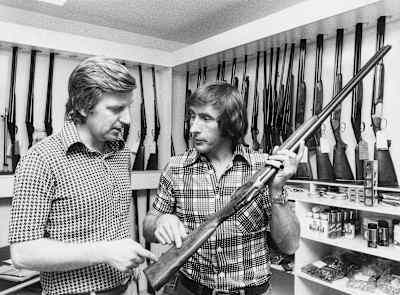
Jackie Stewart was an ace shot
© Getty Images
Three-time F1 world champion Sir Jackie Stewart credits the shooting he did as a young man with giving him essential mind-management skills that helped him in his Formula One career.
“Before you had the first opportunity to shoot at a target, if you were uptight [and] nervous, there was a very good chance you would just miss the target,” Stewart, who came within one target of competing for Britain at the 1960 Rome Olympics, told Petrolicious in 2016.
“When I drove racing cars, I had already passed through the uptight feeling. I was able to control that through my entire career, and I was lucky because I won most of my races in the first five laps, because I had already learned how to manage my emotions and not be affected by the big start, so to speak.”
3. Skiing
Especially good for: Balance
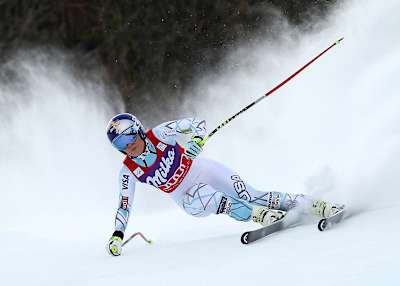
Skiing teaches you to control a slide
© Red Bull Content Pool
The basic sense of balance that hitting the slopes at a young age teaches you has helped racers including former grand prix winner Gerhard Berger and rally drivers Andreas Mikkelsenand Sébastien Ogierto achieve success in their sports.
“There is a lot you can learn from skiing that’s useful in a rally car,” Ogier, a former ski instructor at the Orcières-Merlette and Serre Chevalier resorts, told RedBull.com back in 2013.
“You learn how to feel the grip instinctively: where you can go and where you can’t. Obviously you have to slide, but also know how to control the slide and, even more importantly, stop the slide. That’s no different to rallying.
“You [also] get comfortable with a slippery surface. And, of course, it’s a lot of fun, so you enjoy the speed and get quite used to that.”
Ogier was also a national boules lyonnaises champion – but we’re not sure how much that helped…
4. Gymnastics
Especially good for: Balance, discipline
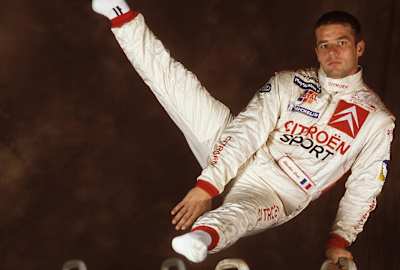
Loeb was a gymnast as a young man
© DPPI
How did Sébastien Loeb win nine straight rally titles between 2004 and 2012? Immense skill behind the wheel, great stamina… and a background in gymnastics. Yes, while Loeb trained as an electrician before becoming a full-time rally driver, his first love was gymnastics. He was a four-time regional champion in his native Alsace, and once finished fifth in the French national championships.
He can still do a mean backflip too…
Many credit Loeb’s uncanny ability to read changing road conditions during a rally – a skill that netted him an incredible seven Rallye Monte-Carlo wins – to the sense of balance that he developed as a young gymnast. Some even believe that it's what made him so mentally strong.
"I’m quite sure [Loeb's mental strength] has to do with his youth when he was a gymnast," mind coach Christopher Treier told RedBull.com in 2014. "In gymnastics, you develop the coordination and with the coordination you also develop how the brain works."
5. Two-wheeled sports
Especially good for: Balance, race craft, competitiveness
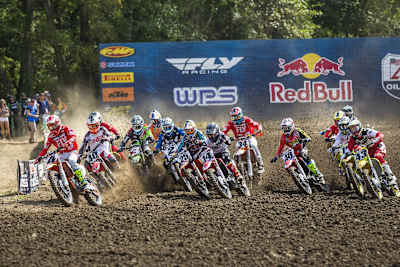
Motocross is great training for car racing
© Red Bull Content Pool
Long before he'd ever even sat in a single-seater racing car, Alex Wurz was a world champion. The former F1 racer claimed the BMX world championship in 1986, while being crowned vice European BMX champion in the same year. And it was as a 12-year-old pedal-pusher that Wurz believed he learned how to be a pro athlete.
"It was all very serious – I had a real trainer, and a sponsor who paid for everything, and my school was very supportive and gave me time off," Wurz told Motor Sport Magazine in 2011. "And at the end of it all I was the winner, I was world champion."
Motocross, meanwhile, has helped drivers like drift racer 'Mad Mike' Whiddett, rally and rallycross star Travis Pastrana and trophy truck driver Ricky Johnson to success on four wheels. Oh, and Andreas Mikkelsen – his third mention in this list – who competed for Norway in their national junior team. It’s also still used as a training tool by drivers including Daniel Ricciardo, Lewis Hamilton (who's been spotted out riding with Justin Bieber) and Kimi Räikkönen, who owns his own motocross squad, ICE1Racing International NV.
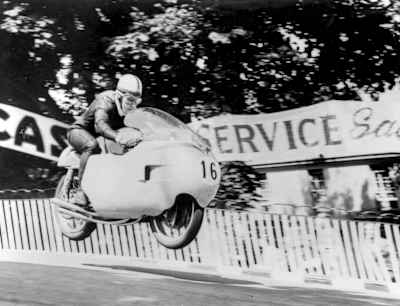
John Surtees won seven motorcycle world titles
© Autosport Show
Circuit racing-wise, John Surtees, Damon Hill and Mike Hailwood all tasted success on two wheels in road racing before switching to four. Hill even attributed his wet-weather skills in an F1 car to the experience he'd gained from sliding a bike through London's Belgravia Square back when he worked as a motorcycle messenger.
6. Rallycross
Especially good for: Race craft, car control, competitiveness
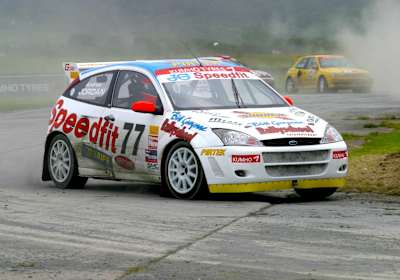
Andrew Jordan began his career in rallycross
© British Rallycross Championship
“In karting, you just learn tarmac driving. But in rallycross, you’re learning racing on dirt and racing on tarmac. They water the track, so you learn on wet gravel, too. Plus you learn race craft, and you get so much seat time.” So said British Touring Car racer and sometime World Rallycross star Andrew Jordan when RedBull.com asked him about the benefits of rallycross for a young driver.
He’s got a point. Mattias Ekström grew up racing rallycross in Sweden before switching to tarmac and winning first the Swedish Touring Car Championship and then the DTM, while Jordan was a British Rallycross champ before moving to the BTCC and taking the title in 2013.
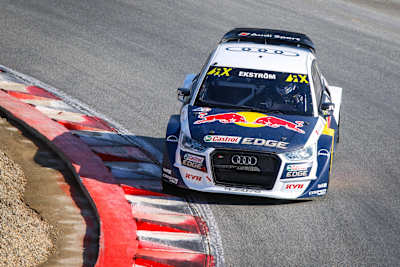
Mattias Ekström cut his teeth in rallycross
© FIA World Rallycross Championship
More obviously, rallycross has given a number of drivers the tools to go into stage rallying, including Mikko Hirvonen and brothers Petter and Henning Solberg.
“If you stay in rallycross, great,” Jordan went on to tell RedBull.com. “If you go into rallying, you’ve learnt tarmac and gravel driving. And if you go into circuit racing, you’ve learnt race craft and how to drive on low grip surfaces. Rallycross really is a great place to learn about racing.”


