
esports
Amazing on what sets Berlin apart as an esports city
Berlin is an esports hub for many pros and teams, and home to the European arm of Riot Games. League of Legends expert Maurice ‘Amazing’ Stückenschneider tells us what makes the German capital tick.
Berlin’s esports scene is a hotbed of activity; you only have to look at Riot Games, which moved to the area a few years ago and is now home to the European League of Legends Championship Series. Esports fans from all over Europe descend on Berlin to catch one of the weekly games straight from the studio, while teams have set up roots spanning across the city. Many pros and players call it home, but why?
Following on from our Part of the Game documentary episode in which we explored the German capital, we caught up with League of Legends expert, Maurice ‘Amazing’ Stückenschneider, to delve deeper into what makes Berlin such a haven for esports activity.


“I think it's mostly because Berlin is so international,” says Stückenschneider. “You can find anything you want almost within a square kilometre. It draws so much attention from international folks, with Brazilian shops, Argentine shops and Chinese stores. It kind of unifies every nationality within Germany.
“I think Berlin offers something completely distinct to other cities in Germany, and to most other cities within Europe aside from maybe London. So, it makes sense for esports to be set there.”
Riot Games relocating from Cologne to Berlin is one reason a lot of teams have done the same – being near the studio is key. Stückenschneider believes that’s not the only reason, however, and Berlin welcomes all, unconditionally.
”Berlin is so open to different people and ideas. And with esports being such a new thing, Berlin is somewhere where it's accepted for what it is.”


While other cities may have a digital infrastructure that’s ripe for esports – such as the lightning-fast internet of Seoul – Berlin doesn’t offer the fastest speeds, nor does it have huge clusters of gaming cafes or PC bangs for gamers to hang out in. Instead, its sheer scale and accessibility has meant that plenty of esports talents can carve out their own niches and find similar people to work on projects.
”You're able to easily find other like-minded people to start projects with, or streams, or whatever it is you want to do,” says Stückenschneider. “There are a lot of things an esports player or an esports personality needs to do in order to gain a reputation and to build their repertoire.”
It helps that Berlin natives are a friendly bunch, according to Stückenschneider. It's a place where people are keen to start conversations and tend to go with the flow. This could be down to just how fleeting a lot of moments can be in a city the size of Berlin and how people want to seize that one moment, that one opportunity – akin in a way to esports in general.
“I think what Berlin offers is that it’s really open minded and people are talking to one another and are always trying to start a conversation. In smaller cities with smaller areas, the people you meet may have some meaning to your life – you’re a lot more likely to see them again.”

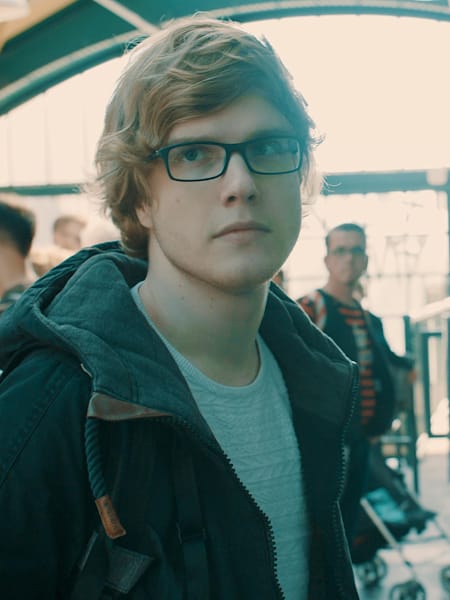
Amazing has been a LoL expert for years
© CLICKON Media
“But in Berlin, due to the sheer size of it, you may see that person only once in your lifetime, and you'll never see them again. So just by people offering more conversation – even fleeting – that's something that adds some uniqueness to Berlin compared to elsewhere.”


It makes sense for teams to be situated near the studio for the EU LCS, but the change from Cologne to Berlin has given rise to a few quirks. “Teams always had to be where the studio was, but what changed from my perspective is that the attitude of people and teams,” says Stückenschneider. “I think Colognewas quite small scale, and has a 'familiar faces' kind of vibe.
“People try to hang with one another and enjoy the company, whereas in Berlin, it's seperated a bit more due to the sheer size – so I think this social familiarity has kind of gone and has dragged the teams apart to a certain extent.
“It's allowed them to branch out into their own specific areas and interests,” he adds. “But before everyone was kind of really similar – it was more of a family than it is now.”
The esports scene in Berlin is still growing, and with the EU LCS here to stay, it looks like it’ll continue to be a hotbed for activity. While next year’s franchising model may shake things up – and split the family dynamic even more – the German capital will continue to be the hallowed stomping ground for many EU teams.
Berlin may not be up there with Seoul in terms of infrastructure, but it offers an interesting melting pot for teams to find themselves. In today’s esports world, that feels important.


Error: Zoe load failed (404)