
Red Bull Motorsports
F1
5 ways biometric technology could improve motorsports
How the latest advance in motorsports tech could help both the show and the safety of F1, MotoGP, the WRC and more.
Motorsport has never been shy about adopting new technology. Whether it’s new engine systems in Formula One, futuristic rubber for tyres in MotoGP or GPS tracking in the World Rally Championship, motorsports as a whole has always embraced the possibilities of progress.
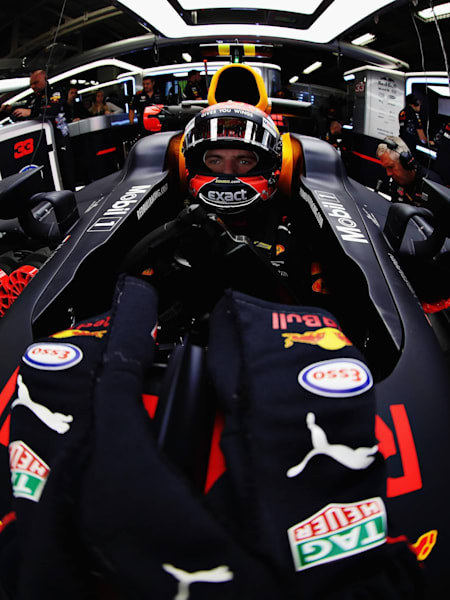
One of the most exciting recent developments in this area comes with the news that Formula One is putting together plans to bring biometric gloves to the sport. These will allow for the monitoring of a driver’s heart rate, blood-oxygen levels and, potentially, other kinds of data yet to be revealed.
This has got us thinking – how else could biometric technology help motorsports? We’ve come up with a few answers, from helping a driver’s fitness regimes to enhancing the audience experience and, vitally, keeping competitors as safe as possible.
1. Medical emergencies
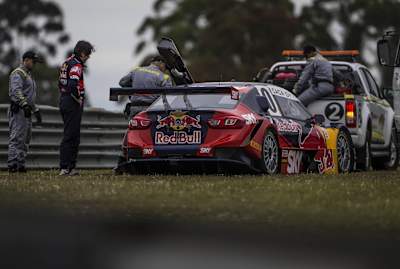
Biometric tech can help medical crews in an emergency
© Red Bull Content Pool
Safety is paramount in an environment as potentially dangerous as motorsport. Here, in the drive to keep racers safe, biometric technology could play a huge role through providing stewards and medics with accurate and up-to-data information on a driver before they treat them following an accident.
Knowing a driver’s heart rate and level of oxygen in the blood before deciding to lift a driver from a damaged vehicle, for instance, could help enormously in reducing the risk of further injury. It is the availability of this kind of data that has convinced the powers-that-be at the top of F1 to adopt biometric gloves from 2018.
Such information would be particularly helpful if the driver was unable to respond to clear questions due to being unconscious or difficult to comprehend, giving motorsports across the board clear, instant insight into what kind of help an injured driver needs.
2. Advising on the quantity and type of fluid intake needed

Biometric tech could monitor fluid intake
© Flavien Duhamel/Red Bull Content Pool
Staying hydrated is a concern for all top-level racers, no matter what the discipline. Whether it’s drinking enough during an F1 race or recharging between stages in a rally, taking on liquid is not to be overlooked.
Biometric technology can be used to monitor how much sweat a driver is losing in real-time, allowing their team to work out whether they’re in need of fresh fluids.
Rests between rally stages can be as little as a few minutes, for instance, and in that time it is essential that a driver is completely replenished and ready to go when it's time for them to head to the start line of the next stage. Having scanned the driver's biometric data, the team's nutritionist can then be ready with the right combination of water, isotonic drinks and energy drinks to meet the exact needs of their driver.
3. Improving training regimes

WRC drivers could have their training fine-tuned for different rallies
© Daniel Tengs/Red Bull Content Pool
Tracking someone’s heart rate is one of the most accurate means of knowing how tough he or she is finding a physical activity. Armed with the knowledge of how well, say, Lewis Hamilton deals with races in the heat and humidity of Malaysia compared to the relative cool of Silverstone could help his Mercedes team design very specialised training regimes for him in the run up to each grand prix.
Ultimately, this could improve his performance, giving the fans an even better spectacle come race day. After all, we all want to see the best racers racing at their best, right?
4. Pumping up the fan experience
Watching F1 drivers' heart rates change in battle would be fascinating
© Getty Images/Red Bull Content Pool
Imagine a broadcast in which you can not only see the lap times of an F1 driver, but the heart rate of every single driver up and down the grid, giving you some indication as to their current stress and excitement levels.
Two drivers could be neck and neck going into the last lap of a title-deciding race, for example – which is exciting enough anyway – but you’d be able to witness how fast each driver’s heart was beating, adding even more tension to the experience.
This would give fans a new insight into their favourite racers and let them know who was truly the coolest of the cool (it could also provide conclusive proof that Kimi Räikkönen’s heart rate never goes north of 40bpm…). Given that motorsport competitors wear helmets that block their face and emotions from us, these kinds of readings would allow us to get closer to their personalities during a race.
5. Eye tracking
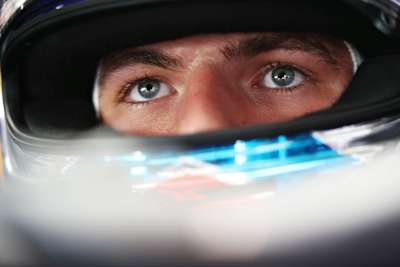
Eye tracking could be used in stewards' inquiries
© Getty Images/Red Bull Content Pool
Working out whether or not a driver was aware of an opponent prior to crashing into them can be a tricky task, not least for the stewards who have to decide to penalise those involved or not.
Eye tracking technology has existed for some time, but it could be put to use as a means of clearing up these types of disputes. At the very least, it would allow stewards to decide whether or not a driver had looked into their mirrors before cutting dangerously close to an opponent as they tried to overtake them.
Additionally, eye tracking would allow teams to decide if their drivers required greater training when it comes to observing the track and other cars. They could then set up very precisely designed simulations to improve any shortcomings.


