
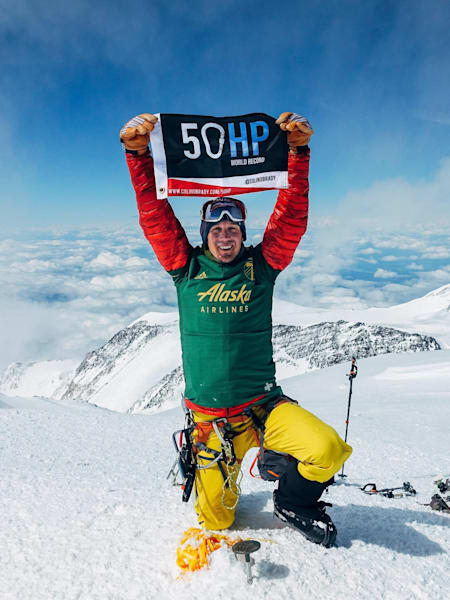
Mountaineering
Meet the man who climbed America's 50 highest summits in just 21 days
Climbing to the highest point of every American state in record time is the kind of challenge most can't even imagine, much less accomplish, but Colin O'Brady has done just that.
When it comes to relatively obscure world records, sometimes all you've got to do is make the effort. While it's difficult to determine how many people have attempted to set a record for the fastest consecutive ascent of the highest point in all 50 states in the United States, we can't image there's very many. In fact, only 273 people have touched all 50 summits – and most of them didn't do it very quickly. Then there's Colin O'Brady.

Given the breadth of the project – after all, the United States includes remote Alaska and Hawaii – it's not simply a matter of walking out one's front door. To even attempt such a thing required immense imagination, willpower and planning, not to mention the fitness, high-alpine skills and mental tenacity to make it happen. O'Brady, a 33-year-old endurance athlete from Portland, Oregon has all of that and in the middle of July, he stood atop Mt Hood in his home state, having reached the highest peak of all 50 states in just 21 days, 9 hours and 54 minutes.
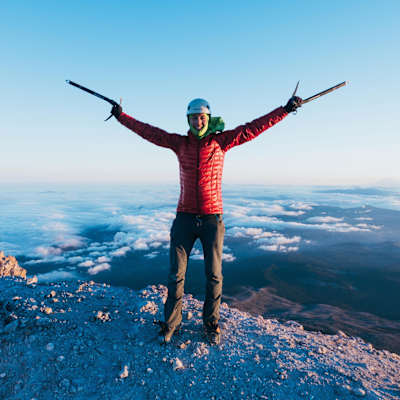
Colin O'Brady on Mt Hood in his home state of Oregon
© Colin O’Brady
Florida, you say? Sure, that was an easy one, as were some others, but states like Colorado, California, and Montana have real-deal summits to conquer. Then there's Alaska's Denali, which stands a serious 6,140m above sea level. So how did O'Brady do it? Maximum effort, major logistics, and a lot of help from his friends. Read on to find out more about what he called Project 50HP.

He used 8 different shoes (and boots)
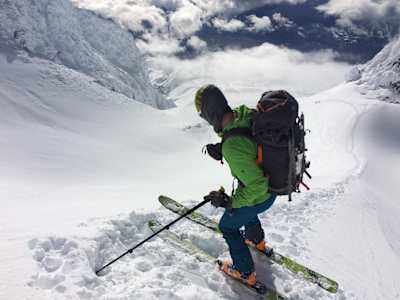
Skiing down Denali
© Courtsey of Colin O’Brady
Do that much moving, and you've got to think about what's on your feet. O'Brady used eight different pieces of footwear during his record-breaking adventure: three sets of trail running shoes, two different mountaineering boots, two different waterproof hiking boots and his ski boots – he skied off Denali, cutting a three day descent into mere hours.


His team drove over 16,000km
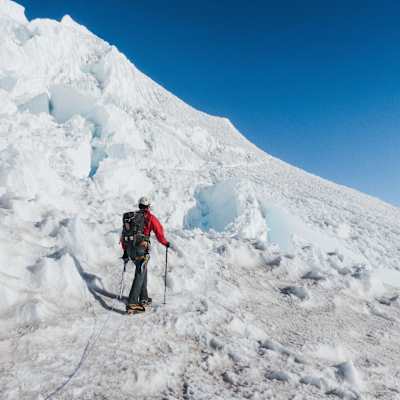
Rugged terrain on Mt Rainier
© Colin O’Brady
That's enough to cross the United States three times. "Cruise America was nice enough to give us an RV so we spent a lot of time in that," O'Brady says. "The crew would wake me up at the trailhead and kick me out the door!" The team also had the occasional use of a private plane, which helped them to hop between small airports and save time. Of course, they also used commercial flights for cross-country journeys and trips over oceans.
The lowest high point and drivable 'peaks'
One state had to claim it, and you shouldn't be surprised that the state of Florida had the lowest high point of all 50 states. Britton Hill takes the honour, measuring a mere 105m. "The local press was so amused by my adventure, they made a pretty big deal out of it," says O'Brady. "I made it into the local paper and everything.
"The high point in Indiana is Hoosier Hill," he continues. "We got there at 2am, and it's a giant cornfield – straight out of a horror film. But we drove to the summit and got our picture."

26 hour treks and lots of running
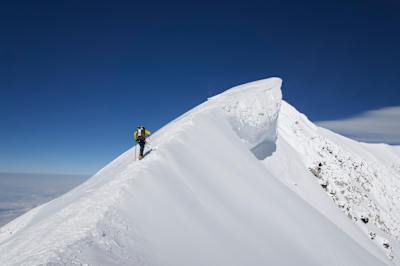
Denali was a proper alpine adventure
© Colin O’Brady
Most peaks weren't so easy to reach. Of course, Denali was a proper mountaineering adventure, but take Wyoming's Gannett Peak as another example. It's a 4,210m mountain on the Continental Divide and it's so remote that O'Brady's total distance on foot to the summit was 32km – so he ran most of it and then ran back out again. "That was a 26 hour day," he says. "I was sleepwalking at the end of it."
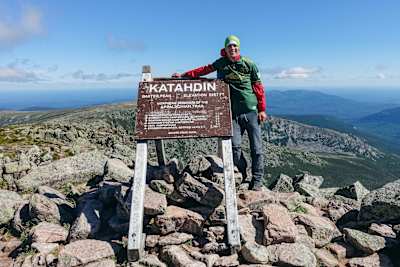
O'Brady kept moving fast to hit all his peaks
© Colin O’Brady
"I was always moving quickly," O'Brady says. "I had a lot of approaches that were 10km–16km and I ran those. Generally, if you look in a guidebook for most of these routes, I would do it in half the expected time or much less."
No camping
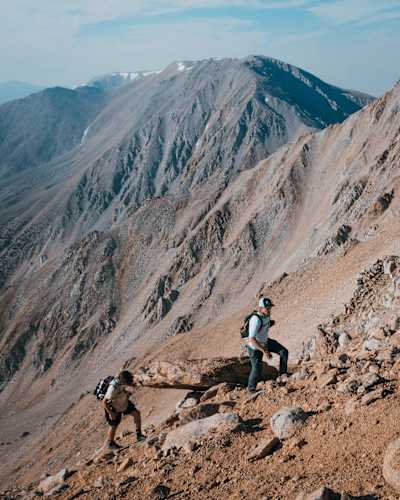
Keeping kit light while walking up Boundary Peak, Nevada
© Colin O’Brady
Minus his Alaskan expedition, O'Brady never carried a tent with him – aiming to keep his pack light as possible for speed. "Usually, I'd just take some water, a few gels and the flag that we'd been bringing to every summit," he says.
He did 6 summits in 24 hours
When O'Brady said he was moving quick, he meant it. At one stretch of the project, he bagged six peaks in six different states during one 24 hour period. Starting on July 1 in Florida he hit Alabama, Mississippi, Missouri, Arkansas, and Louisiana in quick succession.
Fires and lightning both messed with his schedule
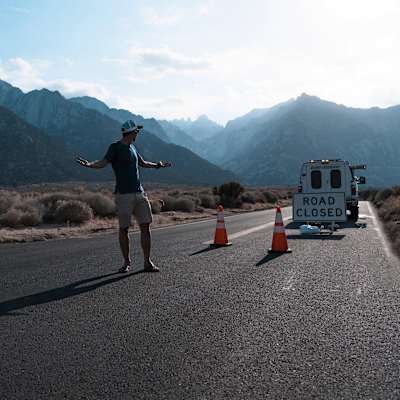
The Mt Whitney trail was closed due to lightning strike causing a fire
© Colin O’Brady
Natural disaster required adapting the schedule. Forest fires – one from a lightning strike at the trailhead – in California and Arizona meant O'Brady had to shuffle around dates to get access to National Parks and complete his list.
He got a little help from friends
Climbing company
© Courtsey of Colin O’Brady
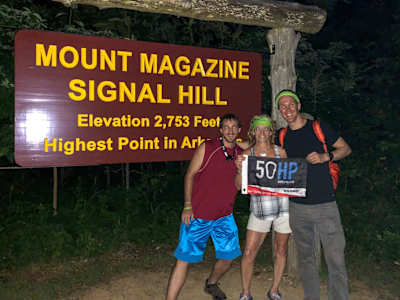
In addition to his girlfriend, Jenna, who accompanied him on the trip, O'Brady had a few other supporters along the way – notably his friend John, who joined for the first climb, last climb and a few more in between. Most impressive, though, was the help received from people he'd never met.
"We were going for the 'Forrest Gump effect'," says O'Brady. "We invited people to join us at any point along the way and in a few places, like Wisconsin and Illinois, we had 30 people with us. We also had 30 people on Mt Elbert in Colorado."
All in all, O'Brady says he couldn't have accomplished this feat as a solo mission, and it was the time with his crew he remembers most fondly. "The high points were the spaces in between," he says. "Like singing out loud in the RV just to stay awake."
