
Fitness
5 ways to improve your grip strength for obstacle racing
OCR Team World Champion Conor Hancock reveals how you can ace the monkey bars once and for all with these elite exercises.
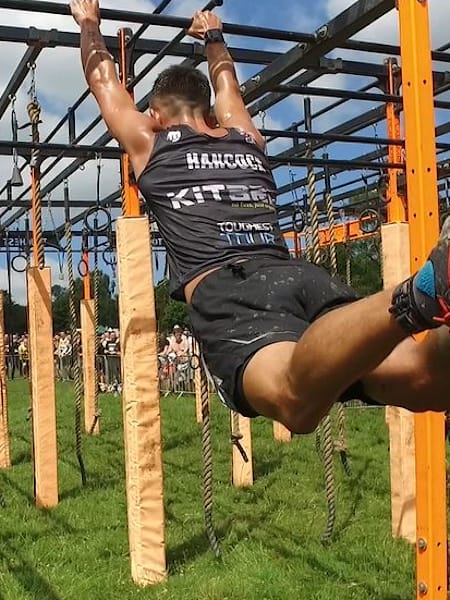
When he’s not speeding through Europe’s obstacle-packed Toughest race series, three-time OCR Team World Champion and KitBrix supported athlete Conor Hancock can be found hanging from bridges or scaling his local climbing wall.
Here, the 24-year-old Brit obstacle course racer shares his top gym-based exercises for improving your OCR grip strength – forearm pump guaranteed.
1. Farmer’s walk
Heavy carries are an OCR favourite and the humble farmer’s walk offers a simple way to replicate race day fatigue. The bonus? The benefits go beyond merely grip strength. “The farmer’s walk is a compound exercise, so it doesn’t just develop your grip strength but also your traps, deltoids, legs, hips, core, and back,” explains Conor. “It’s the first grip strength exercise I started with and I use it all the time because of its many benefits.”

Try Conor’s Farmer’s Walk drill:
Holding a heavy weight with each hand (try dumbbells, kettlebells, water drums or the yoke bar), simply walk up and down. Aim to cover as much distance as you can without dropping the weights until your grip fatigues.
Alternatively, add a farmer’s walk into your circuit training to replicate a carry during an obstacle race [pictured above]. “The more weight you can hold and the further you can walk, the more your forearms and grip strength will improve,” Conor explains.

2. Dead hang
Are monkey bars your nemesis? It’s time to go back to basics with the simple dead hang.
“The dead hang, where you hang from a bar with both hands, really tests your grip ability,” explains Conor who uses a pull-up bar (or occasionally a peg board) for this exercise. “I like to test how long I can hang for and see whether I can beat my last hang time."
Try Conor’s dead hang drill for beginners:
Dead hang on a bar for 30 seconds. Rest for 30 seconds (or drop into the plank position). Repeat for 10 rounds. “I like to do this as a warm-up exercise as it doesn’t kill your ability to grip fully, plus it’s really quick and very effective,” says Conor.
Advanced drill: Dead hang throw and catch
Want to take your dead hang up a notch? Conor’s next drill practises a single hand hold on the bar, mimicking the one arm hang that occurs when you reach and move through monkey bars, hanging rings and rigs during an obstacle race.
Grab a partner and a tennis ball. As one partner dead hangs, the other stands two metres in front for a throw-and-catch game. Start with alternate catches of 3 x 20 catches left hand, then 3 x 20 catches right hand, and switch places.

3. Pinch plate hold
A trickier twist on the farmer’s walk, this pinch plate drill is guaranteed to annihilate your forearms. “This was the hardest exercise for me to improve on and it’s still a struggle, but it’s also fun – especially when you move onto heavier plates,” says Conor. “I recommend starting with two 10kg plates (preferably smooth iron plates without a ridge to grab) as these should give you a longer grip time.”
Try Conor’s pinch plate drill:
Place the two weight plates between your feet to stabilise them. Next, pinch each plate together (one in each hand) with your fingers and thumb in a pincer grip. Hold as long as possible in either a static position or walking, and record your time.

4. Rope climb
Faced with a rope climb in a race, the foot lock technique, where you use your feet to ‘lock’ the rope and take your bodyweight, wins hands down. But in training? By shifting more of your weight to your hands offers great grip strength gains, says Conor, who also, ahem, ropes somebody to help shift his weight, as you can see in the video above.
“Rope climbing is fantastic for building grip strength and is a great exercise to mix into your circuits or to superset with another exercise,” explains Conor. He recommends beginners master the basic foot lock rope climbing technique before trying the exercise below. “I like to use the J-hook foot lock technique – easy, quick and efficient."
Try Conor’s rope climb drill:
Begin climbing the rope by using a standard foot lock technique. Hold your bodyweight for an extended amount of time as you climb. Progressively resist gravity longer with each hand as you climb higher. This forces your grip to work unilaterally and stabilises the body.
Tip: Go easy to begin with. “Just scaling a five metre rope can be pretty taxing if you’ve not climbed much, so start by mastering your technique and then build rep by rep,” recommends Conor.
5. Now head to the climbing wall
You’d be hard pushed to find an elite OCR athlete who doesn’t climb or boulder, such are the grip strength gains on offer. “Bouldering and lead climbing are my personal favourites,” says Conor. “They’re the ultimate test for grip and pull strength. It’s all about how far you can push yourself, how easily you can lift your body and how effectively you can control your position on the wall. And the great thing is, you don’t need an expensive gym membership or a ton of complicated equipment – I train for this almost anywhere!”