
Athletics
How I train: Niamh Emerson
Niamh Emerson gives the lowdown on the complex nature of a heptathlete's unique training schedule and delves into the specifics of some of her gruelling sessions...
She experienced her first taste of athletics when her parents took her to a training session on her ninth birthday. Eleven years on, Niamh Emerson is making serious waves in female athletics. She hit the headlines when she scooped Commonwealth bronze in heptathlon in 2018, and won the prestigious world under-20 heptathlon title in the same year. The following year, she secured a silver medal for European indoor penthalon, with the highest score ever achieved by a teenager.
Despite her talent, and the magnitude of success she's had so early on in her career, Niamh remains humble and hard-working, and is currently juggling her training around studying for a psychology degree at Loughborough University.

Redbull.com caught up with the 20-year-old to find out exactly what goes in to training for – and juggling – all seven of the events that compromise heptathlon, as well as what some of those tough and technical sessions look like...
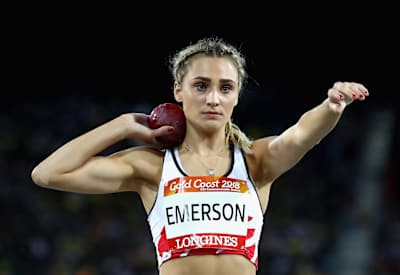
Training for heptathlon's 7 events requires a structured training schedule
© Cameron Spencer / Staff / Getty Images Sport / Getty Images
How is your training year broken up?
It all depends on competition schedules but generally my training year is broken up into different blocks. Off-season is September and then October sees the start of the long winter block, which is all about slogging it out to be robust and durable. Spring marks the indoor season and the summer months are the peak of training.
There’s lots of technical aspects because all the events in heptathlon are very specific. This means that it’s all a bit of a balancing act in terms of training for my individual needs. Overall, heptathlon training is all about making sure that you’re strong and fast, but then in order to do the 800 metres, you need to have a big lung capacity, too. The underlying principles are speed and power, so we do a lot of work being reactive and fast.
How do you fit your studies around training?
Training works really well around my studies – it’s not easy but I absolutely love being busy and it’s so nice to have two different aspects to my life. I’m studying psychology part-time at Loughborough University, and when I have down days training-wise, my days are filled with lectures. Thankfully, a lot of the coursework can be done in my own time, so it’s just about having the motivation and willpower to study. All in all, it works out quite well.

Niamh breaks up her week into different training disciplines
© Greg Coleman / Red Bull Content Pool

Packing in her sessions means every third week is a rest week
© Greg Coleman / Red Bull Content Pool
Do you target different disciplines on different days?
Yes. Monday, Tuesday, Thursday [and Friday] are full days and, on Wednesday and Saturday, I only train in the morning. It’s pretty complex, but at the same time, my schedule follows a simple structure that focuses on getting the work done so I have to be really focused.
Heptathlon training is all about making sure that you’re strong and fast, but then in order to do the 800 metres, you need to have a big lung capacity, too
Monday is the start of the week and where I’m required to mentally concentrate to the max. We concentrate on high jump and javelin on Mondays so training is tough. Tuesdays are all about speed work, while Wednesday is a mini down day where we work on shot put and tempo. Thursday is my active recovery day, where I do swimming or yoga, and Friday is a big day focusing on hurdles, speed blocks, javelin, gym and long jump in short, sharp punchy sessions. Friday is really the day where I fill in any gaps or focus on things I’ve missed throughout the week. Every third week is a rest week to allow my body to recover.
What does a typical high jump training session look like?
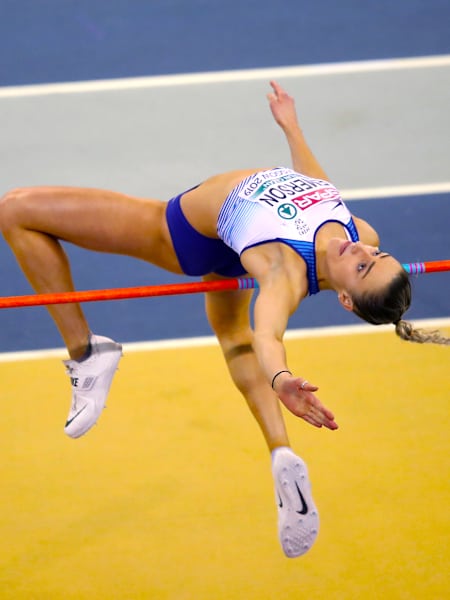
A full day of high jump training is from 10am-4pm with a lunch break slotted in at midday. A training session for high jump focusses on drills and the biomechanics of how I jump. We do drills around the bend, run ups around a ‘u’ bend, run ups onto the bed, short approach jumps scissors, and work on bar clearance. Sessions can change depending on where I need to focus my attention but it’s generally about getting technical jumping in.
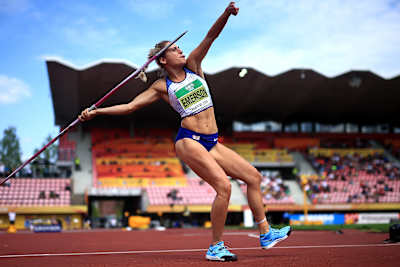
Niamh competing in javelin at the IAAF World U20 Championships 2018
© Ben Hoskins / Stringer / Getty Images Sport / Getty Images
Describe a typical javelin training session?
We start the week on long javelin sessions with run ups and drills and then we get straight into throwing. We go outside and do short approach, and then gradually work back to full approach. The second javelin session (on Fridays), is about remembering what I did at the start of the week and then just feeling my way through it.
How do you train for the 800m?
In terms of running, I actually train as a 400m runner, which means that running sessions are emphasised around 400m training. So I’ll do tempo runs, which is a grass session revolving around 50-second runs, 40-second runs and 30-second runs, to churn out volume. Then I’ll do short 120s, so that’s really fast running with big recovery to try and get speed up. As we get into the season it gets that bit more specific and we try and tick as many boxes as possible.
What does a typical training session look like in the build up to a big competition?
In the run up to a big event I spend a lot less time on the field, and I train less, putting my focus where I need it most. It’s more about longer rests and building up quality.
To find out more about how Niamh and other Red Bull athletes train, fuel and think, head to the Red Bull Pro hub.