



Gaming
Games
6 tips to give you a headstart on Ride 3
Milestone Games' Michele Caletti explains how to get ahead of the competition in the new bike racing game.
If you’ve never played a Ride game before, you’ll probably have a hard time getting to grips with Ride 3. Milestone’s latest motorcycle sim has a fairly steep learning curve, which can make winning races or staying on your bike seem like an insurmountable task at times. But that doesn’t mean you should just give up – with enough practise, it is possible to improve your skills and get on track to become a champion racer.
These Ride 3 tips from Milestone’s Michele Caletti should help speed up the process of getting to grips with the different bikes in the game, and give you some advice on where to focus your energy early on.
1. Start on a lower difficulty
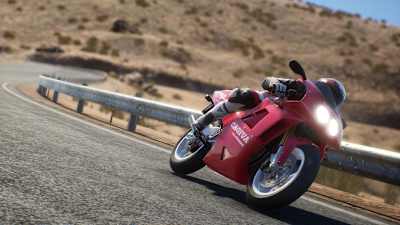
Learning the courses is a good idea before cranking up the difficulty
© Milestone Games
It might seem tempting to get stuck into the game’s higher difficulties out of pride, but the support is there for a reason. It aims to get you accustomed to the game, letting you learn the courses before moving on to the more difficult challenges on offer.
“When you get on the track you are welcomed by an introductory race,” explains Caletti. “It will evaluate your skill level and there's an option at the end of this race, and other races too, that suggests the settings you may want to use for some of the time. If you finish last – because you’ve never picked up a racing game or a bike game – it will suggest to tone down the difficulty significantly.”
The idea behind this isn’t to insult players about their ability, but to gradually ease them in by giving them some experience on the courses to train up. And there are other examples of this elsewhere in the game too.
2. Introduce settings gradually
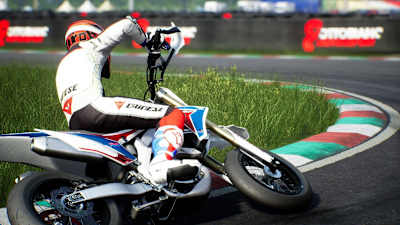
Using helpers like autobraking can help you learn the ropes
© Milestone Games
Much like in Ride 2, players can also adjust the settings to change how much of a simulation experience they want, or to train on one particular aspect that they are struggling with.
“You can remove everything and have a very brutal simulation or you can turn on all the aids,” says Caletti. “I don’t want to say it turns into an arcade game, but it does turn it into a much simpler game; you have autobraking, jump brakes and slower AI.”
Caletti refers to these helpers as a guide for the player, and suggests that the game’s reward system is what will entice them to gradually drop these once they have become more comfortable with the controls. This is because players receive greater rewards for completing tasks as a full-on simulation, rather than with the helpers enabled.
3. Focus on a specific bike or track to start with

Stick with one bike or track before moving on to something else
© Milestone Games
Ride 3 is a large game with lots of new content including tracks, bikes, and other customisation options, and it’s easy to see how new players might get overwhelmed and flick between bikes and tracks if things don’t initially go their way. Caletti warns against this:
“Don’t change because you’re tempted. If you [stay on the same] bike or track for half an hour or an hour, you’ll see that you will get better times and more intuitive lap behaviour. It’s only then you should feel free to explore the rest of the game more freely.”
So, in other words, you should focus in on a specific bike, track or challenge and try to hone your skills over time. Don’t just expect one bike to click with you immediately, as unless you already have several hours invested in Ride 2 that probably won’t be the case.
4. Get used to the physics
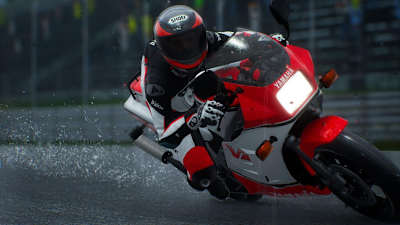
Start with a low-displacement bike to get used to reaction times
© Milestone Games
One of the biggest problems facing new players will be learning how to lean, especially around tight corners. To the uninitiated, it may seem like an impossible task to pull off, but there are definitely some tricks that you can use to help you.
“We now have two different first-person cameras which are much more refined and much more usable this time around,” says Caletti. “Maybe players will find that a new approach can help, because it feels more natural.”
As for players who are still struggling, she also has another piece of advice to offer them:
“You should probably start with a low-displacement bike and get used to the overall reaction time. Take a small sports bike and follow a relatively easy track and after half an hour you will understand the basic mechanics of the bike. Then you can move onto the same track with a higher displacement bike that behaves with the same rules of physics but asks for a quicker response.”
5. Prepare for night tracks on Time Attack mode

Night mode is a new feature for Ride 3
© Milestone Games
One new feature in Ride 3 is the addition of night tracks. These races are not just cosmetically different, but also offer a unique perspective challenge as you have to identify markers and reference points for braking in the dark.
“One tip I can give is to experiment with night tracks in the Time Attack mode,” says Caletti. “Racing at night or racing at noon is very different from a gameplay perspective and visibility is different; a track that is familiar at noon, might be different at night.
“I recommend that you get acquainted to the night version of a track in Time Attack, because you will find them throughout the Career Mode, and you can get experience with them before playing them against the AI or online.”
6. Pick tracks based on their themes
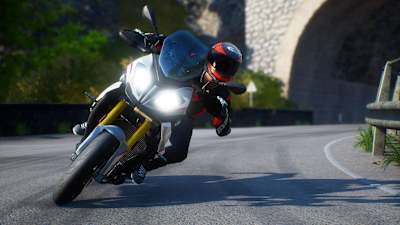
Tailor your Career Mode choices to earn rewards more easily
© Milestone Games
As well as the addition of night tracks, Ride 3 also changes up how the Career Mode works. Players no longer simply pick from a list of random competitions and race. Instead, they can now choose from a number of different volumes, connected by a theme.
“Career Mode is organised into magazines, so all the groups of events are under a particular theme and you enter them by unlocking specific books,” explains Caletti. “When you do find what you like the most, there’s a way to identify it and follow this kind of style of bike and track.”
Before choosing a track, first check out what it entails and make your decisions based on that. If you are better at a particular style of racing then you can tailor your choices to reflect that and earn rewards more easily.
