




Gaming

Games
Hutch returns: The trials and tribulations of a YouTube legend
Shaun 'Hutch' Hutchinson is one of the most enduring figures in the Call of Duty scene. Now, the 36-year old is back on the competitive circuit showing you can have esports success at any age
If you’ve been following Call of Duty over the last 12 years, one way or another you will have come across Hutch. Shaun ‘Hutch’ Hutchinson has been described as one of the "founding fathers" of the Call of Duty scene. As one of the first members of CoD outfit OpTic, and director of the highly successful Machinima Respawn series, Hutch has been at the forefront of online gaming culture for more than a decade.
Now, after a career that's included frag-video fame, community adoration, burnout and losing a vast amount of money playing poker, Hutch has returned to Call of Duty, climbing the Gamebattles ladder with a team of former OpTic members.
Here, Hutch talks about the early days of YouTube and OpTic, and returning to competitive CoD.
YouTube in its infancy
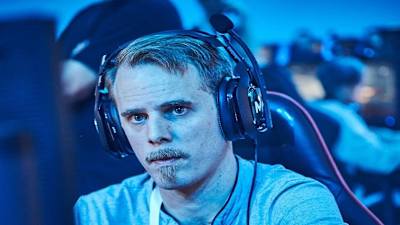
Hutch at Modern Warfare's capture event in August 2019
© Shaun "Hutchinson" Hutch
"If you searched 'Call of Duty sniping video' in 2008, you'd find videos with maybe 1,000, 2,000 views"
It's 2008, gaming on YouTube is in its infancy, and Hutch is about to break it big. "If you searched 'Call of Duty sniping video' in 2008, you'd find videos with maybe 1,000, 2,000 views," he explained. "If it was a really big video, maybe something like 5,000." To put that in context, the same search now reveals videos with upwards of 3 million views.
Hutch had been playing shooters like Doom and Duke Nukem 3D as a teenager, but zoned out of games in his early twenties, losing interest. Then, he fired up Call of Duty 2 on the Xbox 360, which served as his first real introduction to the online FPS. It wasn't long before Hutch found himself drawn in by Modern Warfare and World at War.
Seeing what other creators on YouTube were doing with sniper rifles in the game, Hutch decided he wanted to start making YouTube videos doing the same thing, to try and motivate him to get better.
OpTic Hutch
During his first year of making videos, Hutch reached out to another YouTuber, Hector Rodriguez, or ‘OpTic H3CZ.’ Rodriguez is perhaps best known now as the personality that brought OpTic to fame and worldwide visibility, encouraging hundreds of fans to join the Green Wall.
However, back in 2008, before it became the esports organisation we know today, OpTic was a sniping team, chewing out lesser players as fodder for frag videos and bragging rights.
Hutch expressed interest in joining OpTic and was given the opportunity to try out.
“Back then you had to beat everyone in the team at least once,” Hutch explained, talking through the process for joining “You didn’t have to beat them on the first try but you had to beat them at least once.”
“It just felt so elite," he added. Even though Hutch was already in his 20s, and a little out of place in the seemingly teen-dominated CoD scene, that didn't matter. "It was so much fun, and it felt like it was going somewhere.”
Hutch was right. OpTic and the other sniper clans created not just a trend, but a culture. And that culture is still a key part of Call of Duty today. The 1v1s, the 360 no-scopes, the dubstep-laden frag videos: teams like OpTic were laying the foundations for what was to come, even if they didn't know it.
"If someone called you out there was a lot of pressure for you to beat them in a 1v1."
As well as establishing the style of YouTube videos for years to come, OpTic was also a fiercely competitive clan to be part of. "If someone called you out there was a lot of pressure for you to beat them in a 1v1." Lost matches still niggle even now. "I remember a couple times I lost, and it was crushing," explained Hutch. "But for the most part we won and that felt cool."
Machinima Respawn
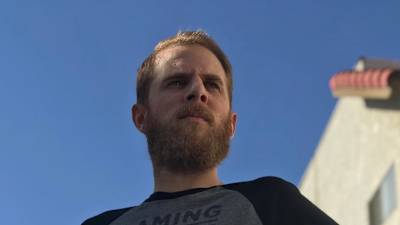
Hutch made a triumphant return to competitive Call of Duty at 36
© Shaun "Hutch" Hutchinson
Hutch left OpTic in early 2009 to join Machinima Respawn. While working as a waiter on the side, he'd built up a solid YouTube audience of around 10,000 subscribers. Teaming up with Machinima was a massive boost. "That 10,000 turned into 100,000," Hutch said. Timing was key as well - the launch of Modern Warfare 2 created an explosion of interest in CoD videos, which in turn led Hutch to Machinima.
Hutch was getting paid an “insanely good rate per 1000 views.” He weighed up the long-term risk of making YouTube his sole income, but he wasn’t sure people would still care about Call of Duty in another year.
“I remember sending [Machinima] a ton of emails and saying, ‘It’d be a lot cheaper for you guys to just hire me.’ I leveraged my popularity and convinced them." In January Machinima top brass set Hutch a goal - two million views that month and they'd hire him. He hit eight million. "They flew me out in February, formally offered me the job and I moved out there shortly after that."
As a director at Machinima Respawn, Hutch was involved with running Machinima’s gameplay-focused channel. Machinima, which produced different gaming shows, was one of the most subscribed channels on YouTube.
“The first year I was there was one of the most incredible years of my life, just life-changing Cinderella story stuff.”
Burnout
But that feeling didn't last, and Hutch experienced the dangers of creator burnout firsthand.
After two years at Machinima, tired of fame and YouTube culture, Hutch left. Explaining that choice, Hutch is startlingly honest: “I was back at Machinima and the company was going in a direction I wasn’t super comfortable with. It had been a slow process, like death by a thousand cuts, and it took me a year to face the reality, because facing it was just too sad.”
When he did finally decide to move on, the reaction to his departure came as a massive shock. On the day he announced his decision, #GoodbyeHutch was trending number one worldwide on Twitter. "I felt a mixture of regret and fear," Hutch explained, "like I'd made the wrong decision and I didn’t know what was going to happen next.”
Five months later, Hutch was back on YouTube, posting Garry's Mod gameplay videos with SeaNanners, a fellow creator he'd met through Machinima. But a change in focus, a bout of overconfidence and an elopement to Las Vegas changed Hutch's life again. "I disappeared into a card room and played poker for five months," he explained.
How did that go? “Not well,” he laughed. “I lost tens of thousands of dollars. That’s why I don’t play poker anymore.”
Stream Dreams
With his life in flux, Hutch returned to what he knew - playing video games. This time, however, streaming was his focus.
"I had really fucked my life up and made some terrible decisions - Twitch was something that I could do, that I enjoyed, that I could make money off of right away."
“In the beginning it was sort of born out of necessity. I had really fucked my life up and made some terrible decisions - Twitch was something that I could do, that I enjoyed, that I could make money off of right away. But then this community and culture started to spring up in the chat. All of a sudden I started waking up and really looking forward to going live.”
Around the same time, Hutch reconnected with his old OpTic teammates, now going by the Old Men of (Redacted), or just OMoO. The core of OMoO is made up of former OpTic members Hecz, Diesel and Hutch.
The Old Men of (Redacted)
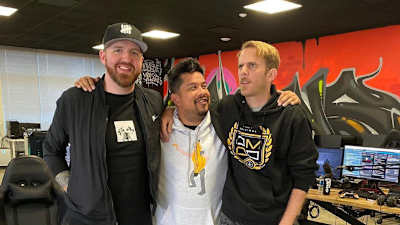
Hutch and OMo(R) at the HECZQUARTERS for Modern Warfare's launch
© Shaun "Hutchinson" Hutch
“I’m someone you could consider old school," says Hutch, now 36. "I'm an old-school OpTic guy so we just get together and play CoD in competitive settings through Gamebattles matches.”
Initially OMoO was little more than a LAN-party in an apartment. "It was Jay, Fwiz and Mike (Diesel) living in an apartment with a four-man LAN set up. On Sundays we’d go over there, drink beers and play games together.”
In the six years since its inception, OMoO has gone from strength to strength. At the launch of Modern Warfare in 2019, Hutch and Diesel flew out to Texas to the HECZQUARTERS – Hecz’s eSports hub - and livestreamed the first Gamebattles that they played in Modern Warfare.
Although OMoO began with core OpTic members, “these days there’s others that hop in like Scumpy and Formal. And Doc (popular streamer DrDisrespect) has jumped in with us a few times,” explained Hutch. “It’s not limited to people that have been in OpTic.”
Hutch has also found himself heading back to his first love. “We got really into Fortnite for a while then went back to CoD for Black Ops 4: Blackout, the Battle Royale. We played a ton of BR, but with Modern Warfare's return, we've gone back to Gamebattles and it’s been pretty great.”
Competitive Modern Warfare
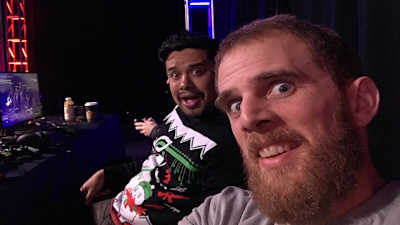
Hutch and OMoO at the OpTic booth at CWLDallas 2017
© Shaun "Hutch" Hutchinson
In December, Hutch was part of a Modern Warfare streamer invitational event with a $250,000 prize pool. Along with his team, which included CoD pro TeePee, Fortnite pro Vivid and streamer AvaGG, Hutch won the tournament.
“It’s a lot easier to do that with someone like TeePee on the team,” he explained. “I felt super comfortable. He’s a freak, he’s really, really good at games.”
While the tournament was nerve-wracking, with the team losing their first match, the experience was a brilliant one. "That gets your heart pumping," Hutch said of the loss. But the team rallied, winning its next two rounds and making it to the last match. "In the finals, after the first map, I thought "we are going to do this" and It ended up working out.”
It's been a rollercoaster ride for Hutch; a decade of ups, downs and personal growth. A career that sprang from a desire to get better at sniping has developed into a journey that didn't just change Hutch, but gave birth to so many tropes and ideas that have woven their way into gaming culture.
Yet he still appears stoic about his success; perhaps as a result of the money he burned on the Vegas tables. According to esportsearning.com, as of January 2020, Hutch was the 13th highest earning Modern Warfare player. How does he feel about that? “Oh, that’s hilarious," he said.
Through it all, there's been one home that Hutch keeps returning to time and time again: a constant answering of the Call of Duty.
“Even though we’re a little bit older, to me, it feels more fun now," he said of his return to the competitive arena. "I feel I’m getting better at the game, and that's really rewarding to me."
In the end, even the best want to improve. Hutch isn't just a legend, a mysterious old-school scrapper, looking back wistfully at the golden days; in spite of all of his trials and tribulations, he remains an integral part of of the story of the biggest gaming franchise the world has ever seen.
