

Red Bull Motorsports
F1
5 F1 drivers who have made interesting career choices
Kimi Raikkonen’s decision to rejoin the Sauber F1 Team for the 2019 Formula One season shocked pretty much everyone. Here are some other drivers who have made similarly jaw-dropping career moves.
Before going on drive for McLaren, Lotus and Ferrari, winning 20 Grands Prix, the 2007 Formula One World Championship and the hearts of every F1 fan with his monosyllabic patter, Kimi Raikkonen started his career with the humble Sauber F1 Team in 2001.
Raikkonen raced for Sauber for just one season and impressed with some strong results before being snapped up by the (then) mighty McLaren F1 Team.
Fast forward to 2018 and many expected the Finn to walk away from F1 following the announcement that the French driver Charles Leclerc would be replacing him in 2019, but Raikkonen surprised everyone and announced that he would return to the team that gave him his big break in F1. Read about his new teammate Antonio Giovinazzi in the link above.
Here are some other F1 legends who have made some rather leftfield career choices.
1. Damon Hill leaves Williams to join Arrows
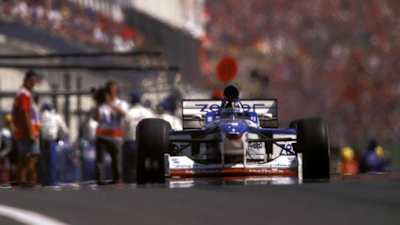
Damon Hill at the 1997 F1 GP in Hungary
© F1Race
On paper the 1996 F1 season was a genuine fairytale. Damon Hill emulated his late father Graham and became F1 World Champion after two tough years of being beaten by Michael Schumacher.
Behind the scenes it was anything but a fairytale…
Hill had already been ditched by the Williams team half way through his championship winning season, so it was no surprise he’d be leaving them for the 1997 season, but it was a surprise when he joined the perennial underdogs Arrows – a team that had failed to win a Grand Prix in over 20 years of trying.
The highlight of an unspectacular season was a second place finish at the Hungarian Grand Prix. In fact, Hill led convincingly in the Yamaha-powered Arrows before mechanical gremlins struck on the final lap, handing the win to Jacques Villeneuve and Williams.
2. Felipe Massa un-retires
It was the F1 equivalent of picking up the flowers, wiping away the tears, waving goodbye to your colleagues and leaving the building for the last time, only to return to the office the next day as if nothing had happened.
Towards the end of the 2016 season Williams driver Felipe Massa announced that he would be retiring at year’s end and what better way to draw the curtain on a 15 year, 11 win career by saying goodbye at the season’s penultimate race, Massa’s home Grand Prix in Brazil?
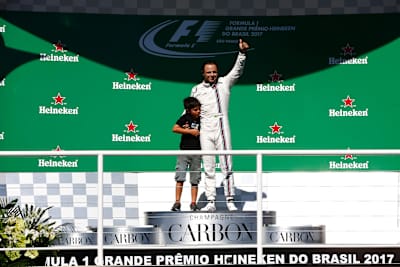
Massa had a second retirement celebration at Brazil 2017
© Williams/LAT Photographic
Massa retired on lap 47 and, in tearful scenes at the Interlagos Circuit, was given a guard of honour by all the teams and drivers who waved goodbye to a great driver.
Then, barely had the tears dried when two months later, in January 2017, as Valtteri Bottas moved from Williams to Mercedes, Massa was back in F1 and back with Williams for the rest of the season, proving that in the crazy world of F1 nothing is quite what it seems.
3. Mansell returns to Williams and literally struggles to fit in at McLaren
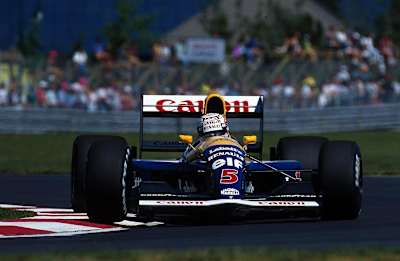
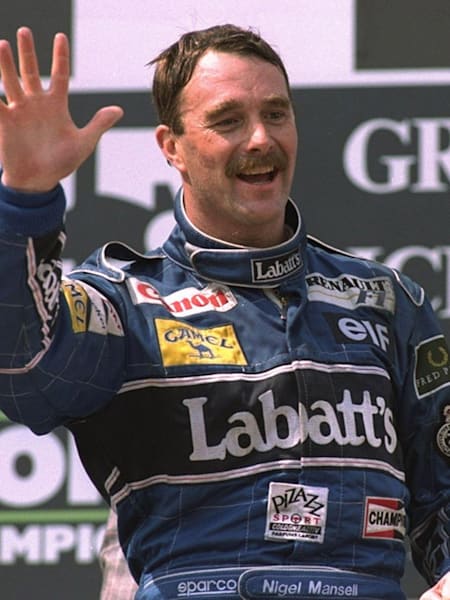
Nigel Mansell, 1992
© [unknown]
For a man often and unfairly lamented as being a bit dull, 1992 F1 World Champion Nigel Mansell has proved to be a bit of a dark horse when it comes to creating headline worthy drama.
Back in 1990, following inter-team squabbles at Ferrari, Mansell announced that he was retiring from F1 halfway through the season, but a multi-million dollar offer from Frank Williams swayed Mansell back to Williams.
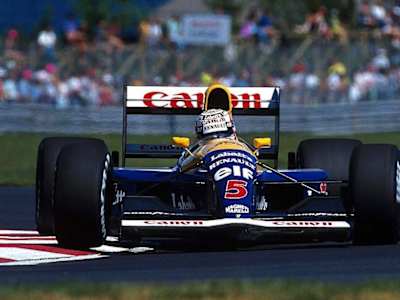
Mansell was unlucky at the 1991 Canada GP
© Salracing
In his second spell at Williams Mansell achieved his destiny, won the 1992 F1 title and shocked everyone by emigrating to IndyCar for 1993, sensationally winning the title in his first attempt with the Newman/Haas team.
There was more Mansell drama to follow...
In 1994, as he bowed out of IndyCar, Mansell cameoed AGAIN at Williams following the death of Ayrton Senna and memorably won the final race of the season in Adelaide, not long after that announced he would be joining McLaren full-time for 1995.
The 1995 McLaren was, at best, a bit of a nightmare. Mansell unintentionally added comedy to this nightmare when during pre-season it was revealed that ‘our Nige’ was a little bit too tubby to fit into the MP4/10’s cockpit and he had to miss the first two races while a new, wider car was built.
4. Emerson Fittipaldi’s patriotic mistake
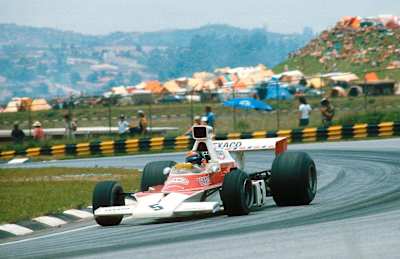
Emerson Fittipaldi driving for Mclaren in 1974
© McLaren
Emerson Fittipaldi is one of those names synonymous with F1 in the 1970s, the decade in which he won two F1 titles, one at the wheel of the iconic wedge-shaped black and gold Lotus, and another title with McLaren.
In 1975, after narrowly missing out on a third title, and at the height of his powers, Fittipaldi decided to leave McLaren and join his brother Wilson’s team, Fittipaldi Automotive, an outfit heavily backed by the huge Brazilian corporation Copersucar.
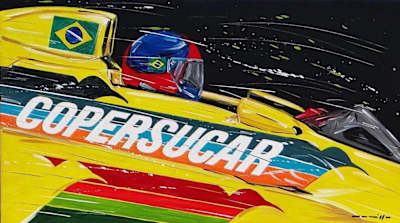
Emerson Fittipaldi in the Copersucar
© Muccillo
The alluring combination of family and love for one’s country did not reap rewards for Fittipaldi who who spent five years slogging it out in a largely uncompetitive car, scoring no more victories and eventually retiring from F1 at the tender age of 33.
5. Villeneuve’s descent into F1 mediocrity
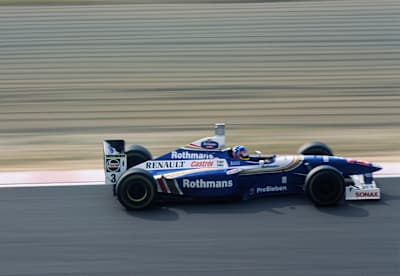
Jacques Villeneuve, vencedor en Barcelona en 1997
© LAT Photografic / Williams F1
When Jacques Villeneuve, son of the late and legendary Gilles Villeneuve, exploded onto the F1 scene in 1996 with his bleached blonde hair and natural speed it wasn’t long before he became a world champion with Williams.
But after his 1997 title triumph, a couple of dismal seasons with an underpowered Williams car soon led the anti-establishment Canadian into the arms of the new multi-million dollar British American Racing, a team run by Villeneuve’s personal manager Craig Pollock in 1999.
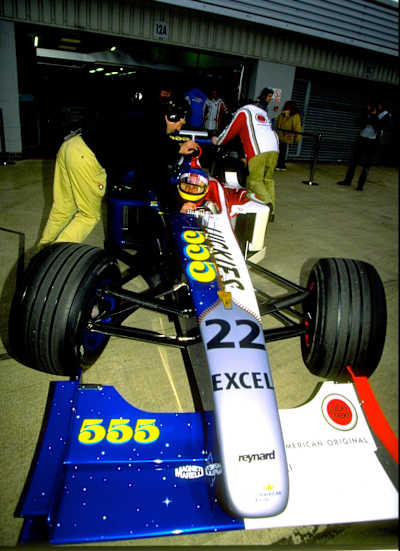
BAR 01
© Getty Images
Despite the fanfare that this new team created, dismal results over the next five years took the shine off Villeneuve’s early career and in his first season he retired from the first 11 races. The best result of his half a decade at BAR included a brace of third places in 2001.
The less said about his F1 swansong with the Sauber F1 Team in 2006 the better....


