
MTB
10 years of the Turbo Levo
How a Specialized side project became the most innovative range in e-mountain biking
Mountain bike riding without a motor is a brutal, hard sport. You kind of have to be physically fit to enjoy it.
Specialized’s director of Turbo product experience Marco Sonderegger is highlighting how, a little over a decade ago, there was no alternative to this reality. Pedal assist mountain bikes were still in their infancy and fitted motor systems designed for city bikes in a hybrid mishmash where the battery was mounted to the downtube and one crash could spell the end of a ride (and leave you with expensive repair bills).
That was until Specialized unveiled its Turbo Levo. Unlike anything on the market up to that point, it was designed and manufactured in-house, including a proprietary motor and battery set-up that hid the latter in the downtube for the first time, and rode and looked like a non-electric mountain bike.
A decade on, the range still leads the industry in its innovative and rider-focused approach to design. Here, Sonderegger shares how one of mountain bike’s most established manufacturers has taken the Turbo Levo from niche side project to a key pillar of its line-up that makes off-road riding fun again for all.
Early development

Early development, e-bikes as a development piece
© Specialized x The Red Bulletin
“Initially, Specialized started e-bikes in 2009 as a development piece,” says Sonderegger. The research project would go on to become the Turbo S. Launched in 2012, it focused on an urban environment. But it got the cogs whirring inside Specialized about what it would take to build an electric mountain bike – a niche that had been growing since the start of the decade.
“It wasn't straightforward because the city bike technology didn't work in mountain bikes,” he explains. “We saw what the competitors were doing, and it wasn't satisfying to the true rider needs. If Specialized built a mountain bike, it needed to feel, act, and look like a proper mountain bike – it shouldn’t be a hybrid.”
After securing internal backing despite a lot of opposition from mountain biking purists, Sonderegger and his team moved from the company’s California HQ to the burgeoning E-MTB heartlands in Switzerland and set about creating a product brief. “It was pretty simple. It needed to have room for a water bottle and dropper post clearance, and good shock clearance so that you can use reservoir shocks.”
The snag was that, at the time, there weren’t any third-party motor manufacturers that would allow Specialized to have a battery hidden in the downtube. Rather than compromise, it decided to produce its own system in-house.
The result was 2016’s first generation Turbo Levo. While it wasn’t the first in the market, Sonderegger says Specialized was the first to create a bike that riders would love – and importantly, the only e-mountain bike that had an integrated battery.
Although initial sales expectations were low, he knew they had hit upon something big when it attracted a cult following amongst a particular demographic of riders.
“It was all these guys and girls in their mid-40s who used to ride bikes in the 90s when bikes were the thing. They’d had 20 years of career and business and no bike riding, and we delivered them a tool that meant they could go back to a sport they once liked in the 90s. We made an old hobby new again, and that thing took off like crazy.”
Pioneering milestones
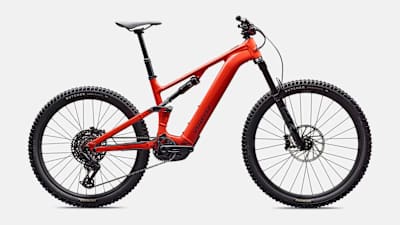
The evolution of the Specialized Turbo Levo
© Specialized x The Red Bulletin
Specialized didn’t rest on its laurels after the launch of the Turbo Levo, and its early success sparked a whole new family for the American manufacturer.
A more gravity-focused Turbo Kenevo arrived the following year, and when the second generation switched an aluminium frame for carbon fibre, the category “exploded”.
There were more avenues it wanted to explore though. The SL (super lightweight) category became another industry first on its launch in 2019 and sacrificed the top-end pedal assistance of Turbo mode for a smaller motor, smaller battery and ultimately less weight. “Seeing how almost the entire industry went on to copy the Specialized approach was a big moment internally,” says Sonderegger.
It has even led to changes in non-electric mountain bikes, with the Specialized Stumpjumper’s ride quality influenced by the Turbo Levo’s. “At one point, the Stumpy team started investigating why the Levo, in some ways, rides faster than a Stumpy on the downhill. They realised some added weight actually helps.”
DIY ethos
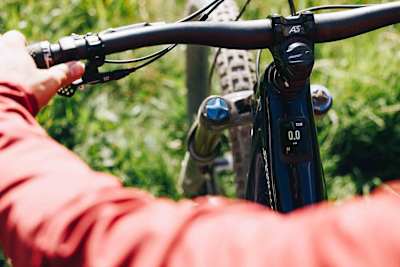
DIY drive throughout the Turbo Levo story
© Specialized x The Red Bulletin
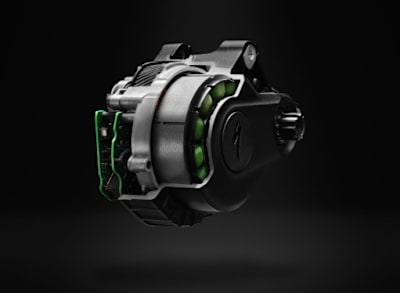
This DIY drive to its motor and battery system has been a constant throughout the Turbo Levo story. Although borne out of a necessity to do things differently, it has led to a wide range of tangible benefits beyond the Turbo Levo’s industry firsts.
“Whenever we do a new system, we always do the system and the bike together,” he says. “We do it as integrated as we can, and that always helps us; we can tailor make better batteries, better motors. Third-party manufacturers’ products need to suit different customers’ needs, so they will have to make compromises.
“We do the rider research and go ‘what do we really need?’. It’s not complicated systems – it’s simple, intuitive, and you can crash all day long on these things, and they don't break; you will never see a Specialized bike where you have a bolted-on handlebar display with a cable, and when the cable fails, you are stranded.”
Industry leader
Specialized Turbo Levo, Modular Battery Options
© Specialized x The Red Bulletin
Now on its fourth generation, the Turbo Levo continues to lead in the e-mountain bike space, which has been aided by its in-house approach.
“We have really strong modular battery options – you can plug in 600 or 900 watt hours, or even ride the bikes with a small battery that we call range extender, and depending on your battery choice, your total bike weight drops significantly.”
He adds that the bike’s natural ride feel is a unique proposition that has come from more than a decade of engineering. “It feels really connected to your body because the main goal is you shouldn’t feel like you have an added motor; you should just feel like you have Superman legs.” This is enhanced by Specialized’s 50 years of experience of making non-electric mountain bikes. “We have Genie [suspension] technology – a shock that has a double air chamber where you have different air volumes depending on your stroke; it feels amazing.”
Finally, the Turbo Levo leads in the noise stakes, and has the quietest motor around. “The motor noise seems to be a really important factor to the purchase decision, which I understand because on a Sunday morning, when it's quiet in the forest, you don’t want to have this whiny mosquito noise with you.”
Continuous progression
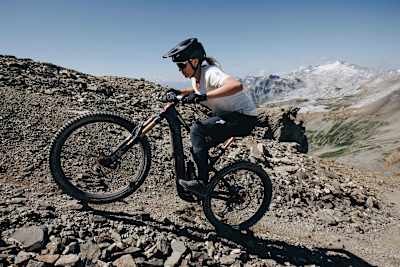
The benefits of a lightweight e-mountain bike
© Specialized x The Red Bulletin
After a decade of progression that resulted in the fourth generation’s release in 2025, Sonderegger says that the team is already looking to the Turbo Levo’s future iterations.
“The goal for us is still building a bike for riders – when you ride it, it immediately clicks.”
He believes that the current trend for ever increasing power is a small blip, and in time, the benefits of a lightweight e-mountain bike will start to shine through.
“The future of Turbo is the super light category. Despite being amongst the best handling bikes, the product was too early. It might come back when people realise they don't need all that raw power; they just want to have exercise amplified.”