Twins Hugo and Ross Turner are adventurers with everyman appeal and a can-do attitude over land, sea and in the air. There’s only one rule for their many and varied expeditions: they do them together
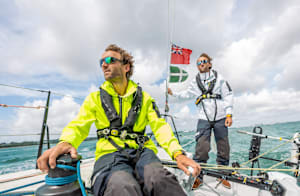
Darkness has fallen over the Bay of Biscay in the northeast Atlantic. Hugo and Ross Turner – identical twins, best mates and adventurers – are nervously scanning the eerie black water, their anxious expressions illuminated by the red glow of their boat’s night light. The brothers are on the lookout for vast shipping vessels that could collide with their vulnerable 12m hydrogen-powered yacht. Suddenly a blip on their CPA (Closest Point of Approach) system alerts them to a ship heading their way. It’s a beast: 48m wide, 330m long, 218,000 tonnes and travelling at 18 knots (33kph). It’s like having Chicago’s 108-storey Willis Tower – just a bit lighter at almost 202,000 tonnes – hurtling towards you. Without enough wind power or time to tack away or steer around it, the only option is to ask the other ship to alter its course. Ross makes the call, requesting that the vast vessel steers five degrees to its port. There’s an anxious wait to see if it can manoeuvre off-course in time. It works. Catastrophe is averted. But it’s going to be a long night.
This is exactly the kind of tense scenario the 33-year-old ‘adventure twins’ from Devon have become accustomed to. Hugo and Ross have been exploring poles, mountains and oceans together for years. They’re now in the Atlantic for the 2022 stage of their global, multi-year hunt for the mysterious Poles of Inaccessibility (POIs). Part Indiana Jones adventure, part GPS-driven Pokémon GO quest, their mission is to reach nine POIs – the remote, often hazardous, points on landmasses, icecaps or oceans that are furthest in all directions from surrounding coastlines. Between 2016 and 2019, the twins bagged the Australian, South American, North American and Iberian POIs using paramotors, bikes and electric motorbikes. Now, they’re on their Quintet Earth powers Blue Pole Project, hunting the mid-Atlantic POI, which lurks 2,033km from any continental coastline.
The twins pair each POI adventure with a unique scientific or environmental goal. So, after securing a secondhand boat from a sailing charity, they swapped the diesel engine for an electric motor and added a sustainable hydrogen fuel-cell generator. This means they can test the real-world potential of a 100-per-cent emission-free yacht (even standard yachts have diesel engines, to get out of port or to escape low wind). But it also means they’re reliant on wind power and don’t have a diesel engine to power them away from danger – such as giant ships heading straight for them.
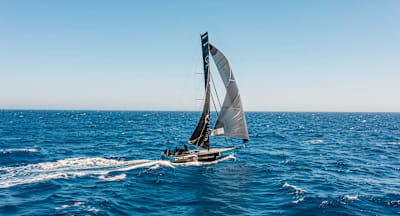
Twin sails: the brothers hunt for the mid-Atlantic POI, or ‘Blue Pole’
The lethal shipping channels of the Atlantic are a distant worry when The Red Bulletin first meets the Turners on a June afternoon at Southampton’s Saxon Wharf marina, just days before they set off. Surrounded by workshops, sparkling yachts and screeching seagulls, and dressed similarly in denim shorts and scruffy T-shirts, they look more like backpackers than grizzled mariners. But the Turners are not like other adventurers. For a start, there are two of them.
“We’re a two-pronged package,” says Hugo. “If you fall down a crevasse, the other one will save you. We have fun together. And we never argue, because it’s like arguing with yourself. We’re genetically identical. We even have the same crazy blonde-grey hairs above our ears, and the same weird things on our body.” That slip into the singular – “our body” – says much about the twins’ unique bond. ‘Hugs’ and ‘Rossy’, as they call each other, are so similar their parents sewed ‘H’ and ‘R’ onto their school jumpers to help other kids identify them. Inseparable to this day, the 6ft 2in-tall (1.88m) brothers both live in southwest London, in different flats but still close by. “We enjoy similar films – anything real life or with people doing amazing things,” says Ross. “But I’m more competitive [he slyly nudges his skis ahead of Hugo’s on polar journeys]. And Hugs has a beer or two more than me.”
We went on Google and typed ‘extreme points in the world’. All these POIs came up... Then we thought, ‘What about doing them all?
The siblings’ similarities give them powerful camaraderie, and their differences equip them with double the strengths and ideas. “Ross is bad at high altitude, whereas I am bad in extreme heat, but if you work together your chances increase,” says Hugo. “The big difference is, Ross loves making stuff out of crap. He gets creative with problems, whereas my approach is more... thought-out.”
Adventurers can be po-faced and flinty. But the twins are playful. By way of a greeting, they share a video of last night’s “amazing, incredible” thunderstorm and are soon debating where best to place the bucket when nature calls at sea. On this trip, they’ll be joined by sailor Lisa Kingston and content creator Patrick Condy (plus, briefly, the ocean photographer George Karbus), so privacy will be non-existent. “We’re always messing around, because we have literally no idea what we’re doing,” says Hugo. “But we learn it all. There’s a theme to our trips: we get an idea that sounds fun, get the funding, and then work out how to do it. We really break the mould. But with adventure there’s no rulebook.”
The twins are experienced sailors and respected fellows of the Royal Geographical Society. They attract major sponsors such as Breitling and Land Rover. And they both have degrees in industrial design and technology, having graduated from Loughborough together in 2011. They just like to have fun, too. “There’s a fine line between badass and dumbass,” says Ross. “We want to be on the right side of that.” The twins certainly have serious goals: as well as promoting sustainable hydrogen power, this Atlantic mission – sponsored by Quintet Earth, an investment fund specialising in sustainable projects – aims to log plastic pollution for Plymouth University’s International Marine Litter Research Unit. “The Poles of Inaccessibility have a unique allure,” says Ross. “But our expeditions have discovery at their heart. We want to learn about science, the environment, technology and the human body.”
Scanning for looming ships that could pose a threat to their 12m yacht
While most adventurers specialise in one field, such as mountaineering, the twins boldly hop from bikes to boats, or from poles to oceans. And this willingness to feel slightly out of their depth is what makes them so refreshing. “We’re not offshore sailors or mountaineers, we’re a bit of everything,” admits Hugo. “And that makes it amazing fun. It allows us to go into any environment with a new narrative. It’s about questioning life, being curious and discovering something new.”
With the planned six-week expedition only days away, the twins are getting nervous. But they have never lost the ability to laugh at themselves, and this may be the secret to their mental resilience. Research by Andy Lane, a professor of sports psychology at the University of Wolverhampton, suggests that humour can be a potent tool in hard times, diverting attention away from stress and sparking positive and creative thoughts.
“We do get upset, but sometimes when we’ve been up shit creek without a paddle we’ve just laughed at ourselves,” says Hugo. “Experience and knowledge tell us what to do. But if it’s not life-threatening, we can giggle. This is our job, so you do need balance. If you have a massive jolly and mess up, you look silly, but if you’re not enjoying it, what’s the point?”
The Turners’ genre-busting style of adventure comes from a blend of childhood dreams, teenage tragedy and adult ambition. Born in Exeter on October 22, 1988, the twins were encouraged by their parents – Nick, who worked in the paint industry, and Jo, a wedding planner – to enjoy outdoor fun in Devon and Dartmoor National Park. As kids, they built rafts, climbed trees and made sledges. Now, they sail 12m boats, climb snow-clad mountains, and drag sledges across polar ice caps. “All those experiences we had as kids now shape our adult lives as adventurers,” says Hugo. “We’re so proud of that. We can handle the hard times because we’re doing what we love.”
They think about this a lot. “I saw a video on YouTube about the regrets of people who’ve lived to 100,” reflects Ross, “and most of them say, ‘Do what you want to do!’ Nobody is going to give it to you, because nobody knows what you want.”
The Turners’ resilience also stems from a near-tragic experience. At the age of 17, Hugo dived into the sea, hit a sandbank and broke his neck. Doctors said he was millimetres away from becoming a tetraplegic. He endured six months of surgery and 18 months of rehab. But he recovered his mobility. “We do this adventure stuff because it was so nearly taken away,” says Hugo. It’s also why they support spinal injury research charities such as Wings for Life.
54 min
The Turner Twins – double or nothing
The Turner Twins are two professional adventurers on a mission to reach the world's poles of inaccessibility.
English +6
Determined to live their lives to the max, the twins completed the Talisker Whiskey Atlantic Rowing Challenge – with their friends Adam Wolley and Greg Symondson – four years later, after leaving university. The 4,300km row was a mind-shredding ordeal: a solitary inch on their map of the Atlantic represented 560km and took a week to row. But Hugo’s accident had given them unshakeable resolve. After 42 days, they secured two world records as the youngest four-man crew to row the Atlantic and the first twins to row an ocean.
However, the brothers learned far more from their first failure, which came on a 555km trek across the polar ice cap of Greenland in 2014. Dragging 100kg sledges, they skirted crevasses and dashed past teetering 6m ice structures. But when Hugo injured his knee, they required a helicopter evacuation. “It was so depressing,” says Hugo. “But a year later we succeeded in climbing Mount Elbrus [at 5,642m, the highest peak in Europe] precisely because of that failure. We learned to use fear – of failure and danger – as fuel. Failure gives you the drive to succeed.”
Greenland also taught the twins that if they wanted to do hazardous missions, they needed to have some worthy goals. “Until then, our trips were personal macho things,” admits Ross. “We wanted to go back to exploration, and explorers of the past pursued knowledge.”
This was the trigger for the huge POI project, which could take 10 years to complete. “We went on Google and typed ‘extreme points in the world’ and all these POIs came up,” says Hugo. “We read about how hard it was to get there. And then we thought, ‘What about doing them all? Let’s document these POIs while discovering new things.’”
At the marina in Southampton, the brothers are still discovering new things, Googling information and thumbing through engine manuals. They’re busy scraping off the boat’s standard antifouling paint, which is toxic, so it can be replaced with Finsulate eco-friendly fibres to keep corrosive algae and barnacles at bay. The pair are tired, dirty and a little apprehensive. “I get worried and frightened quite easily,” admits Hugo. “In tough times, we think, ‘Why do we do this?’”
But they’ve had plenty of practice pushing past that. On their 4,300km row across the Atlantic, the Turners were battered by 12m rogue waves at night. “You’d hear this roar, then it would crash over us in the dark,” recalls Hugo. “It was the most scared we’ve ever been.” When the twins flew paramotors – which Ross dubs “giant fans with parachutes” – to the mid-Outback Australian POI in 2016, 40kph thermal gusts threatened to slam them to earth. “We normalise the uncomfortable,” explains Ross. “The world outside this bad moment is still there. So plan, think, and stay in control.”
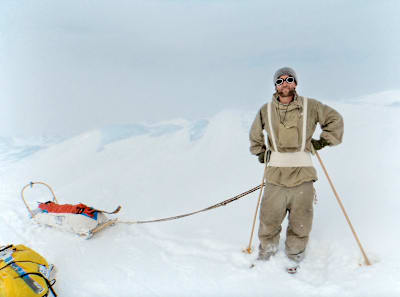
Wearing the type of clothing used by Sir Ernest Shackleton
Such incidents are a world away from their usual routine of pub visits, gym workouts and bike rides. But they’re always plotting new adventures. Ross’s girlfriend Rosie Tapner, a TV presenter for equestrian events, and Hugo’s girlfriend Amy Poë, a teacher, both support their madcap ambitions.
But the brothers do sometimes crave a more normal life. Their older sister, Toddy, an interior designer, and older brother Crispin, a marketing expert, are reminders that not everyone wants to kite-ski across polar terrain. “He [Crispin] is by the book, whereas we do random stuff,” laughs Ross. “But after an 18-hour day ripping the boat apart, we do think, ‘Shouldn’t we just get a semi-enjoyable nine-to-five?’”
That was the question gnawing at the twins’ minds when they found that 218,000-tonne shipping vessel careering towards them in the Atlantic. “It was terrifying,” admits Ross, back on dry land again seven weeks later, looking as bearded and sun-scorched as a castaway. It’s mid-August and the pair are home in London, reflecting on an eventful expedition. “When you get [these vessels] closing in on you, you have to make quick decisions. And these boats don’t turn quickly. It beggars belief how big the propellers must have been.” But the twins have learned how to master their fear. “The secret is to panic slowly,” says Hugo. “Once you’re panicking, you’re not in control. So we plan, think things through, and adapt. The strongest tree is the most flexible.”
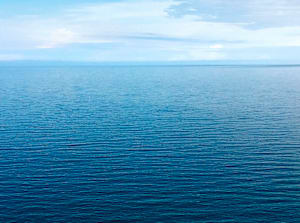
The pair share some of the trip’s epic highs: the dazzling vault of stars at night; the dolphins leaping around the boat; and the magical moment in the Bay of Biscay when they slid from green coastal waters into the vivid tropical blue of the ocean. They also reveal the quirky reality of life at sea, including eating out of dog bowls. “They’re really practical and you can put loads of food in there,” laughs Hugo. The toilet bucket kept them entertained, too. “We were all still getting to know each other, so imagine speed dating and then somebody just goes for a crap in front of you,” laughs Ross. “It’s a bit odd.”
But there were also darker moments: the 30-knot winds that smashed their sail; the broken ballast that destabilised their boat; and the day a low wind combined with a thick fog off the coast of Spain to leave them marooned. “We couldn’t see more than 50 metres,” explains Hugo. “And the boat was dangerously adrift.” Eventually a French boat towed them into port. “When the boat came close, we yelled and managed to literally bump into them.”
Adventure Guinea Pigs
As identical twins (created when a single fertilised egg splits in two), Hugo and Ross Turner have matching DNA but different attributes – like glucose levels and gut microbiomes – due to nature, nurture, diet and exercise. Experts at King’s College London’s Department of Twin Research conduct experiments to see how their identical bodies react to different stimuli
Bodyweight vs resistance training
In a 10-week experiment in 2021, Hugo performed weight training, such as bench presses, while Ross did bodyweight drills, such as press-ups. Hugo packed on six-per-cent more muscle, compared with Ross’s two- per-cent gain, but the latter still enjoyed major strength improvements. “My deadlift went from 90 to 120kg without lifting a single weight,” says Ross. His VO2 max (a measure of cardio fitness) also improved by eight per cent compared with Hugo’s two-per-cent growth, possibly because bodyweight workouts can be knocked out at a higher, lung-boosting tempo.
Old kit vs modern kit
On a 2014 expedition to Greenland’s polar ice cap, Ross wore the type of clothing used by Sir Ernest Shackleton on his 1914-17 Trans-Antarctic expedition, such as wool jumpers, a gabardine (woven cotton) jacket, tweed trousers and leather boots, while Hugo was in synthetic modern fabrics. “The modern kit was lighter and had a wider temperature range, but the natural materials offered warmth, mobility and breathability, which proves manufacturers should still be using them,” says Hugo.
Vegan diet vs meat diet
In a 12-week experiment in 2020, Ross gained 4.5kg of muscle and 2.8kg of fat on a meat-eating diet, while Hugo went vegan and gained 1.2kg of muscle but lost 1.8kg of fat. Hugo had more energy and lower cholesterol, but his libido and gut microbiome – the beneficial bacteria in the stomach – dipped. “A higher number of microbiomes makes you less susceptible to disease, so vegan isn’t necessarily better,” says Ross. “Eat the rainbow and aim for a healthy balance.”
However, as the weeks went by, this lack of wind proved fatal for the expedition. After sailing 1,200km, they were forced to sail 1,200km home. “We didn’t get to the Blue Pole,” says Ross, “but we did the plastic survey – depressingly, we saw lots of fishing debris – we dropped a drifter buoy [to monitor water temperature, salinity and biogeochemical changes] and we sailed 1,500 miles [2,400km] 100-per-cent emission-free. By travelling so far without fossil fuels, we’ve pushed the boundaries of sustainable travel. And this project was always bigger than the POI.”
Hugo is equally proud of this ground-breaking achievement. “People don’t realise that all boats use an engine to get out of port or escape low winds. With a diesel engine, you get 200-300 miles [320-480km]. But our engine had a 10-15-mile [16-24km] range. We didn’t go to prove sailing works – we’ve been sailing for thousands of years – but rather to show what tomorrow’s technology will be. With green travel, we’re in the ‘MiniDisc moment’. When we went from CDs to MiniDisc, they were expensive and not great. Then MP3 and MP4 changed everything. I think hydrogen power will come extremely quickly.”
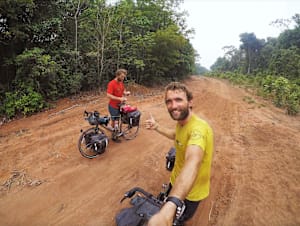
The Turners hope to try again in years to come. But next they’re plotting a 600km hike-and-bike to the Madagascan POI in 2023, which will monitor deforestation and habitat destruction. Their focus on environmental issues helps them to endure all the stress and setbacks. On the brothers’ 2017 ride through jungles and mountains to the South American POI, they monitored deforestation and pollution. And their 2019 Iberian POI mission, which saw them ride electric motorbikes across Europe, revealed the long- distance potential for eco-friendly transport.
“We’ve now seen environmental problems first-hand and it’s terrifying,” says Hugo. “At the South American POI, we expected scenes from The Jungle Book, but it was just field after field without a single tree. And there were plastic bags, bottles and nappies everywhere, even in the Atacama Desert. This environmental research gives us extra motivation.”
The brothers have always combined their adventures with scientific discovery; as “guinea pigs” for King’s College London’s Department of Twin Research (see opposite), the genetically identical pair have their responses to different stimuli – clothing, exercise, diets – tested by scientists. But they were keen to expand their focus to the wider world. “We wanted expeditions with longevity and purpose,” says Hugo. The duo hope their POI adventures will inspire others to think differently. “We’re saying, ‘Let’s discover something new, make a change, or explore how to fit green tech into our lives,’” says Ross. “Someone might just think, ‘If the boys can ride electric motorbikes across Europe, I can take my city bike into the country this weekend.’”
But despite their noble goals, the Turners remain wide-eyed tourists at heart. “On all our POIs, we’ve taken soil or water from the coast and the centre point in 50ml jars,” says Ross. They have wonderful memories, from freewheeling down the mountains of South America to rowing through the ethereal, phosphorescent-tinged waves of the Atlantic. “There’s always one moment when we think, ‘After all the crap, this made the trip worthwhile,’” reflects Hugo. “I remember flying near Ayers Rock in Australia with the sun setting, and I was crying in mid-air, thinking, ‘This is that moment.’”
These are memories the twins wouldn’t possess if they weren’t prepared to break the explorer mould and pursue their dreams. “Our lives can be stressful,” says Ross. “But we’re steering our own ship, and there’s something really rewarding about that.”
Mission Possible
Hazardous and hard to reach, the Poles of Inaccessibility (POIs) are located at the most distant point from any surrounding coastlines. The Turner Twins are hunting at least nine of these remote POIs in the pursuit of scientific discovery and life-changing adventures.
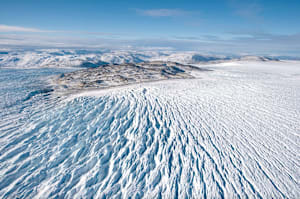
Ice Pole (TBC) - Hugo and Ross are planning a 2,500km kiteskiing expedition to the centre of the perilous Greenland ice cap to monitor ice melt for the European Space Agency
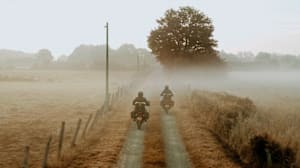
Iberian Pole (2019) - The twins drove Zero electric motorbikes 2,534km from the London Transport Museum to the Iberian POI in Toledo, Spain. The trip took seven days and required 59 hours of charging.
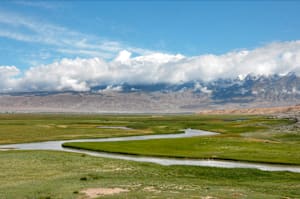
True Pole (TBC) - The twins hope to utilise hydrogen fuel to travel the 3,500km across China to the Eurasian POI in Xinjiang. But given the region’s human rights abuses, it’s proving a difficult project to navigate.
Island Pole (TBC) - Next, Hugo and Ross aim to hike and bike 600km into central Madagascar and back, to study the effects of deforestation and habitat destruction.
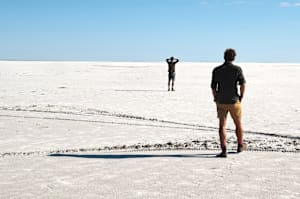
Red Pole (2016) - Armed with Parajet paramotors, and after 60 hours of training, the twins completed a daunting 18-day, 1,600km journey from Adelaide to the Australian POI in the sunbaked Outback.
Turner Twins attempt to sail to the Atlantic point of inaccessibility
Blue Pole (2022) - The twins aimed to sail to the mid- Atlantic POI on an eco-friendly yacht. They travelled more than 2,600km emission-free, but due to low winds they had to sail back early. They hope to try again.
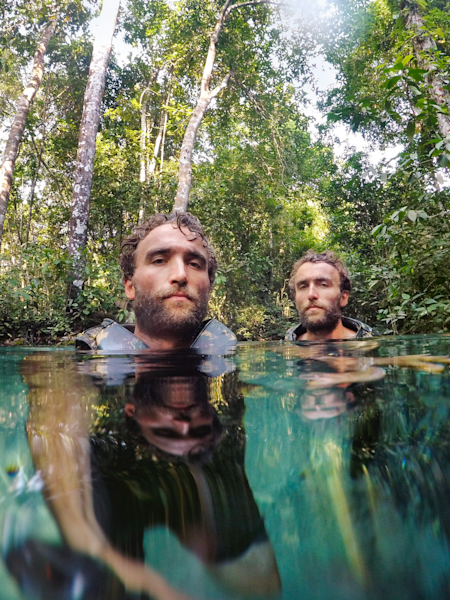
South American point of inaccessibility, near Cuiabá, Brazil
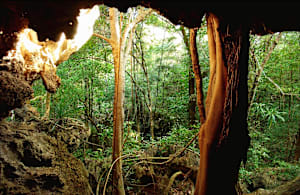
Green Pole (2017) - Hugo and Ross cycled 2,500km through jungles, salt flats and the Andes mountains from Arica, Chile, to the South American POI near Cuiabá, Brazil. They each shed 18kg in 34 days.
Blue Pole (2022) - The twins aimed to sail to the mid-Atlantic POI on an eco-friendly yacht. They travelled more than 2,600km emission-free, but due to low winds they had to sail back early. They hope to try again.
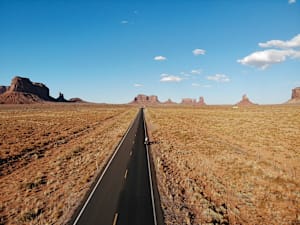
Bad Pole (2018) - The twins cycled 2,500km in four weeks from Santa Monica, through the 51°C heat of the Mojave desert and the Rockies, to the North American POI in Badlands National Park, South Dakota.