



Gaming
Games
WRC 8 developers on building the series’ greatest career mode
We speak with the developers behind WRC 8 about the game’s incredible revamped career mode and how players can rally to victory.
What is it that makes a successful rally driver? Nerves of steel, the sharpest of reflexes, determination, organisation, teamwork and an abundance of grit (pun intended) – all of these and more are required to make it in this most intense, challenging and competitive field.
Kylotonn Games, developers of the upcoming WRC 8, the latest instalment in the rally series, have grasped this fact with two hands, building a completely revamped career mode that’ll do more than test a player’s wits – it’ll give you the tools to build a rally career from the ground up.
We spoke with Alain Jarniou, game director, and Benoit Gomez, lead game designer at Kylotonn Games, to find out more about the new career mode, what players can expect, and just how you can get an edge on your opponents.
First, why the decision to revamp the career mode? According to Jarniou, it was down to a variety of factors: “The idea of a completely renewed career mode came from the feedback we received from the community of players of the previous WRC games, the talks we had with rally drivers and engineers, and our observations of the WRC world over the past few years we’ve been working on rally games.”
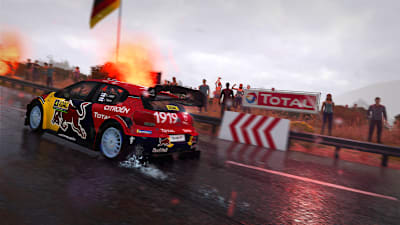
Hit the track in WRC 8
© Kylotonn Games
The findings were simple: there’s more to reaching the top than smashing it on the track. Jarniou explains: “Becoming a champion isn't only a matter of driving skills, it’s also the way a driver works with their team and we wanted to reproduce this unique experience in the game. We want to provide a really immersive rally experience, to give every player the chance to make their own choices and build their own history to become the world champion, in a very authentic and challenging WRC universe.”
Fail to prepare, prepare to fail
With an eye on replicating the minutiae of developing a successful rally career, Kylotonn have included a glut of new features in WRC 8’s career mode, many of which actually come off the track. You’ll not only need to manage a race, but your itinerary, too.
“We emulated what real drivers and their teams experience during a year: namely, managing a race calendar where you can’t participate in every activity,” Gomez says. “For example, training will allow you to develop the car, historical events will bring more money than any other event, manufacturer tryouts will show off your potential to raise your reputation.
“This race calendar is constantly asking one question: What does your team need? Is it money, morale, rest, reputation, car maintenance, or all of the above?”
According to Gomez, the way players can ensure the long term evolution of their rally careers is with the Research and Development department, where you not only influence the performance and reliability of the car, but also your crew members. He says, “There's no perfect choice in there; there's the strategy you choose and it has to be competitive against the opponents’ choices, because they also have a long-term strategy and an R&D department.”
Outside of R&D, players are also expected to manage their crew, consisting of six different types of team members – mechanic, engineer, meteorologist, financial director, agent and physical therapist – who they’ll need to use smartly if they’re to scale the highest heights.
Of these crew members, Gomez says: “They each have their own statistics: they can be more or less skillful, they can get tired if you’re not rotating several of them during the season and they’ve got morale, too. Depending on your results their skills will be improved or will depreciate. You really have to manage them as human beings to get the best out of them: a mechanic will repair the car faster; a weatherman can be more or less accurate. And ultimately, they can quit, so you have to be a good driver, but also a good manager.”
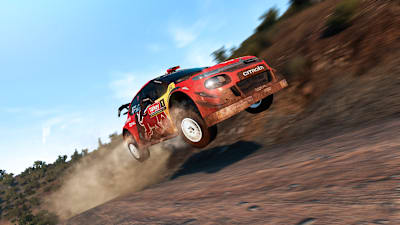
It may be safer with four wheels on the ground
© Kylotonn Games
While this holistic approach will pay dividends for players hoping for a more immersive experience, Gomez admitted that it did pose some challenges: “One of the more complicated aspects of the player’s journey is the balancing around him: being sure that everything is fair and challenging. We're talking about 19 drivable surfaces, seven types of tyres, 14 different countries and 71 unlockable R&D skills. There are so many combinations to take into account and different possible ways to win and lose, it was a significant challenge for the design team.”
Jarniou is also keen to stress that WRC 8 is still a racing game first and foremost: “The new career is deep and rich, it allows the player to adapt the experience to their way of playing, but once you’ve tamed it, it will take only a small amount of time management between two rallies. It’s about 5 percent of the playing time that affects 100 percent of the racing experience.”
And for those eager to forego the management and simply hit the track, Season mode lets the player compete in the WRC without any crew or resource management.
Learn from the best
Realism isn’t achieved only through making the player manage the nitty gritty of rally life. Kylotonn have been sure to ensure every aspect of the career mode is as close to reality as possible. How did they do this? They talked to the experts, of course.
“In the WRC games we have always been in contact with the official teams like Citroën or Hyundai and they always talk about optimisation, strategy, adaptability – this wasn’t deep enough in the previous titles,” Gomez says.
“So, we changed our approach to the career mode by taking a team point of view rather than just the driver’s point of view,” he continues. “This brings to the table the strategic aspect of the sport, not only driving skills – taking the wrong type of tyre can be disastrous, just as much as the wrong weather forecast or an unreliable suspension.”
Jarniou and Gomez also described the level of feedback they received from pro drivers and their teams. Gomez says, “We visited and talked with the engineers at PH Sport (the Citroën official tuner) but also were invited to the HQ of Citroën in France. Sebastien Chardonnet, who has been WRC3 champion, worked closely with us and spent a lot of time at the studio in the simulator to advise us on the driving of rally cars, including the historic cars.”
He adds, “Most of the best esport players of the previous seasons have been invited to test and give us feedback on the game. The top drivers are out there and, as developers, we understand that we have to rely on these guys to bring the best experience possible.”
Back to basics
The pinnacle of rally racing is being crowned the World Rally Champion – but if you’re to be the best in WRC 8, you’re going to have to start at the bottom.
Gomez says, “The ultimate goal of career mode is pretty simple, but the journey is as twisty as Corsica. When you start career mode you'll be offered to enter the Junior WRC championship, or the WRC 2 championship. We want every player to enjoy the game so the experienced drivers can start in WRC 2 for a higher challenger – if they can pass the selection test – but the new players discovering rally games will probably have to begin in junior WRC with the Ford Fiesta R2.”
He's also keen to stress that the player will have to get results and convince manufacturers of their potential as a driver to access higher championships. He adds, “Like anything in sport and WRC 8, everything has to be earned with hard work and good results.”
As you progress up the echelons of rally royalty, players will need to develop their skills in order to keep up. A comprehensive skill tree, which allows the player to improve a car or crew member in a variety of different ways, is invaluable, according to Gomez: “You have to make choices because you will not be able to develop everything: every team has strengths and weaknesses. It’s a long term race – over a complete season and more – and if you change a manufacturer, your R&D department will be different! Every team has its own skill tree, reflecting its own philosophy.”
To progress through this skill development system you will have to gather experience points: the best way to do this is, of course, by winning races and the better the results, the more points you’ll get. That said, point awards aren’t limited to the track: they can be achieved through activities, like the different types of training. Gomez adds, “To get the maximum possible points, you will need to spend several dozens of hours [in career mode].”
An eye on the past
For the first time in the series, WRC 8 is introducing historic WRC cars, with each new vehicle having won the championship at least once in its history. And it should be no surprise to learn that these older vehicles handle a little differently to the ruthlessly efficient machines of today.
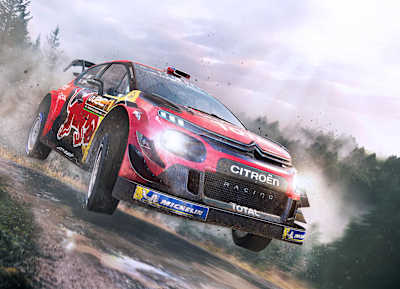
Ready to race
© Kylotonn Games
Gomez explains: “The recent cars, from 2010 or even a little earlier, are more reliable, more precise and have all-wheel drive. The challenge with these is in the optimisation and the risk you're willing to take. They're responsive, agile and not too difficult to drive, according to the WRC and WRC2 drivers we met.”
“But the older ones are front-wheel-drive (FWD), or the most dangerous ones, rear-wheel-drive (RWD). There’s a huge difference to the handling, simply due to the change in traction system. If you don’t throw the car out, FWD Fulvia will understeer an awful lot. They demand more work and effort from the driver and can transform a simple straight line into a nightmare. Historic cars shift the challenge from ‘taking risks’, to ‘staying in control’.”
As for tips for the best way to handle these historic cars, Gomez recommends a soft touch: “Be gentle on the throttle and keep in mind that braking is sometimes the fastest way to the race line. You also should keep an eye on your tyre wear, especially on RWD cars that consume the rubber at a worrying rate.”
Getting an edge
Finally, any tips from the team on how players can start with a bang in WRC 8’s career mode? Gomez says: “The best advice we can give when beginning career mode is to remember that you can win the championship without always being first. There’s no need to take all the risks every time; it’s a marathon in terms of driving but also with management. Learn the specifics of every country and stage, understand your car and then you can try to go flat out.”
WRC 8 is out now on PS4, Xbox One and PC and in November on Switch.
