
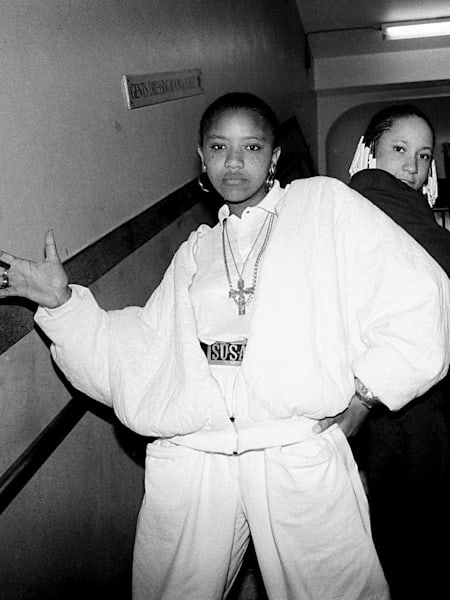
Social Innovation
How YOUTH CLUB Archive are giving a voice to UK subcultures
What started as a photo archive documenting lost British scenes has grown into a fully-fledged Museum Of Youth Culture, supporting a new generation of young outsiders.
From anarcho punks to acid house ravers, dub soundsystems to UK garage scenesters – you’ll find images of all these in YOUTH CLUB's archives. The not for profit organisation is dedicated to providing an authentic platform and historic capsule of youth movements throughout the years.
The project is the brainchild of Jon Swinstead, owner of cult ‘90s fashion publication Sleazenation. After the magazine closed in the early ‘00s, Swinstead decided to preserve his huge collection of editorial photography. In order to build a comprehensive library, he then launched a nationwide campaign calling for photographers to send in photos from their own personal collections. These images helped build the PYMCA archive.
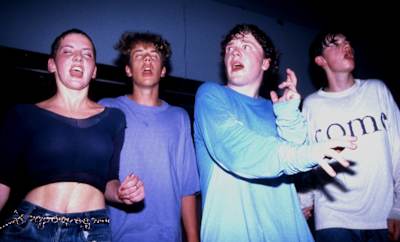
Ravers on the main stage at The Haçienda, Manchester, 1989
© Peter J Walsh
These are people that have been DIY and just curated these movements, picked up a camera and created amazing work
The PYMCA library grew steadily as a commercial resource, providing invaluable and sometimes rare imagery for media outlets and institutions. But in 2015, the organisers decided to switch their focus to outreach work, setting out to safeguard the heritage of the archive by founding YOUTH CLUB as a non-profit organisation. Funded by donations, sales from their shop on London’s Carnaby Street and a crowdfunding campaign, they continue to pick up attention and accolades as they settle in their new home at Printworks, Surrey Quays.
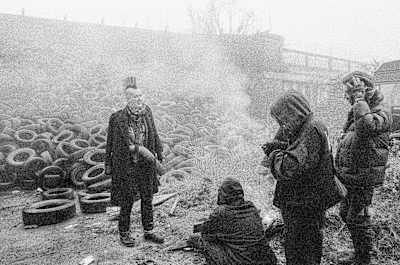
Punks in a junkyard
© Molly Macindoe
Jamie Brett and Lisa Der Weduwe from YOUTH CLUB fill us in on what it’s like conserving and building an ever-evolving archive powered by generations of ravers, rebels and everyday reactionaries.


Why is it important to document subculture and youth movements?
Lisa: If you look anywhere in society today you can really see how youth culture and specific subculture movements have influenced things. The young people who have the space to respond and be creative have gone on to be the people who define what society looks like. Giving young people that space is really important, especially when there can be such negative attitudes around young people. It is important to show what young people can do, what they have done and how that has shaped contemporary culture.
Jamie: We’re coming to a time where we realise it’s quite normal to celebrate the punks and ravers. Up until a few years ago that was just seen as people ‘messing about’ and it wasn’t considered a serious piece of history. Our goal is to open a museum of culture because we feel youth culture isn’t given an authentic platform that’s free from appropriation by large institutions. A lot of youth culture is kind of curated within exhibitions but not actually given its own space as an art form in its own right. It’s an important part of social history.

Woman kicking a puddle at a free party in a Quarry, Wales, 2017
© Molly Macindoe
Are you commissioning photographers to capture movements in 2018?
L: I think a unique and really important part of the archive is that most of the work isn’t commissioned. It comes directly from people that were involved in a movement, that were photographing themselves and their friends in their daily life. It’s really authentic. We don’t really commission anything, we just let the people come to us. We let people tell their own story about what these movements were like.
J: We never curate the work outside of the photographer’s narrative. We let the photographer speak and if another photographer comes along with a different story of events we will include that too. We almost provide a pedestal for the work.

How is the archive helping inspire young people to capture their scenes?
J: We want to show that people who create art and work that is museum-worthy are people like everybody else. They’re not from upper class backgrounds or even middle class backgrounds. These are people that have been DIY and just curated these movements, picked up a camera and created amazing work.
Our educational programme is in its infancy. But what we have done has shocked me. I hadn’t realised how much young people can get from the archive in a way that makes them feel inspired and liberated and they can create their own movement if they want to! It’s not something that is commodified. Young people need to know they can do those things without needing money or resources. The essence of subculture is that it’s all very DIY.
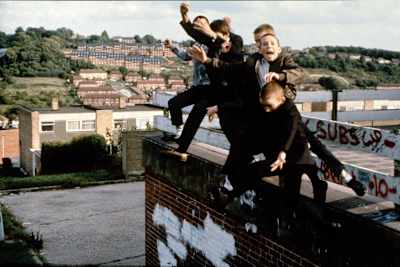
Skinhead boys jumping off a roof, High Wycombe, 1980s
© Gavin Watson
It is important to show what young people can do, what they have done and how that has shaped contemporary culture
Can you tell us a bit more about some of the organisations you’re working with?
J: One place we are collaborating with is The Complete Works at Salmon Centre. It’s a school that defies the standard way of education. Some students come from disadvantaged backgrounds and have been unable to engage with standard schooling. Their GCSE pass rates are amazing and it’s all using material that supports individual creatively. We’re working with them on a programme that fits with their students.
We think that our archive has huge potential to engage with young people that maybe wouldn’t engage with mainstream education. It’s like saying, look here are some people who come from the same world as you and they’ve done pretty well for themselves. You can too. Especially with schooling methods that are maybe a little bit more rigid and fail certain people. There are a few institutions in London that work in those areas and we don’t claim to create a new educational programme with the limited experience that we have. So it’s all about collaboration.
YOUTH CLUB Archive is now based at London’s Printworks...
J: It’s testament to the venue that they have incorporated an archive. It’s quite radical. It’s never been done before. They’re not shying away from youth culture like a lot of venues are.
L: They have been incredibly supportive. They are always popping by having a look through the archives. They also see that it’s a perfect fit, it really brings the context of this venue to life. They can bring people in and say ‘this is what we do here, here’s the history.’ Making those connections is really important for us. It brings the archive to life. We want to get the images in the space, so when people go to a gig they are also faced with the same images of people doing the same thing 20 or 30 years ago. It kind of connects the dots.
Support the YOUTH CLUB campaign to help expand their youth education programme
Want a hit of new music every Friday? Follow our 4pm Finish Spotify playlist
Like Red Bull Music on Facebook and follow us on Twitter at @RedBullMusicUK
Listen to Red Bull Radio for in-depth interviews, exclusive mixes, live broadcasts and more