House, techno, trance and beyond: A guide to electronic music
From house and techno to drum and bass and EDM, electronic music has splintered into hundreds of styles since it first dropped. Here’s everything you need to know.
At its peak, Spotify’s genre map Every Noise at Once had distilled the world’s music into more than 5,000 categories, covering everything from Finnish trip hop to something genuinely called catstep. Electronic music, unsurprisingly, grabbed a massive share of that list. Similarly, Ishkur’s Guide to Electronic Music, the internet’s most obsessive family tree of the scene, charts 166 electronic genres and subgenres on its own, each one born in a particular city, club or bedroom studio before it took over dancefloors around the world.
That said, nobody needs to know all 166 to enjoy a night out, so this guide sticks to the big hitters, with the sounds and artists that define each one, so you’ll know your acid from your trance before the drop lands.
01
What is electronic music?
Electronic music has evolved into hundreds of different styles
Electronic music is any music made mainly with electronic instruments, such as synthesisers, drum machines, samplers and computers, rather than guitars and live drums. The genre emerged in experimental studios in the mid-20th century, hit the clubs of Chicago and Detroit in the 1980s and has been splitting off and speeding up ever since, from Balearic hyperclubs to bootleg radio stations. Today, its family tree stretches from the warm 120 BPM groove of house to gabber and hardstyle kicks hammering past 180.
02
What are the main subgenres of electronic music?
The main subgenres of electronic music are EDM, house, techno, trance, drum and bass, dubstep, hardstyle and ambient, each with its own tempo and feel. Most other styles, including tech house and UK garage, for example, borrow from one or more of these.
03
What is EDM?
If you’ve ever watched a festival livestream and seen an entire field jump at the exact same second, you’ve seen EDM at work. Short for electronic dance music, it’s the big, festival-friendly sound built around huge synth hooks and pop vocals, with dramatic build-ups that explode into a crowd-pleasing drop.
It borrows heavily from house and trance but cranks everything up for stadium-sized crowds, usually at around 126 to 130 BPM. The term took off in the US around 2010, when David Guetta, Swedish House Mafia and Avicii dragged dance music into the pop charts. Its natural habitat is the main stage of mega-festivals from Belgium to Las Vegas, where the DJ plays to tens of thousands of fans beneath a barrage of pyrotechnics and confetti cannons.
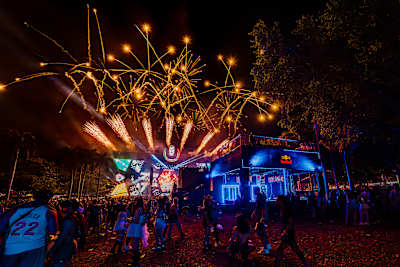
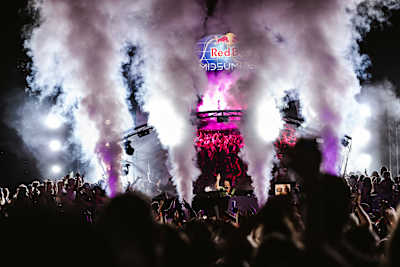
EDM combines high-energy music with eye-catching stage production
Strip away the fireworks and most of those main-stage anthems lead back to one place: a club in 1980s Chicago. Here’s how…
04
What is house music?
House is one of the foundations of modern electronic dance music. It’s warm, soulful dance music built on a steady four-to-the-floor kick drum at around 120 to 125 BPM, often topped with gospel-style vocals and piano chords that have a habit of making strangers hug.
Frankie Knuckles kicked things off in the early 1980s by mixing disco with drum machines at the Warehouse, the Chicago club that gave the genre its name. From there it spread to Ibiza and London and never really left. More than 40 years on it’s still the most popular electronic music genre, with its tech house offshoot the top-selling genre on Beatport for four years running, according to the 2026 IMS Electronic Music Business Report.
FISHER and Chris Lake lead the tech house charge, while Afro house went mainstream after Adam Port’s “Move” passed 370 million Spotify streams. Throw deep house into the mix and you’ve got a genre that soundtracks everything from Ibiza’s superclubs to summer festival main stages. Take these three for a spin and you’ll see what we mean:
Kerri Chandler
Honey Dijon
Black Coffee
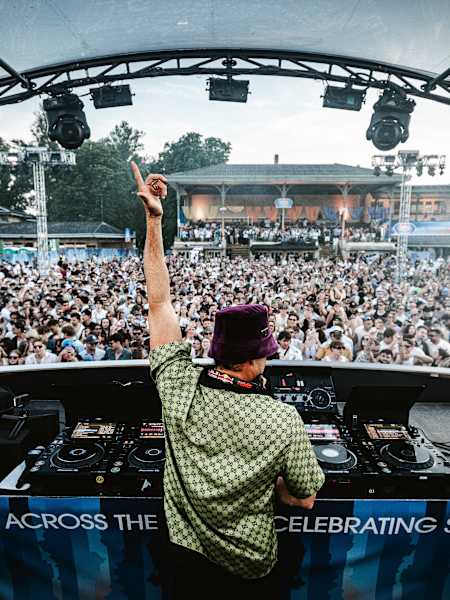
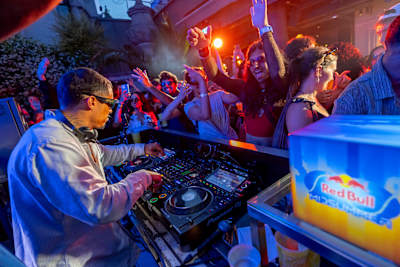
FISHER gets the crowd going at Red Bull Midsummer in Vienna
While Chicago was busy throwing its arms in the air, a few hours up the road in Detroit, something darker was taking shape.
05
What is techno music?
Techno is house’s moodier sibling, using repetitive, pounding beats and machine-like textures to lock you into a dark, hypnotic groove at around 125 to 140 BPM. It was born in Detroit in the mid-1980s, when three school friends known as the Belleville Three (Juan Atkins, Derrick May and Kevin Saunderson) drew on Kraftwerk’s electronic pop and the clanking rhythms of the city’s car factories to build music that sounded like the future.
After the Berlin Wall fell, the German capital adopted techno as its own and clubs like Berghain have been its spiritual home ever since. Amelie Lens and Richie Hawtin are among its biggest names today, while hard techno and minimal techno are its best-known offshoots. Outside Berlin, just follow the strobes to the darkest tent at any big festival. Curious? Press play on these:
Jeff Mills
Charlotte de Witte
Ben Klock
Germany didn’t just borrow techno, though. In the early 1990s its producers started adding big melodies and tear-jerking breakdowns, and trance was the result.
06
What is trance music?
Trance is techno with its heart on its sleeve. Euphoric and melody-led, it’s built around soaring synth lines and long build-ups that break down before launching into an emotional drop, usually at 130 to 140 BPM. After emerging in Germany it took over Ibiza and the Netherlands, home to superstars Armin van Buuren and Tiësto.
Van Buuren’s weekly radio show, A State of Trance, has been running since 2001 and now doubles as a touring festival brand. If you like things a little weirder, psytrance swaps the big emotions for trippy, bubbling basslines and remains a festival favourite. Catch it at arena events across Europe, particularly in the Netherlands and Ibiza, ideally with your hands in the air. A few examples to try:
Paul van Dyk
Above & Beyond
Ferry Corsten
Over in the UK, ravers were heading in a very different direction, speeding breakbeats up until they felt like a rollercoaster with the brakes cut.
07
What is drum and bass?
Drum and bass is fast, high-energy music built on rapid, chopped-up breakbeats at around 170 to 175 BPM, paired with deep, rolling basslines you’ll feel in your chest. It grew out of the UK’s jungle scene in the early 1990s, with London and Bristol at its heart.
Goldie was an early pioneer, while Chase & Status and Nia Archives fly the flag today. If the full-throttle stuff feels like a lot, liquid drum and bass offers a smoother, more soulful ride. The UK is still its natural home, where Hospital Records’ Hospitality nights pack out clubs across the country as well as festival tents at Boomtown. These three artists are a great place to start:
Around the turn of the millennium, a crew of south London producers decided to slow things down and let the bass do the talking.
08
What is dubstep?
Dubstep runs at around 140 BPM, but its half-time drums make it feel much slower, leaving plenty of room for wobbling, growling basslines that rattle your ribcage. It began in south London in the early 2000s with artists like Skream and Benga, when the scene centred on FWD>> at Shoreditch club Plastic People and DMZ nights in Brixton.
Producers would road-test fresh dubplates on enormous sound systems to see what made the floor shake. Skrillex later took its aggressive “brostep” offshoot to America, where it became a festival phenomenon. Today, bass-focused festivals are where it hits hardest and this trio will have you feeling the bass at home:
Mala
Rusko
Excision
Dubstep owes a big debt to another sound that ruled London a few years earlier…
UK garage is bouncy, swung dance music at around 130 to 135 BPM, mixing skipping two-step drum patterns with chopped-up R&B vocals. It started when London DJs took the soulful garage house coming out of New York and New Jersey and sped it up for Sunday afternoon sessions.
By the late 1990s it owned the city’s clubs and pirate radio, with Craig David and So Solid Crew carrying it into the charts. Sammy Virji and Interplanetary Criminal are now leading a full-blown revival, so dig out your best shirt and head to a London day party.
And when the party finally winds down, there’s one genre made specifically for the morning after.
10
What is ambient music?
Ambient drops the beat altogether in favour of slow, dreamy soundscapes made for listening rather than dancing. Brian Eno coined the term in the late 1970s, and his 1978 album Ambient 1: Music for Airports was written to calm travellers in departure lounges. It set the template for almost everything that followed. Aphex Twin later brought the sound into the chill-out rooms of 1990s rave culture, giving sweaty clubbers somewhere to recover between sets. Put it on after a big night and your ears will thank you.
The Orb
Biosphere
Jon Hopkins
11
What’s the difference between techno and trance?
The main difference between techno and trance is melody. Techno is driven by its rhythm, using repetitive, pounding beats and minimal melody to create a dark, hypnotic groove that tends to keep a dancefloor locked in for hours. Trance, however, puts melody front and centre, with soaring synth lines and long build-ups that break down before launching into a euphoric drop.
The two often sit at similar speeds of around 125 to 140 BPM, though their roots differ: techno was born in Detroit in the mid-1980s and found a spiritual home in Berlin, while trance emerged in Germany in the early 1990s before taking over Ibiza and the Netherlands. For a quick comparison, put on a Charlotte de Witte set followed by Armin van Buuren and you’ll hear the difference within a minute.
12
What instruments are used in electronic music?
Electronic music is made mainly with synthesisers, drum machines, samplers and computer software rather than traditional acoustic instruments. Synthesisers create sounds from scratch, while drum machines like the Roland TR-808 and TR-909 supply the punchy kicks behind decades of house and techno. Today, most tracks come together on a laptop in software like Ableton Live.
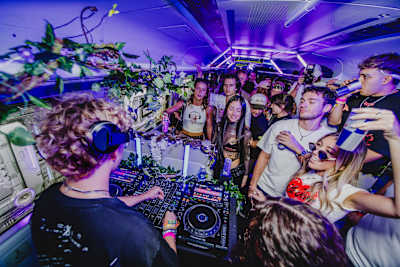
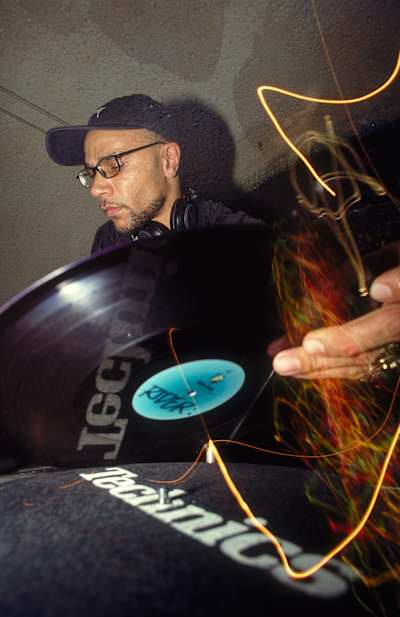
Modern DJ equipment opens up a world of creative possibilities
House is the most popular electronic music genre, with its tech house offshoot currently leading the way. Tech house has held its position as the top-selling genre on Beatport, extending a multi-year run at the top of electronic music sales charts, according to the 2026 IMS Electronic Music Business Report.
It takes the bouncy, feel-good groove of classic house and adds the punchier drums and rumbling basslines of techno, which is why artists like FISHER, Chris Lake and Mau P can fill everything from sweaty basements to larger stages. You can hear the same story on Spotify, where Germany recorded a cumulative total of 604 million monthly electronic music listeners in 2025 and Afro house has gone mainstream.
Adam Port’s “Move” passed 370 million Spotify streams within months of release, and the platform’s own dance editors now point to Afro house sounds turning up across pop and dance production.
What makes electronic music different from other genres?
Electronic music swaps the verse-chorus structure of pop and rock for loops that evolve gradually, with long build-ups leading to a drop where the full beat crashes back in. Tracks are usually made for DJs, with stripped-back intros and outros that blend smoothly into the next record.
Genre
Known for
How it sounds
EDM
US festival boom of the 2010s
Huge synth hooks and pop-friendly drops
House
Chicago roots, Ibiza summers
Warm, soulful four-to-the-floor groove
Techno
Detroit origins, Berlin clubs
Dark, hypnotic and repetitive
Trance
Euphoric festival anthems
Soaring synths and emotional drops
Drum and bass
UK rave culture
Fast breakbeats with rolling bass
Dubstep
South London and US festivals
Half-time drums and wobbling bass
UK garage
Late-90s London pirate radio
Skippy, swung beats with R&B vocals
Hardstyle
Dutch mega-festivals
Distorted kicks and anthemic melodies
Ambient
Chill-out rooms and headphones
Beatless, dreamy and atmospheric
About the author
Ed Cooper is a freelance journalist covering HYROX, the World Fitness Project, and the broader fitness landscape for RedBull.com. With experience in reporting on wellness, technology and sport, Ed also focuses on evolving performance and training trends, delivering expert insights and in-depth reporting.