



Gaming
Games
How does PS4 Pro improve Gran Turismo Sport?
Making ‘The Real Driving Simulator’ look as real as possible.

GT Sport looks a lot better on the PS4
© Sony
Different developers are using the PS4 Pro in different ways, then, depending on their budget, experience with the hardware and remaining time before any promised release date. Ubisoft Montreal's For Honor, due February 2017, is opting to concentrate on achieving 4K resolution given that their core artwork is natively produced to that quality. At present, in order to not delay For Honor's release, the studio is foregoing HDR support.
Nioh, an action from Ninja Gaiden creators Team Ninja, is allowing players to decide how they want to use the extra performance power of the PS4 Pro. From the menu you can select between 'Action Mode' and 'Movie Mode', the former offering smooth 60 frames per second performance at the cost of a reduced resolution, the latter locked in at 30fps but offsetting that with crisper, more detailed visuals.
"We've always had this curiosity for the latest technology and so we have wanted to work with things like HDR and 4K," Polyphony Digital CEO Kaz Yamauchi tells us. "The work is not easy, but it's still something that we've had fun working with and that attitude of having fun has been important for us during development.
"Using 4K, HDR and Wide Color is like a new world and providing that, uncompressed, is something that is really only available in videogames. It's the first time that games is going over the top of the broadcast and movie industry in initiating this kind of visual technology. That's very exciting for us to be a part of."

HDR makes a big difference to brightness levels
© Sony
Wide Color is jargon for 'wide-gamut RGB space', a technology that allows a greater number of colours to appear onscreen compared to the presently widely used sRGB system. The result of Wide Color support is that more of the colours visible to the human eye are able to be produced by the game and projected through an HDR TV. "GT utilises a colour space that is 64 percent greater than the sRGB colour space that you've experienced in the past," is Yamauchi's claim.
Combine this with 4K resolution and the extra brightness of HDR and the entire spectrum of visual impact–detail, luminance and colour–is covered and enhanced. Watch GT Sport running on a PS4 Pro and it's the colour and brightness that really stand out as the biggest improvements, however.
For instance, simply observing the colour of a car's body paint across the two systems reveals a stark difference. The tobacco orange that coats so many modern, commercially-released McLaren cars looks like a washed out shade of pastel on the standard PS4 edition, whereas on the Pro it is rich with vividness and flair thanks to the deeper colour and the more sophisticated way light seems to bounce from its surface. That instantly recognisable red of Ferrari enjoys the same impact on the Pro console.
The quality improvement brought about by the enrichment in brightness capacity are most obvious during night races when cars have their beams on full and there exists an incredibly high level of contrast between the headlights and darkness around them. One of the problems with displaying this example of high contrast when playing without HDR is that the detail in the brightest areas of the screen is lost as their doesn't exist enough variations in luminance to differentiate between the dark areas and the darks, and the light and the very lightest. As such, for example, the outer edges of a headlight is indistinguishable from its inner core whereas it is visibly separate in HDR.
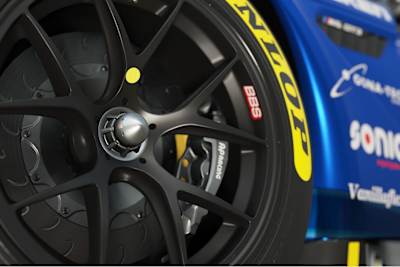
4K offers incredible detail
© Sony
When asked about how GT Sport manages to achieve this degree of distinction between light levels, Yamauchi puts in down to 'nits'. "GT is going to be able to display 10,000 nits, which gives us a huge dynamic range. You can only really take in and use the power of that sort of lighting when you're playing in HDR."
Nits is a unit that measures brightness and the more of them you have the more levels of light you're able to produce in a way distinguishable to the human eye. To put Yamauchi's claim of supporting 10,000 nits into perspective, the majority of 1080p TVs today are capable of displaying just 100 nits. The best movie theatres hit 1,000 nits. There exists no TV on today's market capable of achieving anything close to 10,000 nits, with Yamauchi stating that the threshold GT Sport is aiming for is being done so as to make sure the game is ready to take advantage of the quality of "HDR TVs that will come in the future".
When asked whether these improvements in fidelity, brightness and colour range come at a cost of frame rate performance, Yamauchi is quick to state that these aspects are unrelated: "There is no reduction in rendering performance to make the game compatible with Wide Color and HDR. The difficulty comes in the actual development workflow itself, because every process that we go through has to be compatible with [4K, HDR and Wide Color]. That does add to the development cost."
Some of that cost has come as a result of Polyphony creating a dedicated camera to capture the raw data used to build GT Sport. When the team started to work on the game three years ago there didn't exist HDR images, of track and backdrops etc, from which the designers could work from and so they had to come up with their own. As a result of this groundwork, however, Yamauchi is adamant that lessons have been learnt that will assist in the creation of all Gran Turismo releases from this point forward.
It's the pushing of a new frontier, now and in future, that Yamauchi seems most excited about when it comes to what is possible on the PS4 Pro. In particular, the fact that videogames are now finally at the forefront of developing and creating content to take advantage of the most progressive works of visual technology is something that he is quite clearly proud to be involved in.
Yang lainnya
"It will be quite some time before other media will be able to produce 4K, 60fps, HDR, Wide Colour images," he explains to us. "It will take a long time for the technology to catch up and allow them to do that for broadcasting, but the PS4 Pro allows that to happen in the world of videogames."
The PS4 Pro 'allows' that to happen for videogames, but only if game studios are prepared to take advantage of it. To make the most of the PS4 Pro more creators need to follow in Polyphony Digital's footsteps and build their games around the potential the system offers. GT Sport has been three years in the making, though, so it might be some time before other console-focused studios are able to take make the most of the PS4 Pro's potential in the way Polyphony has been able to do.
Gran Turismo Sport is out in 2017 on PlayStation 4. The PlayStation 4 Pro is released November 10, 2016. For more gaming coverage, be sure to follow @RedBullGames on Twitter and like us on Facebook.
