
Obstacle Course Racing
How to train for an obstacle course race
Organizers and participants of Wild Warrior – a famous obstacle course race championship in India – share tips for amateurs interested in the sport.
Obstacle course races (OCR) are well-known for testing participants in various physical skills.
Most commonly, the race course is 3km long with about 25 obstacles. But it could go up to 12km long with 100+ obstacles.


In order to compete in obstacle course races, you must have a suitable combination of agility, endurance, speed, power, and strength.
Here are some obstacles you might encounter in one of these races.
- Rope climb
- Bear crawl
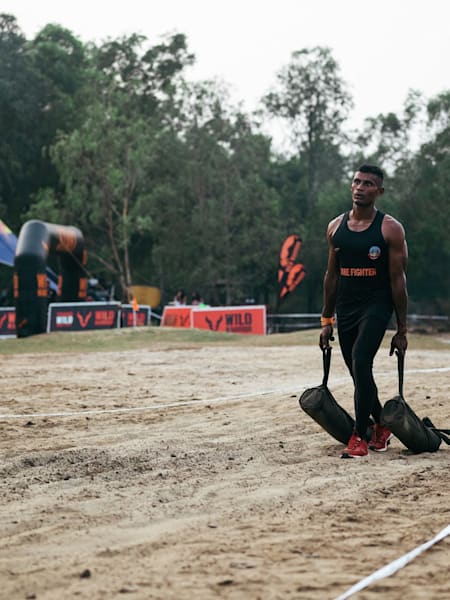
- Bucket/sandbag carry
- Sandpits
- Drum roll
- Caterpillar
- Dip & go
- Chain drag
- Tyre wall
- Tarzan swing
- Barbed wire crawl
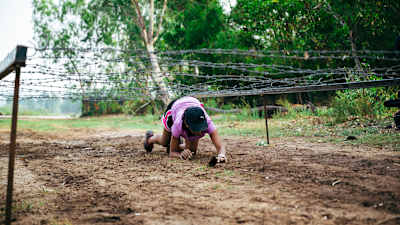
Bardbed wire crawl, an obstacle at Wild Warrior
© Neeraj Dev Varma
Related

The obstacles in these races need to be overcome by jumping, hanging, crawling, carrying, moving weights, pulling, balancing, climbing, swinging, and much more. So you need well-rounded fitness plans to train for them.
Wild Warrior is the official obstacle course racing national championship in India. After organizing over 48 obstacle course races of various distances on different terrains, the organizers launched the first-ever OCR championship in India in 2022 with the first race in Chennai.
We spoke with Vikram Menon (co-founder of Wild Warrior), Sanjay Negi (current men’s champion) and Mallika Fernandes (current women’s champion) to find out what it takes to compete in these races.
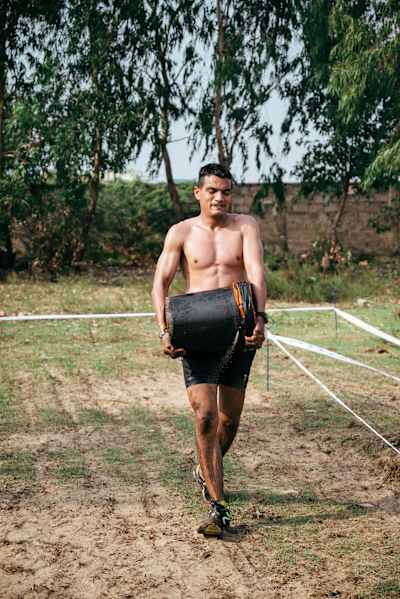
Sanjay Negi during an obstacle at Wild Warrior
© Neeraj Dev Varma
Focus on endurance running first
Vikram Menon has been participating in obstacle course races internationally since 2016. He co-founded Wild Warrior in India with Varun Gunaseelan in 2018.
“Running is the main component of obstacle course races. The distance ranges from 3-5km, with some races going up to 12km (so you need to train in running first). Sprinkled on top of these are a variety of obstacles. You must have a good aerobic base to run this long distance, after that you must train to clear the challenges,” says Vikram.
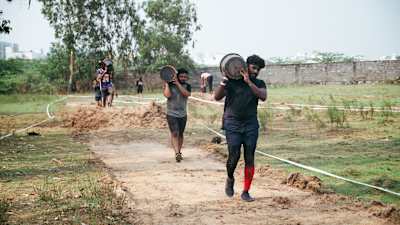
Participants during an obstacle at Wild Warrior
© Neeraj Dev Varma
Sanjay Negi agrees with this point and elaborates on how he prepares.
“I include three-four days of running in my training schedule. Other than that, I participate in trail running races to prepare myself for my obstacle races and work on my aerobic base,” says Sanjay.
Related

Train on hanging and pulling your bodyweight
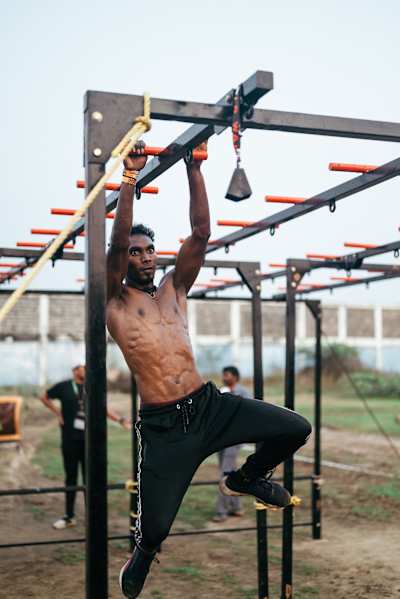
Participants during an obstacle at Wild Warrior
© Neeraj Dev Varma
These races also include a lot of hanging and lifting your own bodyweight. Obstacles like caterpillars, rope climbs, and climbing raised platforms challenge you to carry your own bodyweight.
“I focus on some specific bodyweight workouts that focus on push, pull, hinge and squats. My strength in obstacle course races is hanging, and my favourite obstacle is monkey bars. My advice would be to hang on bars a lot in training,” says Mallika Fernandes, the current Wild Warrior female champion who has been participating in these races since 2018.
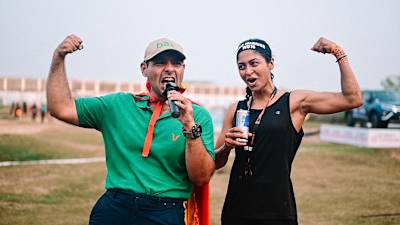
Mallika Fernandes after winning Wild Warrior
© Neeraj Dev Varma
Do full body strength workouts
As an OCR athlete, you will need great overall body strength to perform various tasks without tiring out easily.
“Compound training such as the deadlift, bench press, lunges, with weights are important. You have to carry weights like sandbags on your shoulders for certain distances to complete some obstacles. Sometimes it could be uphill. It requires overall body strength to perform such lifting and carrying tasks without cramping,” says Sanjay.
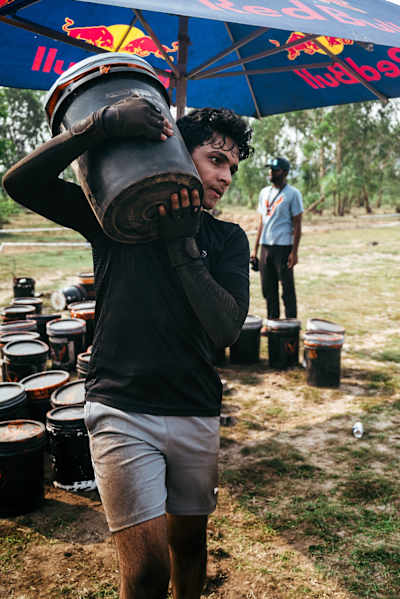
A participant competing at Wild Warrior
© Neeraj Dev Varma

Practice animal flow and core workouts
Mallika says you need your whole body to work in coordination during an obstacle race. She recommends practicing animal flow to work on the various aspects of your body.
“There are obstacles like caterpillar and bear crawl that require core strength and coordination between limbs. I am a huge fan of animal flow workouts; it works very well for the biomechanics required in obstacle course races,” says Mallika.
She also suggests doing workouts like planks, side planks, glute bridge, superman, bird dog, etc, to strengthen your core muscles. “A strong core will help you clear the obstacles that require climbing and also help you maintain good form during the race,” Mallika adds.
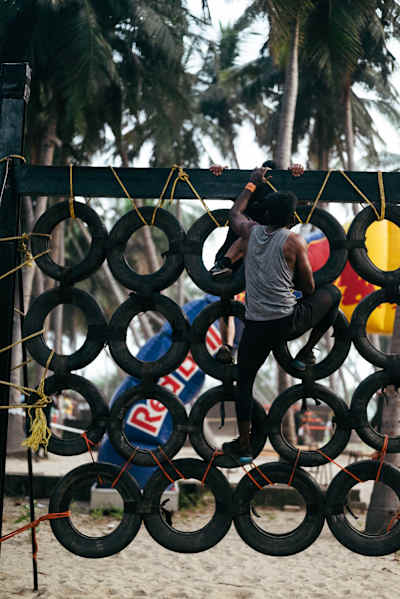
Participants during an obstacle at Wild Warrior
© Neeraj Dev Varma
Work on your weaknesses
“Obstacle course races require a combination of strength and endurance. To work on those together, I like to carry bags uphill and then do balance workouts. Over years of racing internationally, I know my strengths and weaknesses. I find carrying weights difficult so I always include that in my training,” says Sanjay. He is currently training for the Asian OCR Championship in Qatar in November 2022 and the Spartan World Cup in Abu Dhabi.
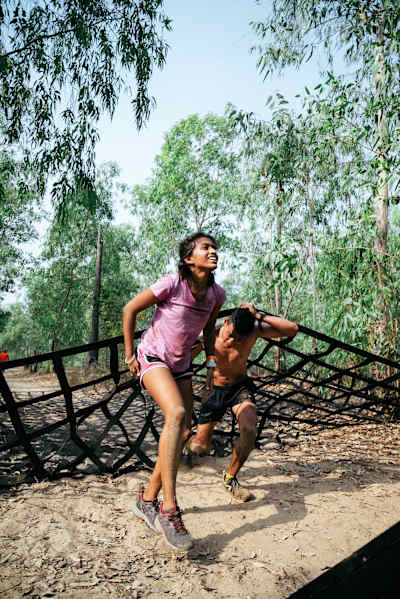
Participants during an obstacle at Wild Warrior
© Neeraj Dev Varma

Simulate race situations in training
“I do interval training and perform tasks that mimic race obstacles. For example, in training I will run hard and then mix it up by doing pull-ups. It’s difficult to focus on the tasks at an elevated heart rate so this trains me for it. Specificity is important in training so that your body can cope well with the tasks in races," says Mallika.
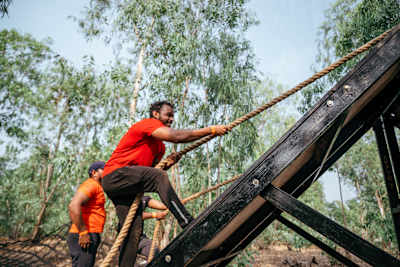
Participants during an obstacle at Wild Warrior
© Neeraj Dev Varma
Pay attention to your recovery and nutrition
Sanjay says he always focuses on his nutrition and recovery to get the best performance out of his body.
“Taking in macros is a lot more important than just training. Fuelling right makes a big difference. You should focus on consuming iron, vitamin D, magnesium, manganese, and other important nutrients. It is important to consumer carbs when you are doing hard training sessions. Eating healthy fats and protein will help your body recover quicker and be ready for the next session or race. I also do foam rolling to remove the tension built in muscles and remove inflammation,” says Sanjay.