
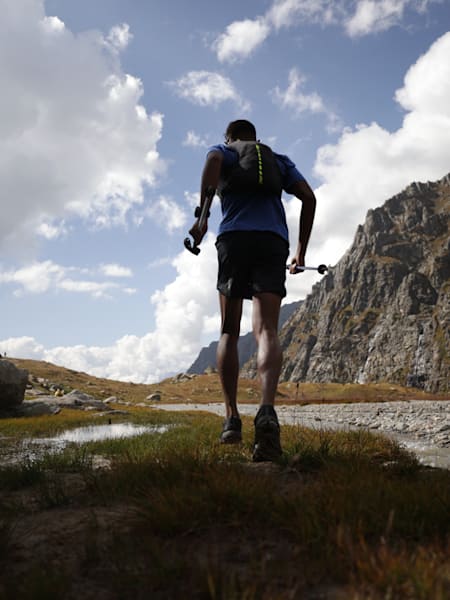
Mountain Running
9 tips on how to prepare for trail running in the Himalayas
Kieren D’Souza draws from personal experience to list out a guide on how to prepare if you are planning for trail running in the Himalayan Mountains.


28 min
Fastest Known Time
Follow Indian ultrarunner Kieren D’Souza as he sets the fastest known time for traversing Mt Deo Tibba.
Trail running is a sport that requires a combination of endurance and skills.
India has incredible opportunities for trail runners, particularly across the vast expanse of the Himalayan Mountains that have an ever-changing topography.


Kieren D’Souza is a trail-runner, ultra-runner and mountaineer who lives in Manali and trains in the Himalayas. He also does a lot of personal projects across the mountain range.
In October 2020, he completed the Fastest Known Time of Mount Deo Tibba (6,001 metres) in the Pir Panjal Range, scaling and descending it in 19 hours and 38 minutes. He followed that up by scaling another 10 peaks of 6,000+ metres in Ladakh in July 2021, climbing all in just 26 days.

Kieren D'Souza
© Kieren D'Souza
Kieren has years of experience in trail running and has represented India at the Trail World Championship on three separate occasions.
Here he shares his tips on how you should prepare if you are planning on going trail running in the Himalayas.
01
Build up your base fitness levels
Good fitness will help you stay injury-free and also make the running experience more comfortable.
“Start by doing long, slow distance running on easy trails in the beginning. As you progress, do hill repeats but don’t overdo hard training sessions in the mountains without proper recovery. Do proper stretching. I like doing animal flow movements for mobility training,” says Kieren.
He also recommends doing exercises to strengthen your muscles and improve mobility. Here are some bodyweight and free-weight exercises Kieren does regularly.
- Single-leg balance
- Calf raises
- Single-leg deadlift
- Planks
- Side planks
- Superman
- Shoulder press

Side plank
© Ben Foxall
02
Choose the right shoe for the trail
Kieren has tried many different trail running shoes over his career. He recommends shoes that have good heel and toe protection. Some points to remember when picking your trail running shoes are that they should have deep lugs and good traction to take on slippery surfaces, gravel and slushy trails that you find in the Himalayas. Pick a shoe with waterproof and abrasion-resistant outer layer.
“I prefer lightweight trail shoes that have good traction on slippery algae rocks and muddy trails. I keep my running shoes separate from the walking ones,” says Kieren.

03
Make sure you have the equipment you need
“I consider myself a minimalist runner. I do not carry much with me while in the mountains. Although I do suggest people carry a rain jacket even if they think they won’t need it. I drink water from the streams if I need to,” says Kieren.
The equipment you need will depend on the weather, terrain and duration of your run. Kieren sasy you could consider standard equipment like hiking poles, base layers, moisture-wicking apparel, windproof jacket, rain jacket, sun protection cream and water bottle, depending on what you need and want to carry. Additionally, a GPS watch could help track your run, anti-chafing and blister creams are important on long runs, and carrying a mobile phone can help in case of emergencies.
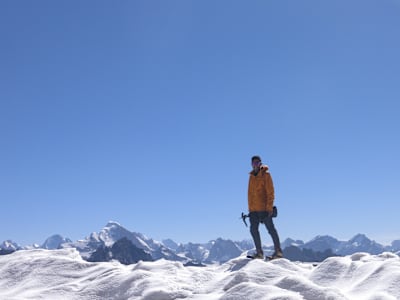
Kieren on a recce of Mt Deo Tibba before his FKT attempt
© Cactus Productions
04
Do some homework on your trail selection
“I choose trails depending upon my goal and type of training session that day. There is a network of trails around Manali, like Kanyal trail, Lamadugh trail, Bhrigu trail, trails in the Solang Valley,” says Kieren.
He suggests picking a trial according to your fitness level and experience. If you are a beginner, pick a trail with less elevation changes and fewer rocks/gravel. If you have some experience, you could pick rocky trails that need better skills like quick shuffling of feet, looking 4-5 meters ahead while you run and quick decision-making.
If needed, ask locals about trails or go for a walk to recce and get familiar with a trail you want to run.
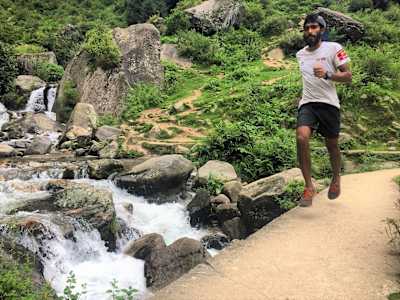
The routes never get boring in Manali for Kieren
© Ashok Daniel

05
Check weather forecasts before starting your run
The Himalayas are notorious for rapid weather changes. A sunny day in the morning can quickly turn into an afternoon downpour. Check for weather updates to plan the time of your run, how far you will venture out on the trails, and what you might need to carry.
“My favourite season to run in the Himalayas is summer. Although I do go out to run in rains and snowfall as well as I have to get in my mental training as well. I time the duration of my run according to the weather. I leave early in the morning when the weather is usually clear and there’s no wind,” says Kieren.
A general rule of thumb is that March to November is the best time for trail running in the Himalayas for mid-to-low altitude.

06
Focus on your posture and cadence during runs
Kieren suggests keeping your knees bent, taking short strides and keeping your cadence high when running downhill. And for uphill sections, he suggests keeping your bodyweight in front and running on your toes.
“I like to go fast on the downhills as it is my strength. Start by going easy on the downhills in the beginning. Make sure your foot placement is right,” says Kieren.

Correct posture for uphill running
© Miles Holden | Red Bull Content Pool
07
Learn to pace yourself
Trail running in the Himalayas really isn’t about going fast. Pacing yourself is a very important skill in the Himalayan Mountains. The sport is about conserving your energy to finish the run strong and not about trying to beat the clock.
“Walk if you have to, and rest if you must. [Trail running technique] comes with experience, and people overestimate their fitness and pace in the mountains. For beginners, a steep uphill walk may clock a better time than if they try to run; and they save their energy as well,” says Kieren.

08
Fuel your body properly before and during your run
Make sure you eat something at least two hours before your run; this will give your body energy and enough time to digest the food.
If you are going to be doing a long run or a lot of activity, eat a lot of carbohydrates the previous night. Also carry a banana or sports bar if you are on a long run, and carry water as needed.
“Aim to eat a bar or a banana every hour if your run is going to be 3+ hours. Take a sip of water with electrolytes every 15-20 minutes. I usually like to train my body for fat adaptation, so I run on low calories mostly. I fuel according to the goal of the run,” says Kieren.
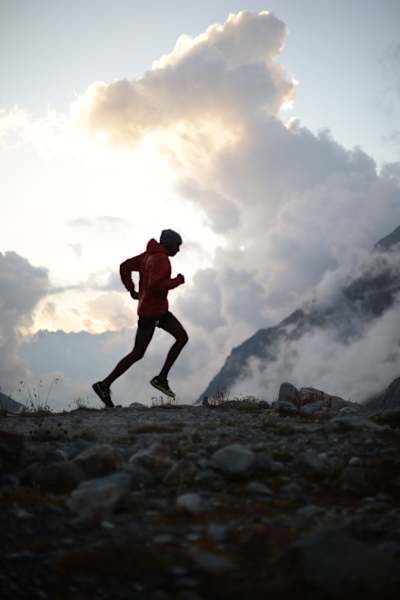
Kieren trains in Kullu Valley of Himachal Pradesh
© Cactus Productions

09
Respect the locals and their customs
Running in the Himalayas is also about adapting to the ecosystems. The trails are for everyone and so mutual respect is appreciated.
Kieren says some simple rules are avoid disturbing sheep and cows that may be grazing, keep an eye out for shepherd dogs to avoid being chased, don’t play loud music, and don’t damage plants/trees.
“I like to stop by to talk to the shepherds and know their stories – where they are going, where they are coming from, etc. If you are lucky, they will share some great cheese with you,” says Kieren.