
Music
An introduction to Alice Coltrane
Om shanti! The must-listen Alice Coltrane albums ahead of Red Bull Music Academy New York’s tribute.
Before the '70s, Alice Coltrane was probably better known as the wife of John Coltrane, whose band she joined in 1966. But after her husband's death in 1967, everything changed. Seeking solace, Coltrane immersed herself in eastern philosophies and began a close friendship with the world-famous guru Swami Satchidananda. It didn't take long for Coltrane's interest in spiritual and cosmic enlightenment to start influencing her music and after a series of ground-breaking albums in the 1970s, Coltrane had become a pioneering musician in her own right.
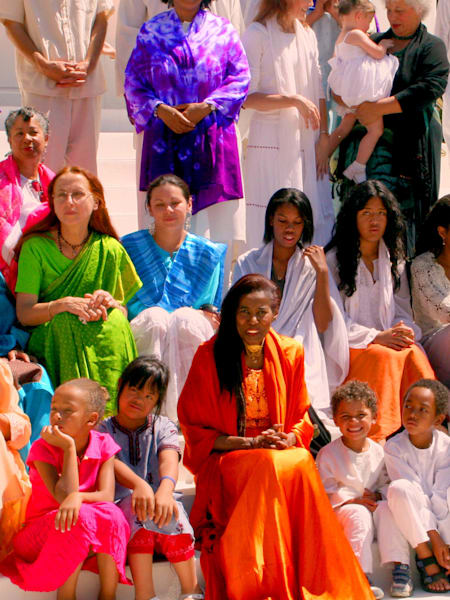
It's ten years since Coltrane's death and a brand-new compilation from Luaka Bop, World Spirituality Classics, Vol 1: The Ecstatic Music Of Alice Coltrane Turiyasangitananda, has introduced the world to another side of Coltrane: the devotional music she performed and recorded on her Californian ashram – which her nephew Flying Lotus would often visit – during the '80s. To celebrate this new release and her imperious back catalogue, Red Bull Music Academy New York present a two-set show revisiting moments from her 60-year career on May 21.
If you're new to Alice Coltrane and don't know where to begin, here's a brief primer featuring three of her most essential albums.

Journey In Satchidananda (Impulse!, 1971)
Alice Coltrane was better known as an organist and pianist prior to this groundbreaking 1971 album, but it was here that she introduced her cosmic-harp playing to the world. And what a joy it is. Spiritual jazz wasn't exactly a new thing by then but Journey In Satchidananda, her fourth album, was still a bolt from the blue and set the stage for a series of similarly-themed albums for Impulse! Melodic and accessible – it remains an entry point for newcomers – it infuses the then-standard jazz sound of the late-60s/early-70s with Indian classical music, Eastern blues and the earthy clattering sound of old-world sacred music for something hypnotic and, dare we say it, new age. It also features a stellar cast of musicians, including Pharoah Sanders, Charlie Haden and Rashied Ali.
Transcendence (Warner Bros, 1977)
This 1977 album was one of the final formal recordings made by Alice Coltrane before she started her new life as a swamini. Coltrane had been adapting Indian hymns (or bhajans) for ashram services since her first trips to India and Transcendence is dominated by this kind of devotional music. On an album that's equal parts cosmic, contemplative and celebratory, Coltrane glides between harp and organ, building spacious, meditational instrumentals into bright gospel-chant songs. It was a clue to the sort of music Coltrane would be making behind closed doors from the early-80s.
World Spirituality Classics, Vol 1: The Ecstatic Music Of Alice Coltrane Turiyasangitananda (Luaka Bop, 2017)
After apparently receiving a divine message to start an ashram, Coltrane left her old secular life behind to open the Shanti Anantam Ashram in North California, changing her name to Turiyasangitananda ("the Transcendental Lord's highest song of bliss") in the process. It was there that she explored a new kind of devotional song, recording four cassette-only albums – Turiya Sings, Divine Songs, Infinite Chants and Glorious Chants – that she presented her devotees with. Luaka Bop have compiled tracks from the cassettes into an album of numinous joy that pitches up somewhere between gospel music and meditational song, and employs ecstatic synths, soulful mantras and silky grooves.
Want to discover a world of new music? Like our Facebook page.
Follow us on Instagram for the best in live music.