

Red Bull Motorsports
F1
Daniel Ricciardo steps into the Singapore sauna
Daniel Ricciardo writes about why coaching has little place in F1, where to draw the line on routines and why the omens are good for Singapore this Sunday.
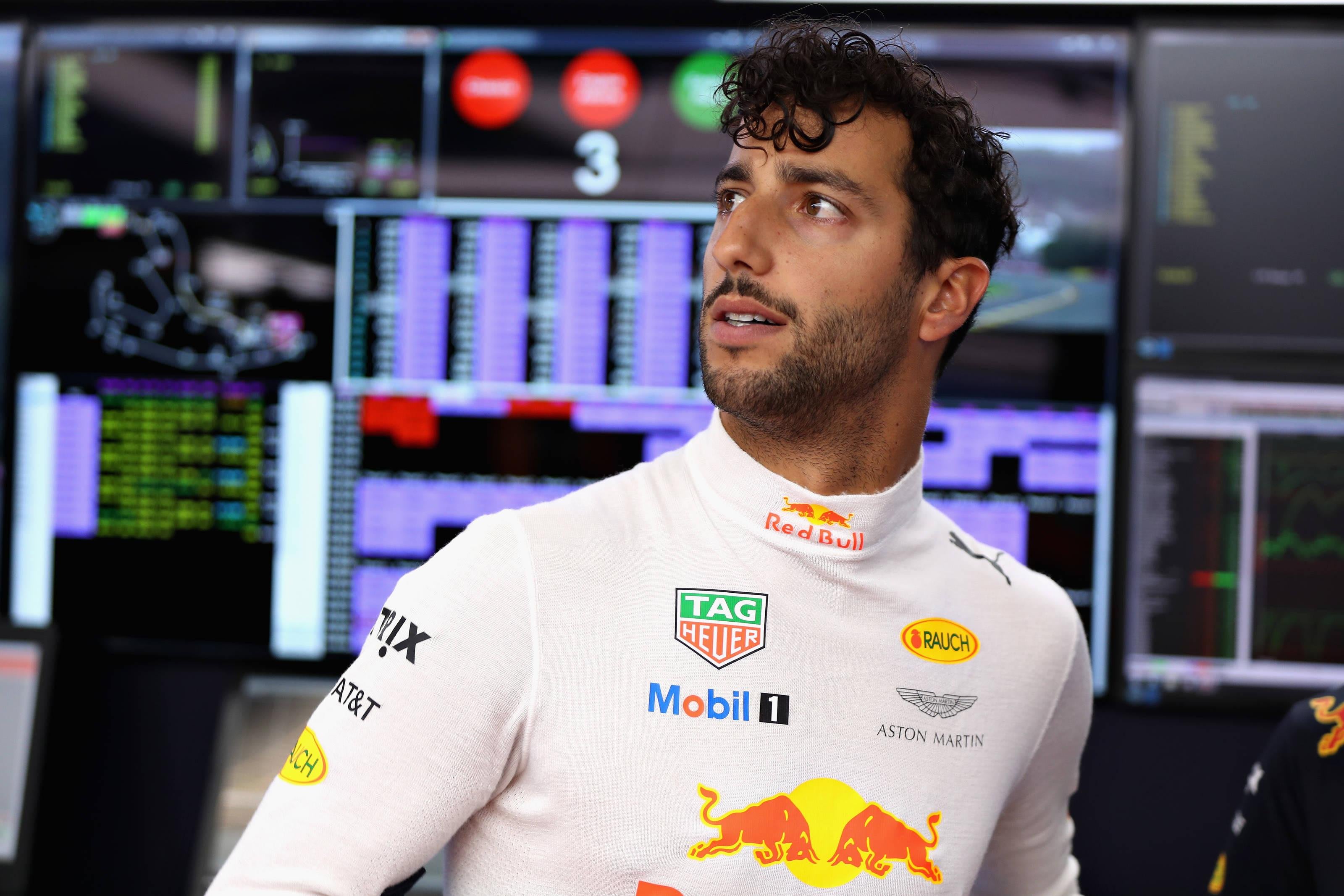
Preparing for the two hours on Sunday is critical
© Getty Images/Red Bull Content Pool
September in Australia means footy finals – no matter what type of footy is your footy – and for me, last Saturday afternoon at home in Monaco was spent getting my heart rate up watching my West Coast Eagles in their AFL elimination final against Port Adelaide. It had everything – extra time, crazy momentum shifts, and a match-winning goal after the final siren (for the good guys, naturally). Awesome. But something I noticed after the game as the players were going nuts and all the team's support staff spilled onto the field was just how many coaches an AFL team has, and the same applies for most other types of team sports.
Compare that to what I do? Us drivers have personal trainers who help to shape our bodies (and sometimes our minds) to get us ready, and my long-time trainer Stu Smith has had as much (if not more) impact on my career than anyone. But as far as coaching for actual driving goes, there's nothing. It's on you. To anyone on the outside, it must seem odd to think that you get to the main motorsport category in the world and you're mostly on your own, but that's the way it is – and the way it has to be.
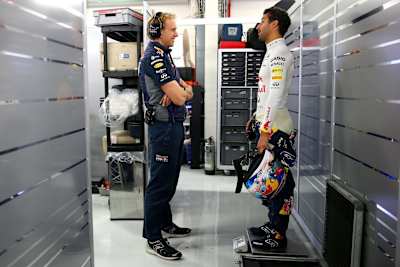
Stu might be my greatest off-track influence
© Getty Images/Red Bull Content Pool
When I first came to Europe to race, I went to a few driver coach days and had some more experienced people than I was teach you some techniques and some approaches to things. I figured that was what you were supposed to do. But the further I got into my career and especially once I got to F1, I realised I had to learn things for myself. I'm the one in the car and things change every year – different rules, different tyres, different teams – so it's hard for anyone to advise you, you're the one in the hot seat. So you're faced with a choice – commit, invest the time and learn for yourself, or you'll probably soon be an ex-F1 driver.
F1's a unique sport in that if you're, say, a tennis player, you can go and practice serving or returning or whatever as you try to work on your game. As an F1 driver, we get very limited test days and simulator time, and it’s not like you can go and "practice" F1 away from race weekends, is it? So how do you get better as an F1 driver?
Data and dissecting it – and then learning not to over-do it – has been a big thing for me. You'll always take, say, your best lap and compare that to your team-mate's best lap – I was quicker here, he was quicker there – but I don't think many people want to do a longer dissection and look at, say, 20 random laps in the race. Who was better on older tyres and why? Is your team-mate coming off the brakes earlier than you at a certain corner? Which of you is keeping the rear tyres cooler and why? What can your engineer identify for you from looking at the data and give you something to work on? There's always something to learn, and that's a part of being an F1 driver that I've always enjoyed.
You can always learn from your teammate
© Getty Images/Red Bull Content Pool
The trick when you're a younger driver is working out how much analysis is enough. Because I was interested in those early F1 years, looking back at it now, I did a lot of poring over the numbers, probably too much. There was a bit of paralysis by analysis for me early on, and I needed to scale back or I was just going to send myself around in circles looking for tenths of a second that might not be there. I just thought that was what you needed to do to be an F1 driver, and if going over data meant two hours' less sleep, that's what I did. You learn over time that more isn't always better, and as you gain trust in your engineer – and that takes time – they can help you narrow things down, and that's what Simon (Rennie) does for me.
Developing a routine – and one that has some flexibility in it – is massive for us too when you consider the travel that we do, the timezone changes and all of that. Working out what works for you takes time, but it's time you have to spend. Looking back again to when I first came to Europe, I didn't really have an eating or training routine that I followed, and it showed. By my second year, I began to learn what I needed to do away from the car to get me in the best place to operate my best, and then the year before my first full year of F1, 2010, I realised what sleep did for my performances, and became very aware of my sleep patterns, sleep quality and hours as I built up to a race weekend. By my second year of F1, I was much more aware of how to manage my energy and be ready to peak at the right times.
Sometimes routines have to take a back seat …
© Getty Images/Red Bull Content Pool
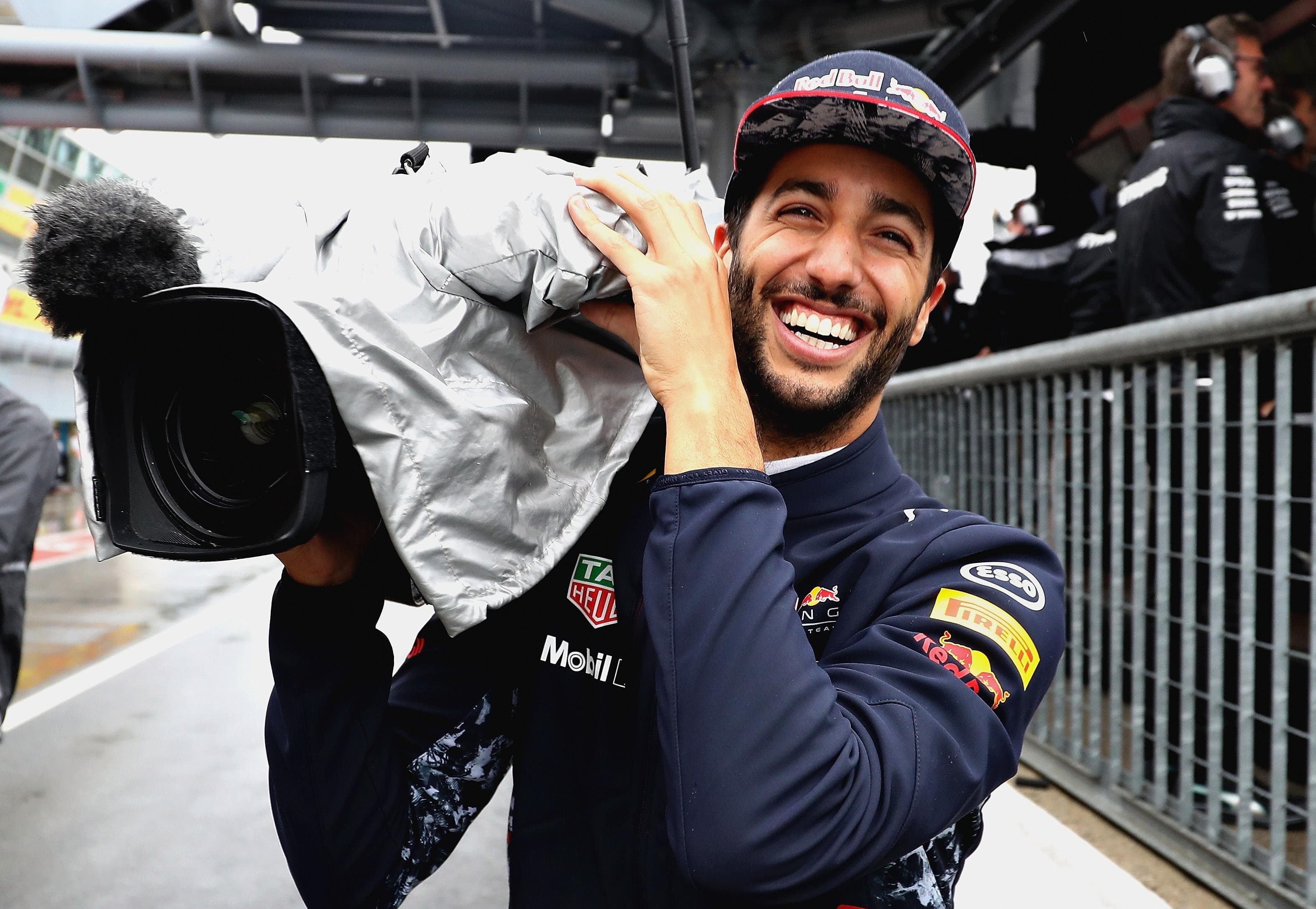
The trick with a routine, at least for me, is not to get so caught up in the order of things or when things have to happen that you get knocked off-balance when strange things happen, like weather delaying qualifying for hours like in Italy in the last race (when I grabbed a camera for a bit!), or somewhere like Melbourne when things are pretty hectic for me and there's always a last-minute request to do this or that. If I had a set routine that had to be followed to the letter, I'd never get through that Australian weekend because of how busy it is. More strict routines work for some top-line sportspeople – look at Valentino Rossi's rituals as he leaves the pits on his bike, or the way Rafael Nadal prepares to serve or what he does when he rests between games. But just because a rigid routine works for them, it doesn't make it right for you. Mine is less strict than that, but I do have a checklist of things I like to do to get me completely at my peak for the most important part of the weekend, Sunday afternoon.
I mentioned Rossi and Nadal and their routines, and while F1 and what we do is so unique, I love looking at other sports and other athletes to see what they do to prepare and whether that can translate, can maybe help me in some way. I've probably learned more from other sports than my own, to be honest. Seeing how other athletes perform in the moment and trying to find out why, or how they prepare – I can't get enough of that sort of thing. You don't want to get too specific with it because some of it might not apply to your sport, but you can learn so much from watching and listening, and I think that's why I'm such a sports enthusiast generally, there's always something you can take away from someone else's approach.
Other than watch footy last weekend, it was time to think about packing my life into a bag and being on the road for the rest of the year. The last seven races of the season are all outside of Europe, and the main focus after Monza was to ramp up the training and get some work done in the heat for the next two races in Singapore this weekend and then Malaysia two weeks after that. There's no sugar-coating it, these two are just brutally hard, and I've tried to smash myself a bit with the training over the last week but keep myself fresh enough so I'm ready for Sunday in Singapore. You need to be in proper nick for these two.
For the team, Singapore is obviously one we've had our sights on for a while, and while it won't be the only other race we have a chance at winning this year – who would have thought I'd have won at Bakuwith the characteristics of that track? – Singapore is one race where we have a great chance.
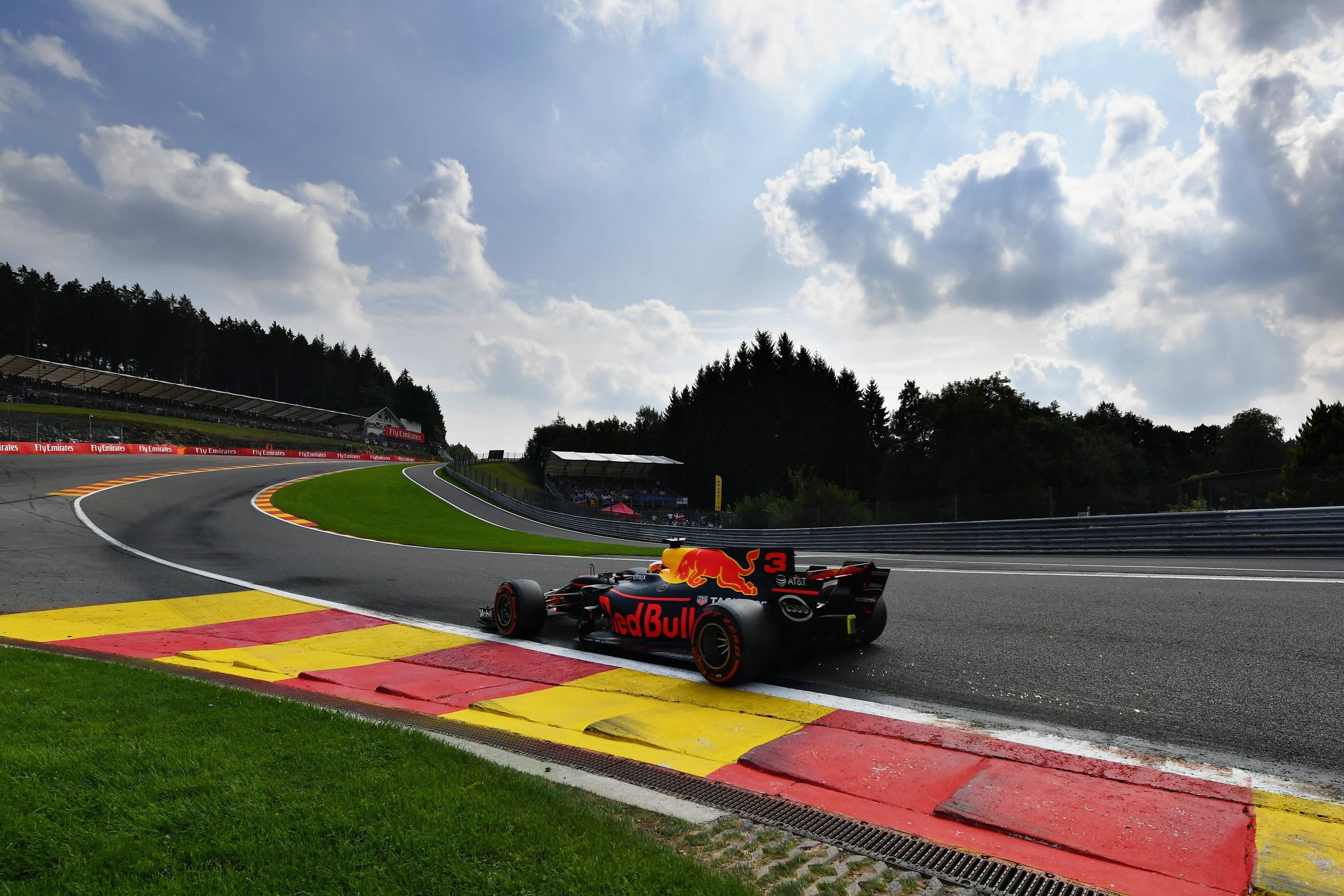
It's good to head there off the back of a couple of pretty good races, including the podium at Spa which we didn't expect. That safety car for the Force India boys crashing into each other was handy, for sure. We had a new set of ultrasoft tyres, and I was pretty surprised Mercedes went to the soft tyres, particularly with Valtteri Bottas ahead of me. Fourth would have been good, but the podium was there to be taken, and I had to have a go. I had Kimi (Raikkonen) hovering behind me ready to attack, so the best way for me to defend from him was to attack Bottas, and I had one shot at it after the restart and nailed it. Pretty sweet.
I had one chance at Spa, and made it count
© Getty Images/Red Bull Content Pool
It would have been awesome to get onto the podium again at Monza too – that's one podium I've still not been on and one I want because that has to be the best podium in all of F1 – but in the end I ran out of laps to get to Seb (Sebastian Vettel) after starting down near the back because of penalties. It'll happen one day.
That was a fun race and there was plenty of overtakes, everyone saw the one with Kimi and the one with (Sergio) Perez at the second chicane. I'd also managed to pass (Kevin) Magnussen at the same chicane with the same move earlier in the race, but I don't think it made the TV broadcast. So, a shame to not be on that awesome podium, but good to string a couple of good ones together after coming back from the break.
Hopefully we can make it three this weekend. Singapore has been good to me the last three years – third, second, and second again (and fastest lap) last year, so there's only one step to go from there …
Daniel was speaking to Red Bull Australia motorsport editor Matthew Clayton.


