






Red Bull Motorsports
F1
This is the evolution of F1 cars through the decades
From raw power in the 1950s to today's hybrid technology, the evolution of F1 cars reflects innovation and speed. Learn how each decade shaped the future of motorsport and performance vehicles.
Formula One cars are where sports meet science, and every improvement advances performance. A modern F1 car is not only made from advance materials, it’s designed using computational fluid dynamics, it’s built using 3D printing and drivers use augmented reality to learn circuits. The whole process is enhanced by AI. And at its heart are brilliant people: including the most skilled engineers and drivers in the world.
Max Verstappen understands the importance of every small innovation in winning championships. Max started the 2025 season in a slower car than his rivals at McLaren. Making his title defence even more challenging was the RB21 was also temperamental with a small window of performance. Max’s superior skill delivered outstanding results, especially his victory at the Japanese Grand Prix.
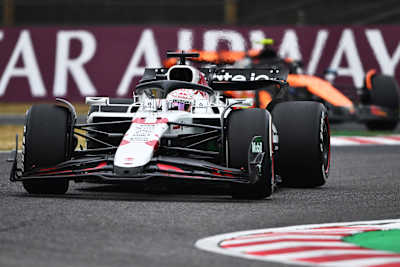
Max Verstappen is pursued around Suzuka by Lando Norris
© Getty Images/Red Bull Content Pool
Over the course of the season, the Oracle Red Bull Racing team, led by new boss Laurent Mekies, made the car more stable and with a wider operating window without compromising on speed. From the Dutch Grand Prix onwards, Verstappen was never off the podium, winning six of the final 10 races including the last three. He took a championship that looked to be wrapped up by the Hungarian Grand Prix down to the wire.
In 2026, it's a full reset for the teams as F1 introduces the biggest rule changes in the history of the world championship. In come a new generation of engines, as well as new chassis shapes and aerodynamics as F1 opens a new chapter. While 2026 represents a radical overhaul, it's not the first time the rules of F1 have changed: it happens every few years as the series balances sporting brilliance with technological excellence and relevance to the wider car industry. F1 is a relentless pursuit of perfection. Discover how these magnificent machines have evolved through the decades.
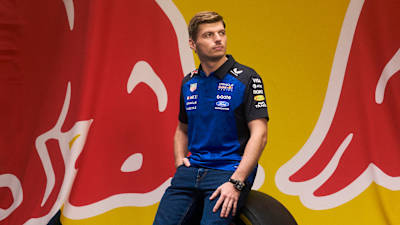
Max Verstappen is ready to go in 2026
© Khalil Musa / Red Bull Content Pool
01
Early days (1950s–1960s)
Grand Prix racing began in France in 1901 and as the sport gained popularity, the FIA (Federation Internationale de I’Automobile) organised the biggest races into a European Championship – the forerunner of F1. In the late 1940s, the FIA set up a new set of rules governing the highest level of racing, calling it Formula 1. These regulations formed the basis of a new World Championship, which began at Silverstone in the UK in 1950. It consisted of seven rounds – four of which are still part of the championship and run on the same circuits: Silverstone (Great Britain), Monte Carlo (Monaco), Spa-Francorchamps (Belgium) and Monza (Italy).
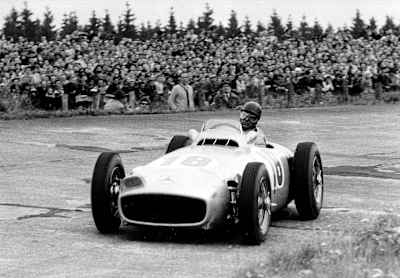
Juan Manuel Fangio at the 1954 German Grand Prix
© Daimler AG
The first superstars were Alberto Ascari, Stirling Moss and Juan Manuel Fangio – the Maestro from Argentina who dominated the sport, winning five world titles – a feat unmatched until Michael Schumacher earlier this century. The cars were heavy and relied on the pure grunt offered by the engine mounted in front of the driver. Aerodynamics started and finished with a lozenge-shaped car and there was even less thought given to safety: the course was lined with hay bales and the pilots raced in cotton boiler suits (usually with a shirt and tie) with a polo helmet perched on their heads as they peered over the top of the bonnet.
Seat belts eventually came in although American driver Masten Gregory preferred to jump out of the car rather than be anywhere near it when it crashed and exploded. That may sound crazy, but he stayed in one piece and lived long enough to retire from F1.
02
The first F1 rule changes
The first major change in F1 regulations was in 1958 and included homologation of fuel, reduced track size and saw the arrival of rear-engined cars. Produced by Cooper, the T44 Cooper-Climax was lightweight and nimble. Suddenly F1 was dominated by small teams comprised of imaginative engineers, designers and skilled drivers who could build their cars cheaply, race, repair, refine and race again. 1958 also saw the advent of the Constructors’ World Championship, which rewarded the so-called 'Garagistes' with prestige and, more importantly, cash.
So, while the mighty Maserati withdrew due to financial difficulties, in came a new team, Lotus, led by Colin Chapman, who developed some of the most important cars in F1 history over the next 20 years. In 1959, Jack Brabham and Cooper became the first team to win both the Drivers' and Constructors' World Championships and suddenly there was a new template for F1 success.
03
The 1960s: A decade of innovation
In 1962, Lotus used an aluminium sheet monocoque chassis to replace the heavier steel frames that cars were built around. The monocoque was lighter, stronger and more stable – and unbeatable in the hands of Jim Clark. Introduced in 1967, the Ford-Cosworth DFV offered teams a superb engine that was powerful, reliable and easy to maintain. It was also affordable, making it possible for smaller teams to compete with the front runners. It won 12 drivers' World Championships from 1968 until 1982.
04
1970s: The era of aerodynamics
In the late '60s, wings began appearing on cars, but they had become increasingly ungainly and unsafe. In the 1970s, the FIA standardised the rules and F1 entered the age of aerodynamics. Lotus were once again in the vanguard with the wedge-shaped Lotus 72 that channelled cooling air past side-mounted radiators (sidepods) and over the rear wing to generate downforce. The result was more grip and more speed as Lotus won three Constructors' titles in four years.
In 1978, Lotus were back, this time with ground-effect technology – which used airflow under the car to create massive amounts of downforce, sucking the car closer to the road and increasing grip and overall speed. Mario Andretti drove the Lotus 79 to the title in 1978 and ground-effect dominated design until it was banned in 1982.
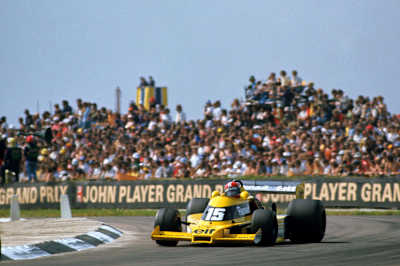
Renault begin the turbo era in 1977 with the RS01
© DPPI
05
1980s: A turbocharge breakthrough
While Lotus relied on clever chassis design, Renault were working on more powerful engines, unleashing the first-ever turbocharged F1 car, the RS01, in 1977. The engines were powerful, but unreliable. It was a year before driver Jean-Pierre Jabouille even completed a Grand Prix. He scored its first (and last) points at the 1978 U.S. Grand Prix. Turbos were slow to take off – quite literally – thanks to turbo lag as the compressor built up pressure. Once the tech worked however, it was awe-inspiring. In 1982, John Watson qualified P22 for the U.S. Grand Prix West in Long Beach, but his McLaren's Porsche engine was so powerful that he was quick enough to pass his way to the front and take the win. It's still an F1 record.
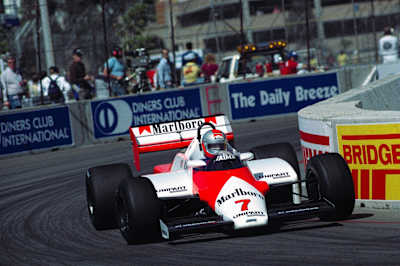
Watson’s drive from 22nd to victory is a record
© Rainer W. Schlegelmilch / Getty Images
In 1983, Nelson Piquet became the first turbo-charged F1 champion in a BMW-powered Brabham. In 1984, Niki Lauda took his third world championship with McLaren, as he and Alain Prost won 12 of 16 Grands Prix. Turbo technology was banned in the late 1980s, though, due to its unpredictable power surges, replaced by stable naturally aspirated 3.5-litre engines.
06
1990s–2000s: Hi-tech to the front
In the 1990s, teams piled sophisticated tech into their cars. The Williams FW14 combined the first semi-automatic gearbox with traction control. While Ayrton Senna took his third title for McLaren-Honda in 1991, the FW14B added active suspension and proved unbeatable as Nigel Mansell won nine of 16 races to become 1992 champion. Prost added his fourth title the following year, also for Williams.
In 1994, in a bid to slow down cars and put driver skill to the front, the FIA hastily banned electronic driver aids such as traction control, launch control, ABS and active suspension. Cars became harder to drive, culminating in Senna’s fatal crash at Imola. That tragedy brought in a raft of safety measures, including better helmets, pit-lane speed limits and a wooden skid block to measure ride height. Further measures arriving before the end of the century were a medical car and wider run-off areas. Michael Schumacher enjoyed a period of relative stability in F1 rules in the early 2000s to produce a staggering run of five consecutive titles as Ferrari dominated the decade.
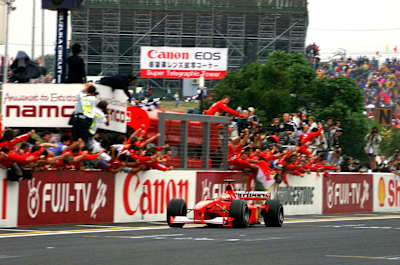
Start of the Schumacher era
© DPPI
07
2009: The rise of Red Bull Racing
At the end of the decade, F1 introduced a radical new set of rules, bringing in KERS (Kinetic Energy Recovery System) as a response to the climate crisis and dramatic cost caps (from 2010) due to the global recession. KERS allowed drivers to convert braking energy into additional power – deployed as a boost. The cars were cleaner in design, becoming taller and narrower to reduce aerodynamic wake.

Sebastian Vettel in the RB5 with its high rear wings and wider front wings
© Getty Images / Red Bull Content Pool

From 2009 to 2013, car chassis had high wings and extra aero kit
© Getty Images / Red Bull Content Pool

The RB05 introduced new aerodynamic ideas such as the shark fin
© Getty Images / Red Bull Content Pool
With engine power output standardised across the grid, Red Bull Racing thrived with its brilliant chassis designs: in 2010 the RB6 used exhaust gases (blown diffusers) to create more downforce. The RB6, RB7 and their successors helped propel Sebastian Vettel to four Drivers' crowns and the team to four Constructors' titles.
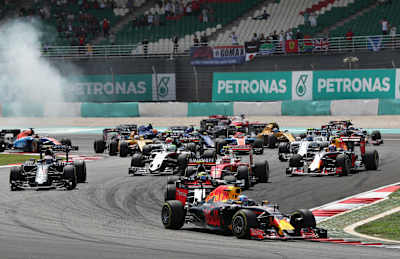
From 2014-2021 cars had a lower profile and relied more on engine power
© Getty Images / Red Bull Content Pool
08
2014: Engine power and a return of ground-effect
The last two major F1 rule changes had a major effect of Red Bull Racing and informs their approach to 2026. In 2014, the emphasis switched from chassis design to engine power. Turbochargers were back, this time as a component of new, smaller and fuel-efficient hybrid engines. ERS was expanded to include kinetic energy recovery (ERS-K) and heat energy recovery (ERS-H), making F1 more sustainable and relevant to road car technology. But the rules favoured teams that build their own engines rather than customer teams like Red Bull Racing. While the team still took victories, they were at a disadvantage.
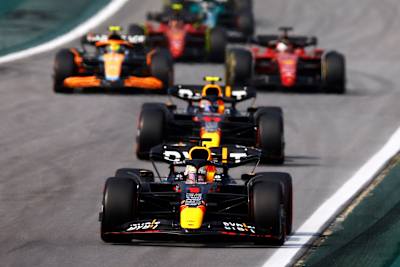
The return of ground effect in 2022 put Max Verstappen out in front
© Getty Images / Red Bull Content Pool
In 2022, the pendulum swung back with the return of ground effect, this time boosting fuel efficiency. Oracle Red Bull Racing were the first to master this tricky technology and produced the most successful car in F1 history in the RB19. Having produced a brilliant run to his first title in 2021, Max Verstappen produced the most dominant run of victories as he swept to the F1 World Championship again in 2022, 2023 and 2024.
09
2026: A new chapter in F1 racing
The next chapter of F1 will be powered by the most fuel-efficient engines in the series' history. The current hybrid power unit are the most efficient in the world, delivering more power whilst using less fuel. From 2026, the hybrid unit will produce three times more power. Half the engine's – or powerplant – 1,000bhp output will come from electric energy and half from a 1.5L internal combustion engine using 100 percent sustainable fuels.

Oracle Red Bull Racing´s new RB22
© Vladimir Rys / Red Bull Content Pool

Oracle Red Bull Racing´s new charger: the RB22
© Vladimir Rys / Red Bull Content Pool

A closer look at the Oracle Red Bull Racing´s new RB22
© Vladimir Rys / Red Bull Content Pool

Up close: Oracle Red Bull Racing´s new RB22
© Vladimir Rys / Red Bull Content Pool

Oracle Red Bull Racing´s new RB22
© Vladimir Rys / Red Bull Content Pool
The cars are also smaller, sleeker and lighter. The ERS-K unit can now recharge the battery with twice as much energy per lap, through actions like recovery under braking or lifting off the throttle at the end of straights. That energy can be used by the drivers strategically to overtake or defend. DRS is out, replaced by active aerodynamic pieces of body kit that help the cars grip through the corners or accelerate along the straights.
Red Bull Racing enters this new era as an engine manufacturer, as Red Bull Powertrains partners with Ford to produce its first powerplants from scratch. It represents a huge step, but one that puts the team completely in charge of every aspect of its F1 campaign, rather than buying in engines as a customer team. Former driver David Coulthard, who drove for Red Bull Racing on their F1 debut in 2005, praised the move: "When I was at the team, I was encouraging them to buy Cosworth and build their own engines.
"If you want to be in control of your own destiny, you don't rely on anyone else. Now the team is 100 percent in control of its own destiny. It will be challenging, of course, and it may not work in the beginning. It didn’t work in the beginning as a Formula 1 team, but it eventually worked and Red Bull has the commitment, resources and people to make it work."
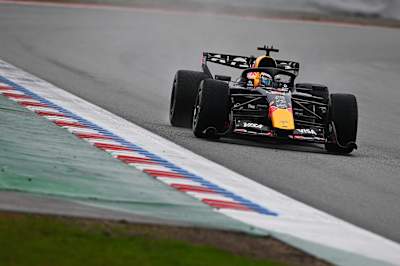
Max Verstappen test the new RB22 for the first time in Barcelona
© Getty Images / Red Bull Content Pool
10
2030: What happens next?
F1's goal is to hit net zero by 2030. That’s not just the cars on track – that's also all the transport involved in moving the F1 circus around the world. That hybrid technology is complex and costly, but it is hugely important to the auto industry and beyond, which is why more engine manufacturers are coming to F1 as Ferrari and Mercedes are joined by Red Bull Powertrains and Ford, Audi, Honda and (from 2029) General Motors.
The rising cost and environmental damage caused by fossil fuels means sustainability will remain high on the list of priorities for motorsport. In an announcement from F1: "F1 can continue to be a pioneer for the auto industry, working with the energy and automotive sectors to deliver the world’s first 100 percent advanced, sustainable-fuelled power units, driving down carbon emissions across the globe."
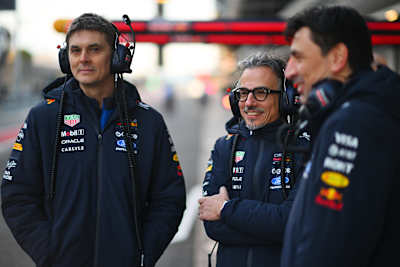
Team boss Laurent Mekies with key men Ben Waterhouse and Pierre Waché
© Getty Images / Red Bull Content Pool
However, there's an argument that ERS is only relevant in developed countries. If, by 2030 F1 has taken ERS as far as it can, it's possible the series could drop the technology – which is heavy and technically complex – and focus instead on developing the next gen of clean, durable, fuel-efficient and lightweight engines that run on sustainable fuels. On track, that would mean even lighter and quicker cars.
F1 boss Stefano Domenicali said: "As soon as the 2026 regulations are defined, we will start to think about what the next steps will be. It is a personal consideration of mine that if sustainable fuels work, we will need to carefully evaluate whether to continue with hybrid [power units] or whether better solutions will be available."
The road ahead is clear in that F1 will continue to mix sporting excellence and entertainment on the circuit with technological brilliance behind-the-scenes to keep the sport on the fast track to the future.


