
Padel
A beginner's guide to the perfect padel serve
The padel serve rarely wins a point on its own, yet it shapes almost every rally that follows. Here's how to serve in padel step by step, with every rule you need under the current FIP rulebook.

The serve in padel is key to setting up a rally, but it plays a very different role than in sports like tennis.
The serve is restricted to underhand contact at or below waist height, so it rarely becomes an ace weapon that wins the point directly like in tennis. However, it can still strongly influence the point if executed with precision.
For pro players, the serve is a setup tool that is rarely used to win the point outright, but instead to pressure the opponent by targeting specific areas or starting a game plan. In amateur padel, however, the serve can be a potent weapon that makes the difference between winning and losing. Since the serve is the only type of shot that depends solely on the player hitting it (it doesn't depend on the pace or spin of your opponent's last shot), a bit of practice can make a great difference.


Serves aimed at the side walls are especially effective because they create tricky angles and rebound effects that make the ball hard to return cleanly. By mastering control, speed and placement, players can hit the ball how and where they want.
The rules around the serve have also changed. The International Padel Federation (FIP) approved an updated rulebook in Acapulco in November 2025, and it has been applied since 1 January 2026 across Premier Padel and FIP events. Your hitting motion stays the same, but the new wording changes where you stand and how far the ball can move before you hit it. This guide follows that current rulebook.
01
Step-by-step: How to serve in padel
Prepare your position and stance
Start behind the service line, with your non-dominant foot slightly forward, and pointing toward the diagonal service box. Face slightly sideways so you can rotate your hips and shoulders to transfer spin and power to the ball. At the beginner level, stand close to the centre of the service box for versatile serve placement.
Under the current FIP rules, you need at least one foot behind the service line when you start your swing, and you must stay between the imaginary extension of the center line and the side wall until you hit the ball. Until 2025, both feet had to stay behind the line, so you now have slightly more freedom to lean in and start your run to the net earlier.
Each game starts with a serve from the right-hand side of your court into the diagonally opposite box. After every point, you switch to the other side.
Pro tip: As you progress, experiment with different starting positions based on the strategies you planned with your team-mate.
Mastering the ball drop
Hold the ball at waist height with your non-hitting hand and keep it steady for a controlled drop. Since you can't hit the ball above your waist, the padel serve doesn’t require a high toss; instead, gently release the ball to fall naturally to the ground.

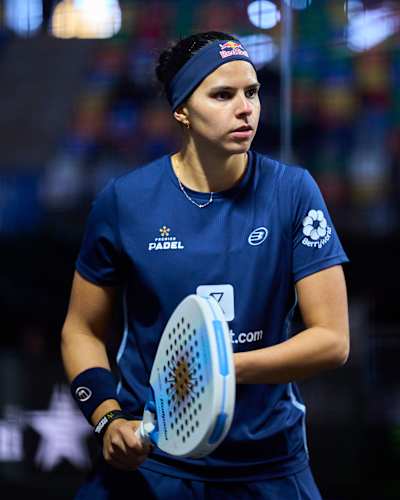
Ariana Sánchez drops the ball from her waist to start her serving motion
© Premier Padel/Red Bull Content Pool
Since the start of the 2026 season, the new rules require the ball to bounce inside your own serving area, behind the service line, and not cross the service line or the imaginary extension of the centre line before you strike it. A drop that drifts too far forward or across the middle counts as a fault, even if the serve lands perfectly. Release the ball slightly in front of your leading foot and out to the side of your body.
Pro tip: Practicing the drop is crucial because an uneven or rushed release can make your serve's speed and direction inconsistent.
Timing and swing mechanics
Once the ball hits the ground, contact it at its highest point after the bounce, just below waist height, with a relaxed, controlled back-to-front swing rather than an up-and-down motion. Use the continental grip (imagine you're shaking hands with it or using the side of the racket as a hammer) for optimal control and versatility. Keep your swing fluid and smooth, avoiding jerky or overpowered motions and excessive wrist movement, and transfer your body weight from your dominant foot (placed behind the non-dominant one in your initial stance) forward, fully rotating your body 90 degrees sideways.
Once the motion feels natural, start choosing where each serve goes. Most club players work with three targets. A serve deep toward the side glass forces an awkward rebound. A serve down the middle, close to the center line, narrows the angles available on the return and usually catches the returner off guard, since most serves aim toward the side walls. A serve straight at the receiver's body reduces reaction time and forces a quick decision. Mixing them keeps the returner guessing and earns you more weak returns than extra pace.

Alejandro Galán has one of the best serves in the world
© Premier Padel/Red Bull Content Pool
Pro tip: As you develop your serve, try adding spin. For example, as you strike, brush slightly under the ball with your racket to create subtle backspin.


Follow through and positioning
Finish your serve with a smooth follow-through aligned with the target direction. After contact, your racket should naturally follow the path toward the intended box, increasing the feeling of control and accuracy. As soon as you finish your serve, move toward the net to gain an advantage for the next shot.
While you serve, your partner usually waits at the net, ready to react to your opponent’s return. Join them quickly so you are both in position to dictate how the point is played. Treat your first step forward as part of the follow-through, then take a small split-step as the receiver makes contact so you stay balanced and ready to volley.
Pro tip: Control your serve's pace so you have plenty of time to get to the net. See below for more on this.
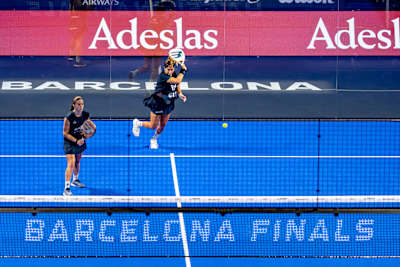
Bea González starts sprinting to the net right after her serve
© Alberto Nevado Red Bull Content Pool
02
Avoid these common serve mistakes
1. Serving too fast
A serve that's too fast may seem like a good idea, but it leaves little time to reach the net, where you should spend most of your time. The net is where you usually win points in padel, so use your serve to establish a strong position with your team-mate. Balance serve speed and placement, leaving enough time to get into position after the serve.
2. Height errors and faults
Unlike in other racket sports, padel requires you to strike the ball at or below waist level. Serving above this line is a fault, and two in a row cost you the point. Practicing a controlled ball drop at waist height helps you stay within the legal boundaries and maintain a consistent serve technique.
3. Staying stationary after the serve
Many beginners stay in their serving position instead of moving forward. In padel, movement and placement are everything, and the team that owns the net usually ends up winning. Right after serving, sprint toward the net to position yourself for the next shot, control the pace of the game and put pressure on your opponents from the start of the rally.
4. Serving from the wrong spot
Stricter position rules have made this mistake more costly, even for the pros. During a match at the Premier Padel Miami P1 in March 2026, Mike Yanguas asked for a video review of Martín Di Nenno's position on a second serve. The replay showed Di Nenno served from an illegal spot. The double fault gave Yanguas and Franco Stupaczuk the game, and the set went to a tie-break at 6-6. Check your feet before every serve.
5. Rushing between points
FIP rules allow a maximum of 20 seconds between points, and in official competition, a second time violation costs the server their first serve. Beginners tend to rush instead, especially after losing a point. A short routine, such as two bounces of the ball, one breath, a look at your target, and even a couple of words with your partner to adjust your strategy, keeps you calm and well within the limit.
03
The rules of serving
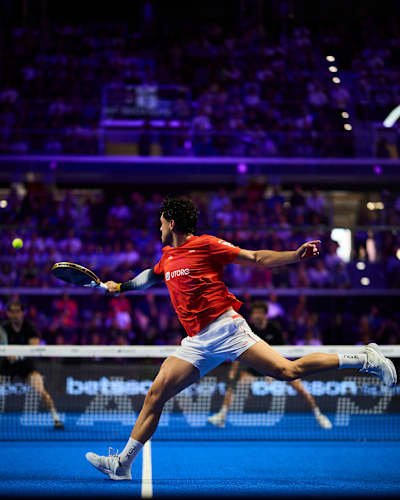
Premier Padel now settles deuce with the Star Point
© Premier Padel/Red Bull Content Pool
- Underhand: Serves are hit underhand – similar to a regular forehand shot - and must first bounce on the ground inside the server’s own serving area, behind the service line.
- Position: The server must keep at least one foot behind the service line., between the imaginary extension of the center line and the side wall, and must stay there until the ball is hit. At contact, at least one foot must touch the ground. The server can't jump.
- Ball path: The ball can't cross the service line or the imaginary extension of the centre line before the server hits it.
- Height: The ball must be hit at or below the server's waist height
- What counts as a valid serve?: The ball must first bounce inside the returner’s box diagonally from the server’s box, and not hit the fence. A serve that bounces in the box and then hits the glass is valid, but one that touches the metal fence before its second bounce is a fault.
- Avoid the lines: The server can't touch the service line or the imaginary center line with their feet before hitting the ball. The receiving box lines count as in, so a serve that lands on a line is good, even if just a tiny part of the ball hits the line.
- Alternate serves: Players take turns serving, so each player serves once every four games.
- Faults: Double faults work like tennis: you have two chances and if you miss both, the opponent is awarded a point. Missing the ball completely when you swing at it also counts as a fault.
- Let: Lets are also like tennis. If you serve a valid ball that hits the top of the net, you get another chance to serve. If the let happens on your first serve, you still have two serves to play with. If it happens on your second serve, you replay only that second serve.
- Hitting the receiver: If the serve strikes the receiver or their partner before it bounces, the point goes to the server.
- Time: Players have a maximum of 20 seconds between points.
- Star Point: Premier Padel now settles deuce with the Star Point. If the game goes back to deuce after two advantages, a single deciding point is played, and the receiving pair chooses which side receives.
04
Watch the world's best padel on Red Bull TV
Red Bull TV broadcasts Premier Padel from the quarter-finals onwards, usually every match from Friday to Sunday, in territories without a local broadcast partner.
Find more information on all tournaments, including ticketing, match schedules, current scores, player updates, and all the latest news on the Premier Padel website.
About the author