Padel positions explained: who plays right, who plays left and why
Your side of the court shapes how you defend, attack and build points. Here’s what it takes to play right or left, with lessons from padel’s biggest stars.
Every padel pair splits the court down the middle, and that line shapes how the game flows and which player takes responsibility for every shot. The player on the right and the player on the left receive different balls, hit different shots, and carry different responsibilities, from the first return of a match to the smash that closes it.
At the top of the Qatar Airways Premier Padel Tour, those roles are so defined that most professionals spend their whole careers on one side. Here is what each position demands, which traits tend to separate right-side players from left-side players, and how four of the best padel players in the world put it into practice.
01
How the padel court is divided
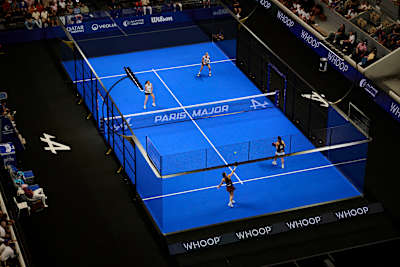
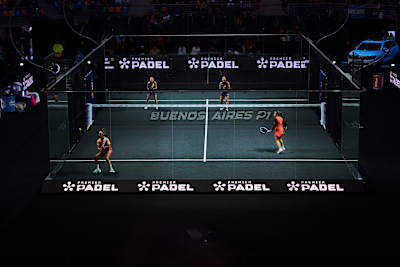
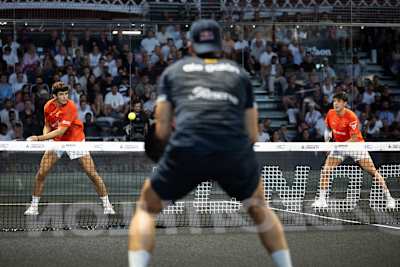
A panoramic view of the Philippe Chatrier court at the 2026 Paris Major
Stand behind your own baseline and look at the net. The right-side player covers the right half of the court. In Spanish, the language most of the pro tour speaks, this player is the drive, or the jugador de derecha (“right-side player” or “forehand player”). The left-side player covers the left half and is known as the revés ("backhand”).
For two right-handed players, that set-up has big consequences. The left-side player has the forehand facing the middle of the court, while the right-side player has the backhand there. So most balls down the centre belong to the left-side player, and so do most of the lobs and overheads that drift between the two.
The score adds another layer. The right-side player returns serve at 0-0, 15-15, 30-30 and 40-40. The left-side player returns at 15-0, 0-15, 30-15, 15-30, 40-30, 30-40, 40-0, 0-40 and every advantage, which means a large share of game points and break points are played on the left. That's one of the main reasons pairs place their most decisive player there.
The rules allow anyone to stand anywhere. After decades of professional padel, though, a clear pattern has settled in. The right side builds the point, and the left side finishes it.
02
The right side: the skills that make a great drive
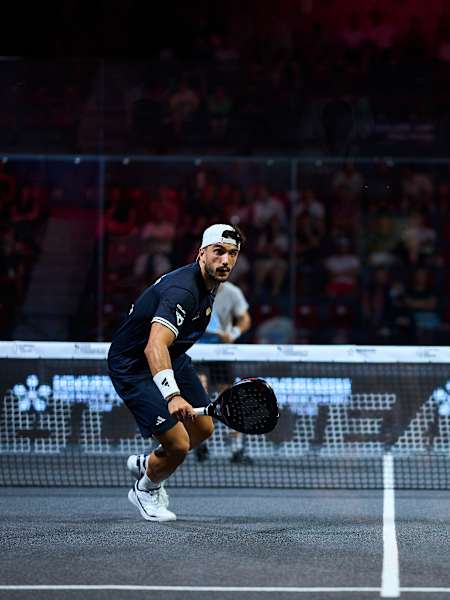
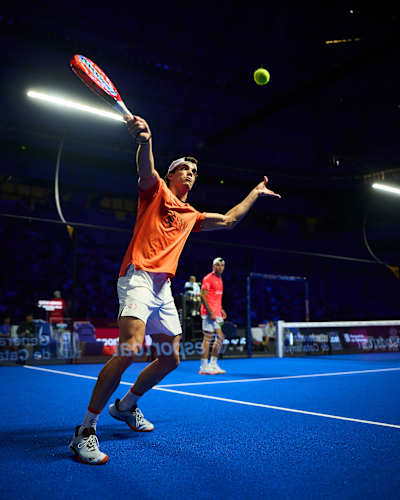
Juan Lebrón hits a backhand shot off the wall rebound
A right-side player wins by making the opponent uncomfortable, one ball at a time. Consistency comes first. They will play more balls from the back of the court than their partner, so they need to defend from the corner, read how the ball comes off the back glass and the side wall, and send it back deep or low every time.
The backhand matters more on this side than anywhere else. With the backhand facing the middle, drive players will block volleys, defend balls at their hip and play cross-court backhands out of the corner. A weak backhand on the right gets exposed within a few points.
The return of serve is another key job. Right-side players set the tone of each game, since they are the first ones to return, so they need an answer to their opponent’s serve that keeps the server back, either low at the feet or with a lob that sends both opponents to the glass.
Then there's the forehand off the back wall, also called bajada de pared. When a lob bounces and comes off the glass, a good right-side player turns that defensive position into an attacking shot with one swing.
Right-side players tend to be patient, quick on their feet and comfortable in long rallies, with strong defensive skills. They often act as the pair's compass, deciding where to play the ball to open up gaps, choosing when to slow the point down and when to give their partner the ball to finish.
03
Juan Lebrón: the right-side player who learned to attack
Juan Lebrón, one of the sport’s most influential players and currently playing in the world’s number-three team alongside smash specialist Leo Augsburger, became one of the faces of modern padel by turning the traditional concept of the right-side player from a defensive specialist into a versatile, transition-oriented weapon who could attack and smash almost as much as the left-side player. Alongside Alejandro Galán, he formed the pair that held the world number one ranking for three straight years and pushed the sport toward a faster, more aggressive style.
Lebrón still does the right-side basics and does them better than almost anybody else. He defends the corner, plays the backhand in the middle and keeps the return deep. His quickness in moving from defence to attack truly sets him apart. A lob that pushes him to the glass often comes back as a hard forehand off the wall, and if the opponents leave the net for half a second, he's already there to volley.
In 2026, he's paired up with Leo Augsburger, one of the hardest smashers on tour. Lebrón builds the point, Augsburger takes the high balls in the middle, and the pair won the Brussels P2 in April, beating Arturo Coello and Agustín Tapia in the final, and qualified for the season-ending Premier Padel Finals in Barcelona.
04
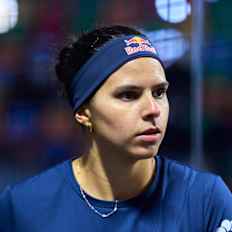
Delfina Brea: defence that turns into pressure
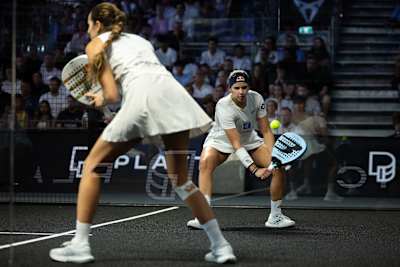
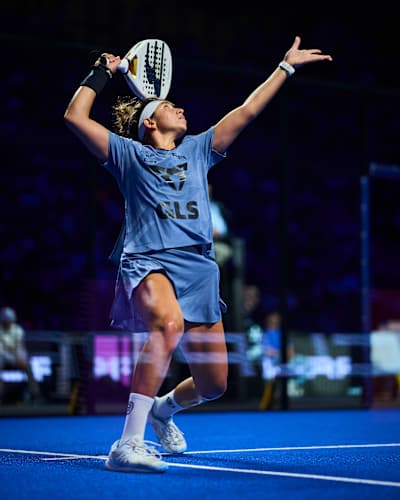
Delfi Brea hitting her signature backhand lob off the wall rebound
Delfi Brea, currently world number one in the women’s competition, is a textbook example of how a right-side player should approach the competition. Consistency and precision are her main skills, but Brea’s readiness to attack separates her from more “traditional” right-side players.
Brea plays with Gemma Triay, who covers the left. Their system relies on long, demanding rallies. Brea absorbs pressure from the corner, sends balls back deep and waits for the moment when the opponents lose their position. When that moment arrives, she steps forward. She is strong in fast volley exchanges at the net and has a reliable overhead, which means opponents cannot simply lob over her and wait.
That mix of defence and offensive decisiveness took her to world number one alongside Triay, an extraordinary left-side player. Brea’s self-demanding nature and desire to be the best make the difference: “I'm a demanding person and I trust that's what will carry me forward,” she says.
The results in 2026 back it up. Triay and Brea have six titles this season, including the Italy Major in Rome, and reached 14 of the 17 women's finals through to the Paris Major. That level of consistency is what the right side looks like when played well.
05
The left side: the skills that win the big points
Bea González executes a shot from the left-side corner of the court
The left-side player usually plays a bigger role in closing points. With the forehand facing the middle, backhand-side players take the balls down the centre, cover the lobs that land between them and their partner, and finish most of the points their partner has built.
Left-side players must master aerial shots, with the smash as this position's signature stroke. The best left-side players can hit a flat smash to the feet, a víbora with heavy slice, and the two smashes that bring crowds to their feet: the x3, which flies out of the court over the side wall, and the x4, which leaves the court over the back fence. To do that, players need timing, explosive legs and the confidence to go for the shot when the ball is above their head.
The left side also demands nerves of steel. Since left-side players return serve on many game points and break points, they face more pressure moments than their partner, so they need a solid and reliable return when the score is tight.
The traits fit the job. Left-side players are often taller, more explosive and more willing to take risks. They need creativity to find angles from the left corner and the personality to accept that some of those risks will fail.
06
Alejandro Galán: power, timing and the decisive ball
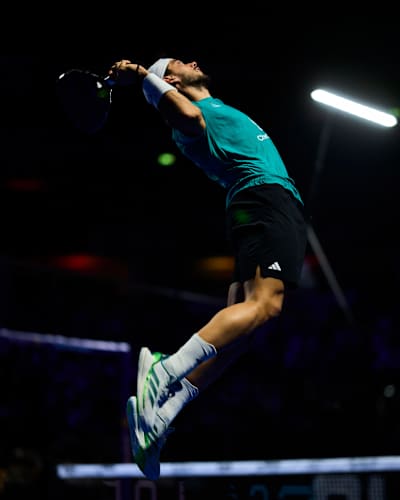
Alejandro Galán performs his signature jumping smash
Alejandro Galán, one of the best players in padel history, and currently part of the world number-two pair alongside defensive maestro Federico Chingotto, is the reference for left-side play on the men's tour. He has everything the position demands and more: elite court coverage thanks to his reach and speed, a heavy smash, quick hands at the net, unstoppable forehand and backhand volleys, a strong forehand down the middle, and the confidence and determination to go for winners in the tightest moments.
What makes Galán so dangerous is how many ways he can finish a point. Lob him short and he ends the point with a thunderous smash. Lob him deep and he can still play a víbora that kills the ball in the corner. Leave a ball in the middle and his forehand volley takes it away before either opponent can react. He also defends better than his reputation suggests, which allows him to stay in rallies until the right ball appears.
His partnership with Chingotto shows the classic split. Chingotto, smaller and incredibly fast, covers the right side and gets almost every ball back. Galán waits on the left for the chance to end it. The two have been the main challengers to the world number ones over the past few seasons.
Bea González, consistently ranked among the top four players in the world, plays the left side the way it should be played: she shows outstanding court coverage and doesn’t hesitate to finish points. Her smash is among the most powerful in women's padel, her footwork and intensity are unmatched, and she can easily create advantages with volleys, drop shots or smashes when an opponent's defence isn't nearly perfect.
She backs that power with a complete game. González takes the middle with her forehand, moves forward at every chance and plays the advantage points without hesitation. Opponents know that a lob towards her side carries a risk, and that knowledge changes how they play the whole match.
In 2026, she's teamed up with left-handed heavy hitter Paula Josemaría, and the results arrived fast. The pair won five consecutive tournaments between the Miami P1 in late March and the Buenos Aires P1 in mid-May, the longest winning streak of the women's season.
08
Left-handers: why they almost always play on the right
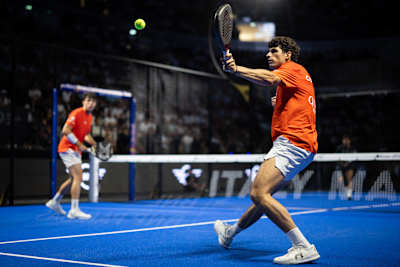
Arturo Coello hits a forehand shot from the back of the court
Left-handed players complicate the neat division above, and coaches love them for it. At the professional level, every lefty plays on the right side.
The reason is geometry. A left-hander on the right has the forehand facing the middle of the court. Paired with a right-hander on the left, that means two forehands down the centre. Balls between the two players, which usually go to the left-side player's forehand, now have two strong options. Opponents lose the safest target in padel, and the middle stops being a weak spot.
The advantages go further. A lefty on the right can also hit smashes and víboras from the right side with the forehand, so both players have the overhead to attack high balls. The spin and angles of a left-handed player are also unusual for opponents, who spend most of their careers facing right-handers.
There are trade-offs. A pair with a lefty on the right has both backhands towards the side walls, so opponents often aim at the corners. Balls through the middle also create confusion and miscommunication for a right-handed plus left-handed pair, since both players are in equal position to return them, with their forehands aimed toward the middle. Still, most coaches will say that playing alongside a left-hander is usually an advantage, because covering the middle with the forehand protects the area where most points are decided.
09
Tapia and Coello: the blueprint for complementary roles
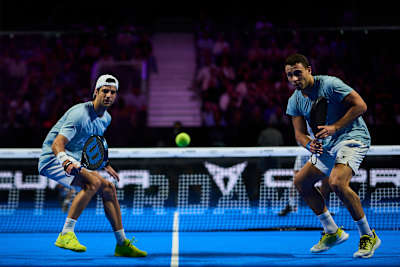
Agustín Tapia and Arturo Coello put relentless pressure on their opponents
The clearest example on tour is the world number one pair. Agustín Tapia is right-handed and plays on the left side. Arturo Coello is left-handed and plays on the right, which means both stars cover the middle with powerful smashes and precise, pressure-heavy volleys and aerial shots.
That combination gives them two forehands in the middle and two players who can attack every high ball. Coello, tall and powerful, can finish points from the right side in a way few right-side players can. Tapia, one of the most creative players the sport has seen, adds touch, angles and improvisation from the left. Opponents have no comfortable place to send the ball.
The results back it up. Tapia and Coello start every week as the pair to beat, and in 2026 they have split almost every men's title with Galán and Chingotto, including both Majors played so far, in Rome and at Roland Garros.
If you play padel at club level, the best way to find your side is to test both and pay attention to how each feels. A few signs can guide you:
You are a right-side player if you enjoy long rallies, trust your backhand, like defending from the glass, and get more satisfaction from setting up a point than from finishing it.
You are a left-side player if you have a strong overhead, like taking the middle with your forehand, stay calm on big points, and enjoy going for winners.
If you are left-handed, start on the right. Your forehand in the middle will make life easier for any right-handed partner.
Even though coaches generally advise amateur players to develop skills to adapt to both sides, some players prefer to stick to one, stay there as much as possible and perfect the skills associated with it. At the elite level, stars usually become specialists in their positions.
Which side of the line will you be more comfortable on?
Lebrón, Brea, Galán and González can all adapt to any situation and position thanks to their exceptional skills (Lebrón, for example, has played several years in both positions), but they all built their main strengths over years of playing in the same position. The habits, angles, and instincts that make them great come from that repetition.
About the author
Javier is CMO at Siux Padel and a certified padel coach with deep roots in the sport, on and off the court. He previously led content and digital strategy at Babolat Padel. As a racket-sports writer, he brings an insider's perspective on the players, events, brands and trends shaping padel's global rise. He's also an avid player and one of the most active voices in the padel industry on LinkedIn.