Tennis vs squash vs padel: How do the three big racket sports differ?
Dominating racket sports participation around the world are tennis, squash and padel. But just how different are they? Here are their unique differences explained.
A racket, a ball, a net or some walls... and go play! Tennis, padel and squash have many elements in common, but only at first glance. If you dig a little deeper, you'll quickly realise that they're significantly more different than we think.
All three sports are growing at the same time, but in different ways. According to the International Tennis Federation (ITF), tennis recently surpassed 100 million players worldwide, while padel's governing body states that there are more than 40 million active padel players. Squash has also gained further recognition, with the International Olympic Committee adding the sport to the list of events at Los Angeles 2028.
Player numbers are clearly growing, but let's check out the ways in which these three popular racket sports differ.
01
Padel, tennis and squash: where they all began
Tennis traces its roots back to medieval France, where it was known as 'jeu de paume' and played primarily by monks as a handball game. It evolved to use rackets in the 16th century, becoming a favorite of European royalty. The modern game of lawn tennis then took shape in the late 19th century in England, giving rise to the sport we know today, complete with its standardised rules and global tournaments. Centuries later, it remains the most widely played of the three.
The ITF Global Tennis Report 2024 (its most recent edition) counted almost 106 million players across 199 nations, a 25.6% increase on 2019. In the US alone, participation reached a record 27.3 million players in 2025, the sixth consecutive year of growth, according to the United States Tennis Association.
Padel is the newest and is growing rapidly around the world
Squash originated in the early 19th century at Harrow School in England, where students adapted the older games of handball and rackets by playing with a punctured ball against the school walls. This new version required a softer ball, which could be used in enclosed areas, leading to the development of the modern squash court and its distinct gameplay.
Today, World Squash, the sport's governing body, counts around 50,000 courts in more than 185 nations. Its next milestone comes at the Los Angeles 2028 Olympic Games, where squash will make its debut with 16 men and 16 women chasing medals at the Universal Studios lot.
Padel meanwhile was invented as recently as 1969, by Mexican Enrique Corcuera as a hybrid of tennis and squash. The game was designed to be played in enclosed spaces with walls, using solid paddles instead of rackets. It quickly gained popularity in Spain and later spread to Europe and the Americas, becoming a favoured sport for its social aspect and accessibility. Few sports have grown faster since.
The FIP (International Padel Federation) World Padel Report 2026, published in October 2026, counts more than 40 million active players and 1.1 million registered players, a 30.5% rise in a year. Padel is now played in 191 countries and territories, on more than 91,200 courts.
02
Rackets vs paddles
The first major difference is the name and construction of the playing implements: in tennis and squash, a strung racket is used, while padel features solid paddles with small holes on the surface. The sizes of all three types of rackets are also significantly different. Tennis and squash rackets are larger than paddles, but lighter.
As laid out by the sport's rules, the frame of the tennis racket shall not exceed 73.7cm in total length and 31.7cm in total width. The hitting surface, or stringing, shall not exceed 39.4cm in total length (measured parallel to the longitudinal axis of the handle). Tennis rackets usually weigh between 240 and 340 grams. As for the materials, most are made of carbon fibre, boron or Kevlar. They can also be found in aluminium, titanium or graphite constructions. They are designed to execute forceful swings and accurate serving.
Squash rackets are limited to a maximum length of 68.6cm, a maximum width of 21.5 cm, and a maximum strung area of 500 cm². The rules allow up to 255 grams, but most weigh between 90 and 150 grams.
The tennis racket is the biggest and most powerful of the three
While the materials used in squash rackets can be similar to the ones found in tennis, they often include composites of carbon fibre with additions of materials like tungsten or basalt. These additions aim to optimise weight distribution, improve racket stability and enhance the overall feel during play. The compact design and lighter weight of squash rackets aid in quick swings and manoeuvrability in the confined space of a squash court.
A standard padel paddle measures 45.5cm long, 26cm wide, and 38mm thick, and weighs between 330 and 400 grams. As for the manufacturing materials, padel paddles have a wide spectrum of materials: fiberglass, carbon fiber, EVA rubber, foam, or more unusual materials like Kevlar, graphene, and even tungsten.
All paddles feature a strap that players attach to their wrist to improve control and keep the paddle from flying out of their hands during explosive shots. They're designed, among other things, to hit the ball shorter distances, fit a smaller, enclosed space, and withstand incidental hits against the court walls. You'll also hear them called padel rackets, the term most players and coaches now use.
The game ball seems identical in tennis and padel, but it isn't. The squash ball is distinct, since the sport calls for a totally different type of ball reaction.
In tennis, the ITF classifies balls into three types: fast, medium and slow. Their weight must be between 56 and 59.4 grams and their diameter between 6.54cm and 6.86cm.
In contrast to the larger, bouncier balls used in padel and tennis, squash balls are smaller, with a diameter of about 4cm, and much less bouncy. Made from a raw rubber compound, they have a low bounce that increases as they warm up during play. Governed by the World Squash Federation (WSF), these balls come in various types, marked by colored dots – double yellow (super slow), single yellow (slow), green or white (medium), and red (fast) – to suit different player levels and court conditions.
Padel balls are very similar to tennis balls, but feature slightly less pressure and are smaller in size. The regulations of the FIP specify that padel balls must be made of rubber in yellow or white, have a diameter of between 6.32cm and 6.77cm, and a weight of between 56 and 59 grams.
Padel balls might look indentical to tennis balls, but they're not
How do the courts differ between tennis, squash and padel?
Tennis, squash and padel courts differ in many aspects. While tennis courts are considerably larger, padel courts are surrounded by four walls and fences that are integrated into the game, while squash courts eliminate the net and feature a four-sided enclosure limited by walls. Tennis also has by far the largest infrastructure. The ITF counts 698,034 tennis courts worldwide, 91.2% of them outdoors, compared with more than 91,200 padel courts and around 50,000 squash courts.
The tennis court is a sprawling rectangle of 23.77m x 8.23m separated by a net (expandable to 10.97m wide in doubles matches). The floor of the court can be grass, clay or asphalt.
Tennis is played on the largest court of the three sports and surfaces vary
Squash courts measure 9.75m long by 6.4m wide (13.72m long by 7.62m for doubles) and are enclosed by four walls. Surfaces are generally made of wood or synthetic materials, uniformly light to contrast with the small, dark-colored squash ball. The court features out lines at the top of the front wall and on the side and back walls. This fully enclosed design is essential for squash and makes it a very intense sport, allowing players to use the walls in fast-paced play, requiring agility and strategic thinking.
The padel court is a captivating blend of the previous two that generates dynamic rallies: a rectangle of 10m by 20m separated in the middle by a net. The surface of the court can be porous concrete and cement, synthetic grass or carpet. The color is usually green, blue or earthy brown. The most striking feature in padel courts are the walls surrounding it (with a minimum height of three metres each). They can be made of glass, acrylic or cement and it's allowed for the ball to bounce off them during the game, as long as it bounces on the floor first.
05
Scoring systems in the big three racket sports
Tennis uses a unique scoring system where games are scored as love (zero), 15, 30, 40 and game point. Matches are typically played in sets, with a player needing to win six games by a margin of two to take a set. Tiebreaks are employed when the game count reaches 6-6, requiring players to win points consecutively to secure the set, emphasising the sport's need for consistent performance and mental toughness.
Squash scoring can follow either traditional or point-a-rally scoring (PAR). In traditional scoring, points are only scored by the server. In PAR, which is used in professional play, points can be scored regardless of who serves. Matches are usually best-of-five games, with each game played to 11 points. A player must win by two clear points, making every rally crucial.
Padel adopts the same scoring system as tennis, with points counted as 15, 30, 40 and game, with sets played to six games and a two-game margin needed to win. Tiebreaks are also used at 6-6. This familiar scoring framework helps make padel accessible, particularly for tennis players transitioning to or from padel, facilitating a seamless adaptation to the game dynamics.
The big difference arrives at deuce. Since the start of the 2026 season, Premier Padel and the other FIP circuits have used the Star Point, a format approved by the FIP General Assembly in November 2025. At 40-40, teams play up to two advantages. If the game reaches deuce a third time, a single deciding point, the Star Point, settles it. Many clubs and amateur leagues still play the golden point, where one point decides the game at the first deuce.
06
How gameplay works in tennis, squash and padel
Technique
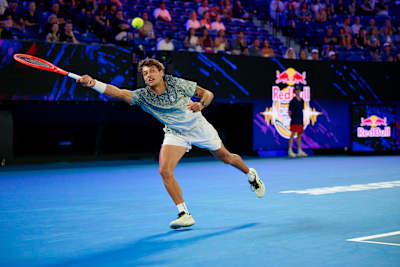
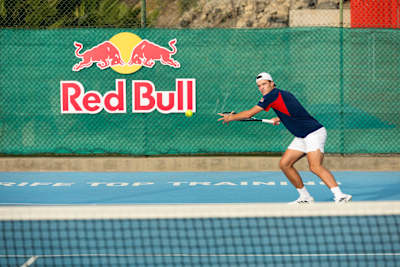
Tennis features explosive, wide gestures and mostly lateral movements, with the intention of returning the ball and hitting it away from the opponent. It requires a high level of technical ability.
Squash requires rapid reflexes and an equally fast brain to play well
Squash demands rapid, sharp movements in a much smaller, enclosed space, enhancing the need for quick reflexes and strategic play. The technical demands include mastering how to use the walls effectively, requiring precise ball control, and the ability to anticipate the opponent's next move, which can be challenging for beginners. Squash's intensity and tactical depth make it a thrilling watch, much like a fast-paced chess match with a physical twist.
In padel, thanks in great measure to the presence of walls, plays are easier and easier to master. Padel has a more simple technique than tennis, and, at the amateur level, slower movements than squash. Learning to play at a decent level usually takes considerably less time and this is one of the reasons why it's currently one of the fastest-growing sports globally. But even though padel doesn't require as much technical ability, a good padel match is a spectacle worth watching
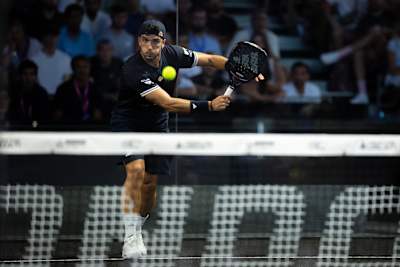
The walls and team-mate make quick thinking and communication key in padel
Tennis demands excellent stamina, strength and agility, essential for covering the extensive court and sustaining lengthy rallies. Players require cardiovascular fitness for endurance, upper body strength for powerful serves and precise hand-eye coordination for accuracy, making it ideal for athletes who excel in endurance and fast-paced, strategic play.
Squash players need exceptional agility and reflexes to manage the quick pace and small space of the court. Physical preparation focuses on building explosive movements and flexibility for tight plays. Mental stamina and quick strategic thinking are crucial, ideal for players who thrive on high-speed physical and mental challenges.
Padel requires good coordination and quick reactions due to its smaller court and wall play. Training should emphasise agility and precision to utilise walls effectively, as well as teamwork to communicate well with partners.
Check out highlights of the Premier Padel tour's Paris Major at Roland-Garros below to get an idea of the physical demands required of players:
26 min
Highlights – Paris Major Premier Padel
Watch the highlights from France as the Paris Major Premier Padel tournament took centre stage.
English
Potential and most frequent injuries
In tennis, frequent injuries include tennis elbow, shoulder pain and knee problems, stemming from the repetitive swinging and high-impact movements across the large court. The diverse playing surfaces can also influence injury types, with harder surfaces often exacerbating stress on joints and muscles, requiring rigorous conditioning and proper technique to minimise risks.
In squash, common injuries often involve the lower back, knees and elbows due to the intense, repetitive twisting, lunging and rapid direction changes. Players need to be particularly mindful of the stress placed on these areas during play.
Repetitive hard swinging of the rackets can pose a risk of arm injuries
In padel, players often experience ankle sprains, wrist injuries and muscle strains due to the sport's quick pivots, wall interactions and the use of solid paddles. The smaller court size increases the likelihood of sudden direction changes, requiring players to maintain agility and use preventive strategies to avoid common injuries.
Tennis has been graced by legends like Bjorn Borg, Pete Sampras, Steffi Graf, Martina Navratilova, Roger Federer, Novak Djokovic, Serena Williams and Rafael Nadal, each defining eras with unparalleled skill and championship victories. Jannik Sinner and Carlos Alcaraz largely define the current era, trading the world No.1 ranking and the sport's biggest titles in recent seasons.
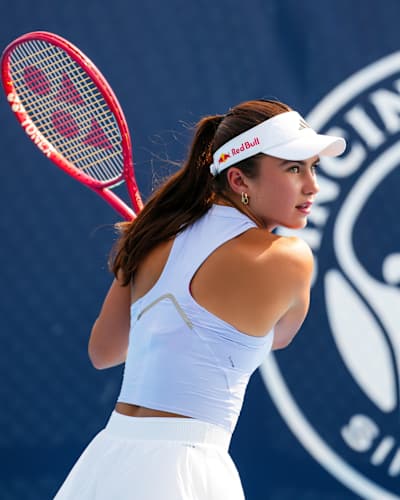
Among the other players making waves is Italy’s Flavio Cobolli, who reached his first Grand Slam final at Roland-Garros in 2026. American teenager Iva Jovic is another name to follow. At 18, she reached the 2026 Australian Open quarter-finals, made the fourth round at both Wimbledon and the US Open, and successfully defended her Guadalajara title in September. Both are exciting talents to watch.
Italian star Flavio Cobolli is known for his explosive groundstrokes
Squash history is illuminated by the phenomenal talents of Jahangir Khan, who dominated the sport in the 1980s with an unbeaten run of 555 matches, and Jansher Khan, known for his tactical genius. Today, Egyptian players lead the way. Mostafa Asal is the 2025 world champion and regularly sits at the top of the world rankings, while 19-year-old Amina Orfi became the youngest women’s world No.1 in history in September 2026 and the youngest women’s world champion.
India’s Anahat Singh is among the leading names from outside Egypt’s production line. In February 2026, the 18-year-old became the youngest Asian player to break into the world top 20 and, just a few months later, became the first Indian to win the World Junior Championship
Diego Elias is another name worth mentioning. The first South American to reach world No.1, he won the world title in 2024. Nouran Gohar has also topped the world rankings and in 2024 was crowned the world champion.
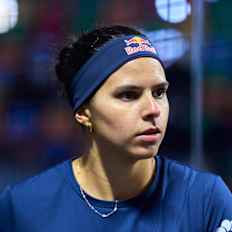
Nouran Gohar has topped the world of women's squash
Padel has produced incredible athletes like Fernando Belasteguín, who won more than 200 professional trophies and reigned supreme for over a decade before retiring at the end of 2024. All-time greats such as Alejandro Galán, Juan Lebrón, Alejandra Salazar and Gemma Triay have each brought flair and finesse to the game.
At the top of the men's game, Arturo Coello and Agustín Tapia have set the standard in recent seasons. Among the newer talents, Bea González and Delfina Brea stand out for their youthful energy and bold playing styles. Martina Calvo, meanwhile, became the youngest champion in top-level padel history at the 2026 London P1, aged just 18.
Bea González is one of the rising stars of Premier Padel
Find your perfect match: which racket sport should you play?
Tennis is ideal for those who enjoy the energy of hitting powerful serves and engaging in baseline rallies across different surfaces. Suitable for singles or doubles, it combines physical endurance with strategic gameplay, appealing to those who seek a challenging physical and mental exercise.
Squash is perfect for players looking for an intense workout and strategic gameplay. Its fast pace and enclosed space demands quick reflexes and sharp mental acuity, making it great for solo or doubles play. It suits those who thrive in high-energy, fast-thinking environments.
Padel is excellent for those seeking a social, strategic game that's easy to pick up. Primarily played in doubles, it involves less physical strain, but requires smart use of walls and teamwork. It's a fantastic choice for a more relaxed yet engaging racket sport experience. It's also the easiest of the three to try with friends, which helps explain why the FIP counted 3,890 new padel clubs worldwide in its latest report.
08
Watch the world's best padel on Red Bull TV
Watching professional padel is a great way to learn more about the sport and the elite tour, Premier Padel, will be broadcast by Red Bull TV throughout the season. Red Bull TV streams every stop live from the quarter-finals onwards, across both the men's and women's draws. Check out the Premier Padel calendar here.
About the author
Javier is CMO at Siux Padel and a certified padel coach with deep roots in the sport, on and off the court. He previously led content and digital strategy at Babolat Padel. As a racket sports writer for Red Bull, he brings an insider's perspective on the players, events, brands, and trends shaping padel's global rise. He's also an avid player and one of the most active voices in the padel industry on LinkedIn.