
Chess
Same board, different game: why chess changes when the clock is ticking
The pieces stay the same, but the clock changes everything. Discover how classical, rapid and blitz chess test players in very different ways.


Imagine a winning position where you have eight seconds left. You know what you want to do. Your opponent keeps making threats. Your eyes jump from the board to the clock. The question changes from "What is the best move?" to "What can I play now?"
The board and rules stay the same, but the amount of time available can completely change how a game unfolds.
01
What are the differences between classical, rapid and blitz chess?
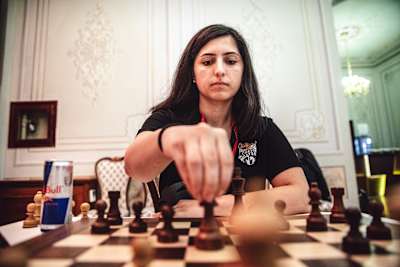
The key difference between classical, rapid and blitz chess is time
© Nuri Yılmazer/Red Bull Content Pool
The main difference comes down to how much time each player has. FIDE, the international chess federation, classifies games into three main formats. Classical games generally allow at least 60 minutes per player, rapid games more than 10 but less than 60 minutes, and blitz games 10 minutes or less. These classifications also take into account any additional time awarded after each move.
But the clock doesn't just change how players approach the game. It also changes what it's like to watch.
Tania Sachdev, an Indian International Master, Woman Grandmaster and chess commentator who was part of the Esports World Cup commentary team, explains why: "The clock becomes part of the drama. You don't need to understand every variation to understand that someone has 10 seconds left and a very difficult decision to make."
02
Classical chess: the luxury of time
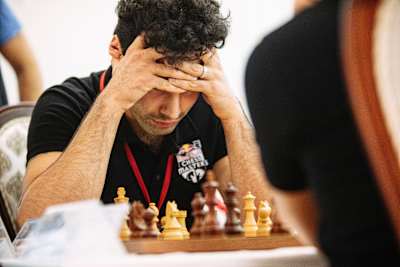
Classical chess allows plenty of time for contemplation
© Nuri Yılmazer/Red Bull Content Pool
Classical chess gives players more time to explore positions in depth. A common top-level time control is 90 minutes for 40 moves, with more time added after move 40. Players can spend 15 minutes or more on a critical decision, comparing candidate moves, evaluating variations and preparing to turn a small advantage into something concrete.
Players still rely on experience and intuition. The difference is that they have time to check whether their instincts are right. Sachdev puts it another way. Classical chess gives a player "the space to go deeper" and to question a first instinct.
03
Rapid chess: finding the balance
Rapid sits between classical and blitz. In a format such as 15+10 (15 minutes, plus 10 seconds per move), players can calculate important lines but cannot spend five or 10 minutes on every position.
So they must decide what to play and how much time the position deserves. Spend too long in the opening, and the middlegame arrives with little time left. Move too fast, and a tactic slips past.
That middle ground is what makes it hard. A player has to calculate like a classical player, then stop like a blitz player. It's a constant balance between calculation, intuition and time management.
04
Blitz chess: trust your intuition
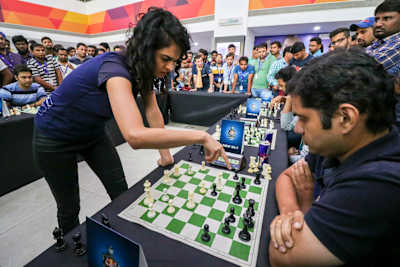
Tania Sachdev plays Blitz Chess at Red Bull Battle for the Queen
© Focus Sports/Red Bull Content Pool
Blitz is one of the most popular fast-paced formats in chess. In games such as 3+2 (three minutes plus two seconds per move) or 5+0 (five minutes with no additional time), there's little room for long calculation. Players must spot tactics, recall opening preparation and decide almost at once.
Pattern recognition becomes especially important. Experienced players recognise familiar attacking ideas, tactical shots and piece placements, allowing them to make decisions quickly.
Ian Nepomniachtchi, a two-time World Championship challenger, described his thinking in an interview with Chess.com: "I hugely rely on my intuition or my common sense. I would say like nine out of 10 times at least."
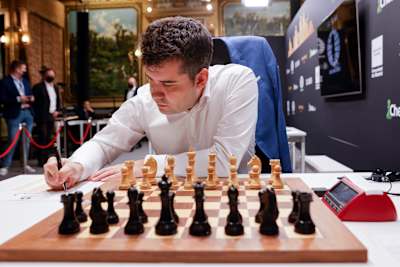
Ian Nepomniachtchi relies heavily on his intuition
© Miguel Pereira/Getty Images
Sachdev echoes that view: "There's less time to work everything out, so you lean more on pattern recognition, intuition and your ability to make strong decisions quickly."
In blitz, finding the perfect move isn't always possible. What matters is finding a strong move in the time available, giving yourself the best fighting chance.
Former World Champion Viswanathan Anand described the urge to keep playing blitz in an interview with Outlook Business: "When you play blitz, then you lose and you want revenge. It is very difficult to play a single blitz game! You want to play for a long time."
05
The clock changes the game
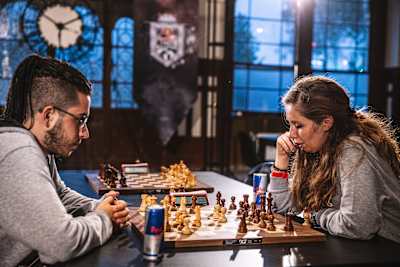
Faster forms of chess constantly test your decision making skills
© Nuri Yılmazer/Red Bull Content Pool
Faster chess also changes what the game feels like. A player can understand the position and still fail to play it. With seconds left, attention is divided between what is happening at the board and the clock. Nerves become part of the calculation too.


Sachdev says that in rapid and blitz, "your intuition, nerves and ability to make decisions under pressure are constantly being tested." For viewers, she adds, that makes it exciting. "That's when chess starts to look more like a sport to fans watching."
A good broadcast, she says, should make people feel "the pulse of the game": who needs to win, where the pressure is, who is under stress, and why a moment matters. When she commentates, Sachdev tries to bring in people who may be watching chess for the first time. They may not understand every variation, she says, but they should understand what is at stake and what the players are feeling.


06
Why time controls exist
The pressure of the clock is now part of what makes chess exciting. But before chess clocks became common, players could spend hours on a single game. Imagine winning, only to wait endlessly for your opponent's next move.
Chess content creator Manuel Ermachenko captures an unusual version of this problem in an Instagram reel, where players use candles as a chess clock.
In 1861, the London Chess Club tried sandglasses during the Anderssen–Kolisch match. Each player had two hours for 24 moves, yet the first game lasted nearly seven hours. In 1883, double clocks were used at a London tournament, bringing competitive chess closer to the timed format familiar today.
07
So, what actually changes?
The board and rules remain the same. What changes is how much time players have to test their ideas.
Fast chess does not remove thought. It gives the player less time to prove it. A perfect move after the flag falls is worth nothing. A good move in time can win the game.
About the author