
Paper Planes
Find out the secret to making a winning paper plane
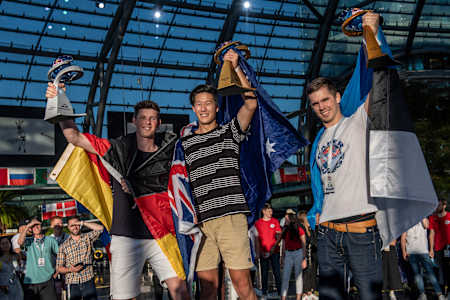
Australia’s Cameron Clark won the Red Bull Paper Wings championship for Longest Airtime in 2019, and now he’s spilling the beans on how he did it.
“Not in a million years did I think I'd become a paper plane world champion.”
In 2019, Melbourne student Cameron Clark saw a notice for a local 'Qualiflyer' for the Red Bull Paper Wings paper plane competition and decided to give it a go. "As a kid, I had enjoyed testing different designs, so I chose a design which my dad taught me and modified it," Clark remembers.
At the Qualiflyer, his phenomenal first throw clinched the win, and soon the then 19-year-old was flying to Salzburg, Austria, to represent Australia in the World Final.
It's every kid's childhood dream come true
Clark planned to use the same successful design right up until he arrived in Austria – his first time in Europe – and started making friends with some of the 176 competitors from 58 countries.

“We were discussing designs on the bus towards Salzburg, where I quickly discovered a more competent design,” he recalls.
The majority of the Longest Airtime contenders had that design in common – but each devised modifications that they hoped would be their superpower. Clark made his own mods through trial and error.
01
Paper Plane making tips
- Ensure a large wing area for a controlled, gradual descent
- Make constant refinements to the same plane to achieve optimal design
- Be as precise as possible with your folds, and choose an unblemished piece of paper
- If your plane is important, your throw is almost equally important. Most pilots choose a vertical takeoff for airtime.
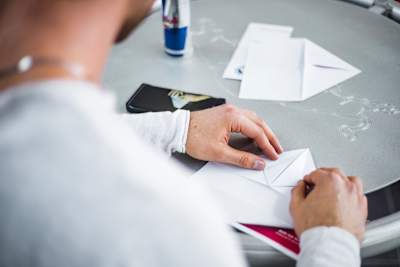
A Red Bull Paper Wings pilot folds a plane at a Qualiflyer
© Filip Nagy/Red Bull Content Pool
"The best airtime comes with many components – the wings, the balance of weight, shape, angle, curvature. If I had to pick the most important, I'd suggest a large wing area for a controlled gradual descent," he reveals. "From adjusting wingtips to adding a rudder to changing the length of the wings, everything was tried and tested until I was pleased with the outcome."
Even then, Clark continued folding and fiddling because each paper plane has a distinct personality. "You can fold 100 planes of the identical design, but each will behave differently," he explains. "This ultimately forces you to make different refinements to every plane until it's just right."
Clark did find that one thing helped across the board, saying: “The key to achieving a well-balanced plane is precision. Be as precise as possible with your folds, and choose an unblemished piece of paper.”
And then there was the Australian’s vertical throwing technique, practically a backbend. He states: “If your plane is important, your throw is almost equally important. Most pilots choose a vertical takeoff for airtime.”
Find out more about Red Bull Paper Wings

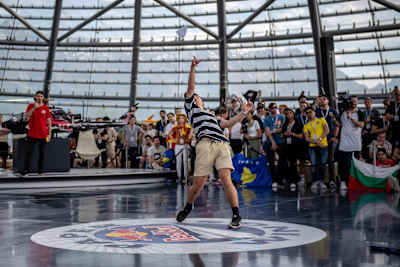
Cameron Clark at the 2019 Red Bull Paper Wings
© Joerg Mitter
Finally, in a back-and-forth showdown with Germany’s Vince Scholl, Clark’s perfectly calibrated design-and-throw combo sent him to the top of the podium with airtime of 13.33s.
Looking back, he shares: "It was an experience of a lifetime, and to be a part of it was so special. The diversity of people from every corner of the planet, being halfway across the world for a paper plane competition, it truly was an opportunity that I wouldn't hesitate to do again."
And he means it. The architectural engineering student intends to defend his title in Red Bull Paper Wings 2022. "I wouldn't miss another opportunity to become a world champion for anything," he says. "It's every kid's childhood dream come true, and I can't wait to try and make it happen again."
All the latest about Qualiflying events and the Red Bull Paper Wings World Final is right here.