







Red Bull Motorsports
F1
How Red Bull and Ford's new F1 engine will power success well beyond 2026
F1 is now powered by the most advanced and cleanest engines ever seen in motorsport. To rise to this challenge, Red Bull Racing has teamed with Ford to develop its new generation of power units.
Part of this story
Oracle Red Bull Racing is making history as the first Formula One team to go from making its own chassis to also developing its own engines. The 2026 F1 season will be run to a new set of rules, which places more emphasis on pure engine power. For Oracle Red Bull Racing, it was a race to avoid falling into a familiar pitfall and finding an engine partner that fit perfectly with the team's vision of success at the pinnacle of motor racing. They have found that partner in car giant Ford.
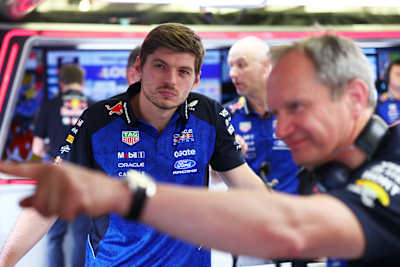
Max Verstappen and Paul Monaghan, Head of Car Engineering, during testing
© Getty Images/Red Bull Content Pool
01
Why have Red Bull Racing started making their own engines?
Oracle Red Bull Racing have always built one of – if not the – best chassis in F1, employing a comprehensive aero package to maximise downforce. Having a car that's supremely quick through corners has enabled drivers like Max Verstappen, Sebastian Vettel and Daniel Ricciardo to take victories even over cars with more horsepower.
But it hasn't always been straightforward. In 2014, new rules nullified their world-beating chassis and left them relying on a Renault engine that couldn't match the output of the Mercedes and Ferrari units. For three years, Red Bull Racing enjoyed the occasional victory, but without the consistent performance to challenge for the championship.
Then, in 2018, Red Bull Racing partnered with Honda to produce power units for both Red Bull Racing and Toro Rosso (now Visa Cash App Racing Bulls). The following year, Max Verstappen took his first Honda-powered victory at the team's home Grand Prix in Austria.
In 2021, Red Bull took control of its fate by establishing Red Bull Powertrains. This outfit began building engines based on the existing Honda design. What followed was four Drivers' Championship crowns for Max Verstappen and two Manufacturers' titles. The 2023 season was spectacular, as Verstappen produced the most dominant title race by driver and team in F1 history.
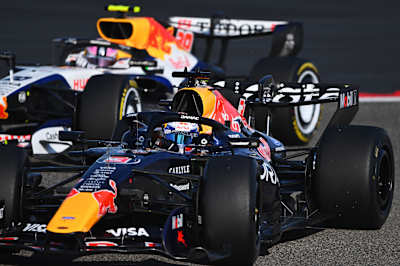
Max Verstappen leads Liam Lawson during F1 Testing
© Getty Images / Red Bull Content Pool
That same year, Red Bull Powertrains began working with a new engine partner to develop the next generation of power units that would drive Red Bull Racing and Racing Bulls to the front of the pack. Enter Ford.
02
Why are Red Bull Powertrains and Ford working in partnership?
Like Oracle Red Bull Racing, Ford has an impeccable F1 legacy. The mighty Ford Cosworth DFV occupies a rare place in motorsport history, powering a who's who of F1 drivers to 155 victories from 1967 until 1985. Powerful, reliable and affordable, the DFV offered plug-and-play reliability to generations of F1 teams.
Ford also established the Stewart Grand Prix team in the 1990s with Jackie Stewart, which morphed into Jaguar Racing before ultimately becoming the starting point for Red Bull Racing in 2005. Now, the might of the Blue Oval is coming back to F1 to power a new generation of cleaner, greener machines.
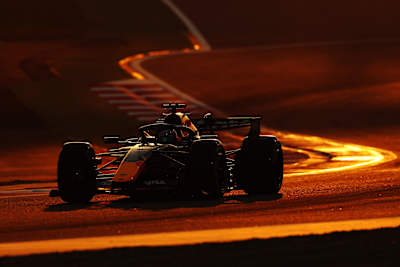
Long days of testing with Max Verstappen
© Mark Thompson/Getty Images/Red Bull Content Pool
03
Why is F1 introducing new engines?
The old adage goes 'Race on Sunday, sell on Monday'. F1 is both a sport and an arena for developing new technology and developing this new hybrid tech is a priority for automakers around the world. Learning from the engines used in F1 will be applied to making the cars of the future.
The explosion of interest in F1 as a sport, with related TV shows, video games and a hit movie, brings new audiences, partnerships and investment into the world championship. That combination makes a return to F1 a compelling proposition for Ford. "When we saw what was happening in Formula One with the technical regulations, it was very aligned, giving us more of an opportunity to contribute and learn the innovation and tech transfer part of it," says Mark Rushbrook, Ford's Head of Motorsport. "But certainly also the health of the sport and the popularity globally and the diversity of the audience."
As well as Ford, Mercedes, Ferrari and Honda, Audi is also making F1 engines for its team and fellow newcomers Cadillac are expected to run on their own engines from 2029 onwards.

Max Verstappen jokes with Gianpiero Lambiase and his dad during testing
© Getty Images / Red Bull Content Pool

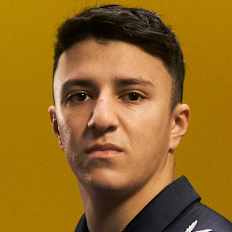
Isack Hadjar has made the step up to Oracle Red Bull Racing
© Getty Images / Red Bull Content Pool

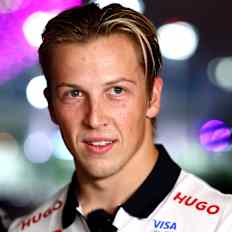
Liam Lawson of Visa Cash App Racing Bulls
© Getty Images / Red Bull Content Pool

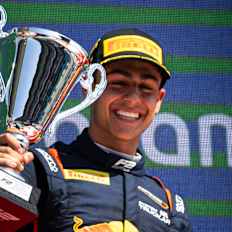
Arvid Lindblad prepares for his rookie season in F1
© Getty Images / Red Bull Content Pool
04
How complicated are these new engines?
Very. Even the name is a bit complex: everyone calls it an engine, but that's only shorthand for power unit or, shorter still, PU, which takes in the internal combustion engine (ICE), the energy recovery system, battery and electronics. In 2026, only half of the power driving an F1 car comes from the ICE, with the rest being generated from kinetic energy via the energy recovery system – the MGU-K.
The good news is the engines are not only the most fuel-efficient in the world, but also durable and reliable. But while the ICE component isn't radically changing from the turbocharged 1.6-litre V6 engines introduced in 2014, they will be run on sustainable fuels – so no fossil fuels will be burned – and use less than half the fuel used in 2013. The engines will need to last longer, though, with drivers given only three for the whole season.
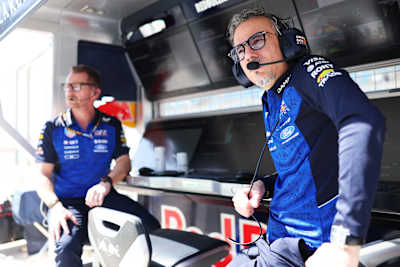
Richard Wolverson and Laurent Mekies on the pit wall
© Getty Images/Red Bull Content Pool
The demands on the MGU-K are much more exacting: they need to generate more than 1000hp using less fuel and half of that output must come from an electrical charge – that's three times more electric power than the previous units.
F1 is abandoning heat recovery units for now to develop KERS that will soon be seen in road-going vehicles. Since 2023, Red Bull Powertrains in the UK and Ford in the United States have been working to create this new hybrid PU in time for the start of the season at the Australian Grand Prix in Melbourne.
05
Building Red Bull Powertrains from the ground up
While successful as an F1 team, Red Bull Racing did not have the technical might or knowledge base of its manufacturer rivals for making power units. They recruited Ben Hodgkinson to be the technical director of Red Bull Powertrains.
He is joined by five more experts who will oversee the production line: Steve Blewett, production director; Omid Mostaghimi, chief engineer, electronics and energy recovery; Pip Clode, head of mechanical design for energy recovery; Anton Mayo, head of combustion power unit design; and Steve Brodie, leader of combustion engine operations.
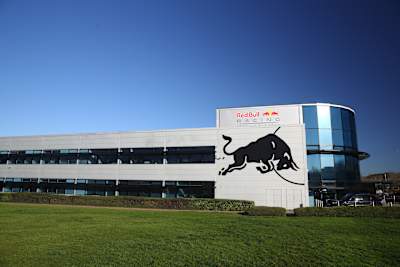
Red Bull Powertrains factory in Milton Keynes
© Getty Images/Red Bull Content Pool
Red Bull Powertrains operates out of a purpose-built 465m2 factory within the same campus as Red Bull Racing. Racing Bulls now operate out of their factory in Faenza and a new home on the same campus, having outgrown their facility in nearby Bicester.
They will be joined by experts from Ford, who will provide technical expertise in areas like combustion engine development, battery cell and electric motor technology, power unit control software and analytics. Together, it means a formidable amount of racing expertise is concentrated in this corner of Buckinghamshire, focusing their efforts on building the best power units on the grid.
06
Putting new tech to the test
To provide F1 teams with track time to get to grips with this new technology, a shakedown test at the Circuit de Barcelona-Catalunya will be followed by two pre-season tests in Bahrain. Barcelona saw the new RB22 and VCARB03 – with their distinctive wide air intake – break cover for the first time. After Barcelona, team boss Laurent Mekies was cautiously optimistic: "We have a lot to take away from this week and Max's (Verstappen) experience and detail with engineering will help us shape the preparations for Bahrain and beyond.
"I can only stress how proud we are of everyone back at base who delivered us this PU. Of course, it's very early days and nothing is perfect, but we have started to learn already."
Oracle Red Bull Racing and Visa Cash App RB both managed a lot of track time in Bahrain, which is crucial to understanding both the new chassis and the engine. All those hot laps will provide the team at Red Bull Powertrains and Ford with crucial data to build on as they fine-tune the new power units.
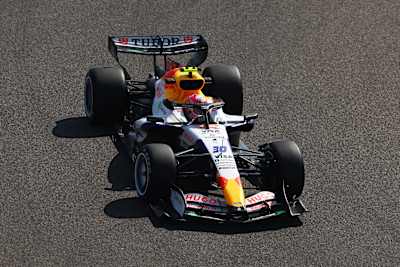
Liam Lawson in the VCARB03 during pre-season testing
© Getty Images/Red Bull Content Pool
"It's been really, really successful," said VCARB chief technical officer Tim Goss. "In testing, your aims are to get out there and build mileage and that's exactly what we've achieved."
He added: "It's been a really impressive job by Red Bull Ford Powertrains. To come as a complete newcomer to F1 and on your very first day put nearly 200 laps under your belt, it's easy to take this level of reliability for granted, but what they've achieved can't be underestimated."
07
After all that testing, who has the quickest car?
Nobody really knows. Charles Leclerc went quickest on the final day of testing in Bahrain, so clearly the Ferrari is the car to beat. Except that George Russell and Kimi Antonelli were comfortably the fastest for Mercedes in the hot conditions earlier in the session. Then, the previous day, Lando Norris and Oscar Piastri dominated for McLaren. And, in the first test, it was Max Verstappen topping the times.
Andrea Stella, team principal of world champions McLaren, said: "This test has confirmed that Ferrari and Mercedes look like the teams to beat. McLaren and Red Bull [are] probably very similar." That seems to be the consensus leaving Bahrain.
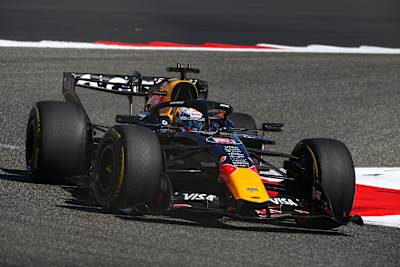
Max Verstappen puts the RB22 through its paces
© Getty Images / Red Bull Content Pool
The truth is that it's easy to read too much into testing times when we simply don't know key factors like how much fuel was in the car, engine settings, the length of run, the tyres used, track temperatures and so much more.
We won't know who's fastest until qualifying starts in Melbourne on March 7 and, more likely, we won't really know until we've seen a few races on different styles of tracks. What is clear is that both the RB22 and VCARB03 look in good shape and both bosses are very happy with the performance of the power unit.
Laurent Mekies struck a balance between optimism and realistic caution: "We can't forget that three years ago where our factory was, there was just a field. We are very proud of them. Does it put us in a position that we can be satisfied with? No, because we very well know the size of the competition.
"We just had a very good start, but we know we are going to run into a number of uncomfortable moments. It's part of the game, but we are happy to be in it. The performance shown by the top guys is stratospheric and it's going to be a huge development race both on the chassis and PU side, but it's what we all love."

Grégoire Munster puts the M-Sport Ford Puma Hybrid Rally1 through its paces
© Jaanus Ree/Red Bull Content Pool

Chloe Chambers in the IMSA Mustang Challenge
© Bob Chapman/Red Bull Content Pool

Mighty off road machine, the Ford Raptor T1+
© Kin Marcin/Red Bull Content Pool

Romain Dumas' Ford E-Transit Supervan was a surprise package
© Alex Carmichael/Carwow/Red Bull Content Pool
08
A partnership that takes motorsport to new levels
This is a partnership that runs far beyond the next season of F1 and brings Ford and Red Bull Motorsport together in a number of different endeavours, including the Dakar Rally, the Rally Raid World Championship and extreme off-roading in the King of the Hammers. There are time trials in the awe-inspiring Ford SuperVan 4.2, which has already conquered the Pike's Peak International Hill Climb. Plus, there's WRC with the M-Sport Ford Puma Hybrid Rally1, 24 Hours of Le Mans and NASCAR.
The new Red Bull Ford Academy Programme is also supporting driver Chloe Chambers in F1 Academy and gave her the chance to test her skills in the IMSA Mustang Challenge.
"This is such an exciting chapter in Ford’s history," said Ford Motor Company CEO Jim Farley. "Over the past 20 years, Red Bull has succeeded in changing the landscape of Formula One, and it has done so by being determined to do things differently, an ethos that is very much emulated in the Red Bull Ford Powertrains partnership and with the title sponsorship of the Red Bull Ford Academy Programme."
Part of this story


