

Adventure Racing
Aerial adventurer Tom de Dorlodot on how to train for Red Bull X-Alps
Hailed as the world's toughest adventure race, Red Bull X-Alps puts athletes to the test as they attempt to hike and fly across the Alps. Find out what it takes to be part of this gruelling event.
Part of this story


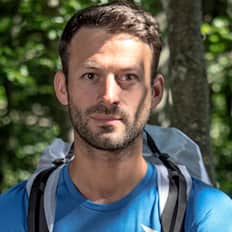

At face value, Tom de Dorlodotis just another adrenaline junkie -- a full time athlete who specialises in paragliding and piloting, everyday seeking out new locales to canvas and traverse over, looking to replicate the experiences of few, or soar over something no person ever has.

8 min
Tom de Dorlodot training
Tom de Dorlodot is physically (and mentally) preparing for X-Alps 2019 – training and getting his gear ready.

On second glance, he’s quite a bit more. Professional, storied and with multiple methods to his madness -- with over 60 countries under his belt, and a small, constructed home in tow of his vehicle of choice. Where most only dare to dream, Tom has dared to live. Rest, for him, often equates to restlessness, so he races.

Thomas de Dorlodot - Pro paraglider
© Camilo Rozo/Red Bull Content Pool
Known as one of the most difficult races in the world, Red Bull X-Alps -- like any gruelling battle of wills -- requires a serious amount of training and dedication. We sat down with de Dolorodot to find out how he’s preparing this year for X-Alps 2019.

“I like to lose myself in the mountains,” says Tom
© Philip Platzer/Red Bull Content Pool
What has your training looked like lately?

Thomas de Dorlodot trains for Red Bull X-Alps 2015
© Leo Rosas/Red Bull Content Pool
I actually started to train regularly more than a year ago. Eight months ago I took on a professional coach, and we began work on a serious training program. Lately, I have been running 70km per week. My coach analyses my Garmin tracks and adapts the volume if needed.

Paul Guschlbauer and Thomas de Dorlodot out in the mountains
© Philip Platzer/Red Bull Content Pool

How much rest do you get everyday? And how much time do you dedicate everyday to stretching or therapy after training?
Resting is part of the training. I try to sleep a minimum of six or seven hours per day. But I have a four-month-old baby now, and Jack still likes to wake up at night and chat with us. Since I live most of the year on a sailboat, I got used to sleeping in bits (during watches, etc). So I’m well trained to fall asleep rapidly and wake up 15 minutes later. Being able to micro sleep like that will help me a lot during the race.

Tom de Dorlodot's around-the-world boat
© Search Projects

For recovery, I get a massage once a week and love to swim or take a shower in very cold water. It really helps my muscles to recover. I don’t do a lot of stretching -- it doesn’t seem to help me much.
What does your meal plan consist of when you’re training?

Healthy breakfast to fuel the day
© Red Bull Hong Kong
A lot of calories! I’m followed by a nutritionist and I have always been on a healthy diet. I’m more on the veggie side, and I try to get a lot of protein. On a long day it’s muesli with dry fruits, eggs and bread in the morning, rice with veggies, pastas, cheese, olive oil, fish, etc. I try not to change my diet to much as my body needs to adapt slowly. On a race day I can go up to 6,000 calories per day!
Do you train alone, or in groups? Do you train with a coach as well?
I like to use my friends for training -- it helps keep me motivated. I prepare my agenda every week with “training appointments”: Monday it’s mountain bike, Tuesday trail running, etc… Scheduling things out this way has really helped me. I spent a month in the Alps this winter, travelling in a VW California and following the snow storms… I was ski touring everyday. It was an amazing bit of training especially for the amount of metres we covered.
What does your gear set-up look like, and how does what you use for X-Alps differ from your typical loadout?

Thomas De Dorlodot's hike-and-fly gear.
© John Stapels
There’s one rule: ‘light is right.’ We’ve worked closely with my partners in order to develop some amazing new gear. Every gram counts, and they all did an amazing job. This year, for example, we have a new inflatable back protection on our flying harness. It makes it safer, lighter, comfier for long flights (which can sometimes top out at eight hours) and a lot smaller to pack. In my pack I have a glider, a harness, a rescue parachute, a helmet, some clothing, instruments (GPS, tracking device), a camel bag, walking poles, etc.
Part of this story