
Social Innovation
Find out how this portable vegetable garden is revolutionising food growing
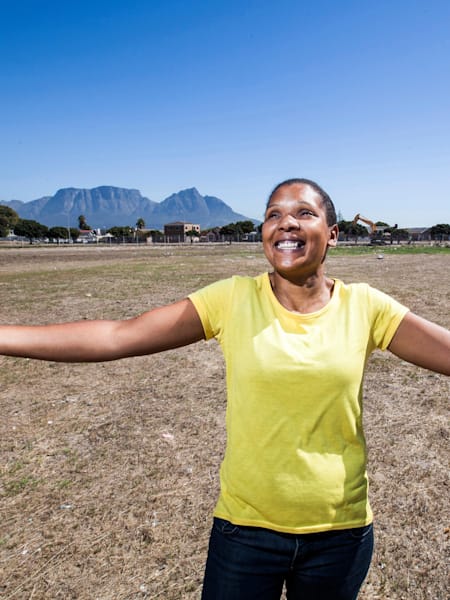
Renshia Manuel started growing vegetables in her backyard to feed her four children, and then turned it into community project in South Africa.
South African Renshia Manuel invented Grow Box, a portable wooden box that allows people living in cramped housing conditions to grow their own vegetables. The idea was so impressive that shortly after releasing it, she won third place at the 2016 Youth Start Cape Town Entrepreneurial Challenge, and was recruited by Red Bull Amaphiko in 2017, an international academy that jump starts grassroots social entrepreneurs who are making a positive change in their communities.
"The great thing about Grow Box is that it can be used by people living in dense, high rise flats with small balconies, as well as backyard dwellers or residents of informal settlements," Manuel says proudly. "Since it has raised legs, you don't need to get down on your knees to dig around, which is good news for the elderly and disabled, because it doesn't require backbreaking work to maintain. As long as there's sunlight available and you can consistently water it, Grow Box can provide you with healthy, organic vegetables anywhere."
The box comes with a variety of vegetable seedlings, which the buyer can select, compost, three hand tools and beginners manuals. It's available in a variety of sizes, ranging from small window herb boxes to patio boxes and larger three tier boxes, depending on the amount of space buyers have. Each box can be also customisable to a user's preference.


Over the years, though, as it faced the elements, the box started showing problems that forced Renshia to add a few design tweaks to the original.
"When we started, the box was made out of pallets, but we discovered that this material would rot quickly, as the box endures a lot of harsh weather conditions if placed outdoors. After testing a lot of prototypes, we eventually found the right combination of wood and chemicals that would allow the Grow Box to last longer than five years without deteriorating," she says.
"After much research we now use pine wood, which is longer lasting, and Tanalith E, an eco-friendly chemical treatment we apply to our new wood. We found this combination can enable the Grow Box to last more than 10 years without costing our clients too much."
Another change to the original Grow Box design is removal of the wheels, as they proved to be more of a hassle than benefit in practical conditions. "I designed the original Grow Box with wheels so that it could be moved indoors in bad weather and to protect it from theft," Manuel explains. "But when we started using different wood and added compost, we discovered the small wheels would break under the additional weight.
"Another problem with wheels is that a lot of our customers don't have even surfaces around their homes, like people living in informal settlements and backyard dwellings who don't have paved or cemented floors. So, we decided to remove the wheels and only add them at the request of the customer. This also cut costs for us and made the box even more affordable."
While Cape Town and the rest of the Western Cape province is currently facing a severe water drought, Manuel is proving to be resilient in what the government is calling a water crisis. "To water Grow Box plants, I'm currently using effluent water from the water treatment centre," she says.

Renshia Mauel at Red Bull Amaphiko Academy
© Luke Daniel / Red Bull Content Pool
"I also use grey water, which is water collected from household use, like bathwater and dishwater. I never use laundry water, though, because there are heavy detergents in there. Because of water restrictions by the Western Cape government, we're not allowed to use potable water for irrigation, which is tap water safe for human consumption. As a solution, I get water donations from farms in the Philippi horticultural area. That is water that is too high in iron for humans to drink, but perfectly fine for watering plants."
Manuel teamed up with an unlikely group of people to keep up with Grow Box demands. "The box is assembled by a nearby rehab centre for men, called The Arc," she reoprts. "It's like a halfway house that helps men who're addicted to drugs and alcohol or have been released from prison and are busy transitioning to normal life.
"I originally made the boxes myself, but as demand grew, I needed help with construction and administration stuff so that's when I approached The Arc, because part of their rehab programs include woodworking and they have the machinery to make my product. Now we have a great collaboration. I notify them when I have orders and after the client has purchased, I split the money between the guys and the rehab centre."
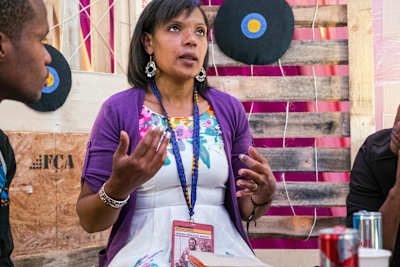
Renshia Mauel with attendees in Mamelodi
© Luke Daniel / Red Bull Content Pool
Since January 2017, Grow Box has reached over 183 people after 62 orders, with bulk orders scheduled for Mandela Day initiatives in July. But is Manuel happy with the sales figures right now?
"Yes. The amount of sales we receive right now are currently what we can cope with," she says. "Hopefully we'll be able to move to a nearby school property very soon, where the principle has promised us land, because once we are there we'll be able to produce more boxes, more seeds and open a large nursery that people can visit and buy our products, thus increasing sales and revenue as a result.
"By next year we would like to expand beyond Cape Town because we've couriered a few boxes to private clients in Johannesburg and Durban. If we got corporate sponsorship, we would be keen on have national food growing workshops in those cities, but in July we'll be implementing beginners food growing workshops for groups of 20 to 30 people in my area."
Manuel continues "I just want to change peoples perception that growing food is back-breaking and expensive work that requires someone with special skills. I want to make people aware that growing food is much easier and cheaper than they think. Hopefully, in the near future, we can spread this message to hundreds of thousands of people across South Africa."