






Red Bull Motorsports
WRC
WRC explained: Your ultimate guide to the 2026 Season
From Monte Carlo to Saudi Arabia, discover the drivers, teams, cars, rules and rallies that make the FIA World Rally Championship one of motorsport's most demanding competitions.
Part of this story
The FIA World Rally Championship is one of motorsport's toughest challenges, taking drivers and co-drivers from snow-covered mountain roads to rugged gravel tracks and fast-flowing forests. In 2026, the world's best rally crews will battle across 14 events on four continents, competing for glory in the sport's premier championship. Here's everything you need to know about WRC, from the cars and teams to the rules and rallies that make it so unique.
01
What's new in the Drivers' Championship?
The 2026 FIA World Rally Championship sees a fresh look to the driver line-up, with established champions joined by a new generation of talent eager to make their mark. Toyota continues with a formidable roster led by Elfyn Evans, Takamoto Katsuta and reigning champion Sébastien Ogier, while rising stars Sami Pajari and Oliver Solberg add even more depth to the manufacturer's title defence.
Hyundai enters the season with Thierry Neuville and Adrien Fourmaux spearheading its challenge, supported by a rotating third-car programme featuring experienced rally winners Dani Sordo, Esapekka Lappi and Hayden Paddon. Paddon's return to the sport's top category is one of the season's biggest storylines, marking his first full Rally1 appearances in several years.
M-Sport Ford fields an all-Irish line-up of Josh McErlean and Jon Armstrong. After impressing during his debut Rally1 campaign, McErlean returns for a second season, while Armstrong steps up from the European Rally Championship to make his full-time Rally1 debut.
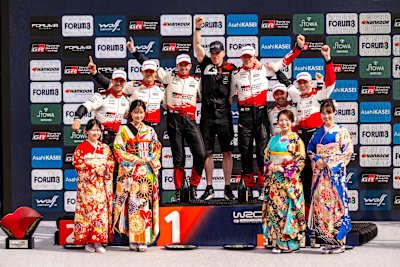
Toyota locked out the top places at the FORUM8 Rally Japan in 2026
© Jaanus Ree/Red Bull Content Pool
02
What about WRC strategy?
Rally is intense. The drivers have to tackle four stages per session, following their pace notes to the letter while also responding to changes in the track surface. They can make repairs on the road, such as changing a flat tyre, but serious repairs have to be done at the service park.
And fastest isn't always best: the first-placed driver opens the first stage the next morning. Drivers call this sweeping because overnight the surface will have got dirty and slippery, which puts the lead driver at a disadvantage, especially on gravel.
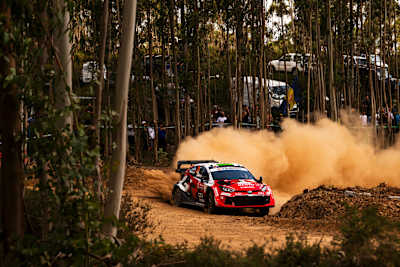
Elfyn Evans races in Porto
© Jaanus Ree/Red Bull Content Pool
03
Final season before a new era
2026 represents the final full year of WRC's current Rally1 era before the championship introduces a new set of technical regulations in 2027. Since their debut in 2022, Rally1 cars have showcased the pinnacle of modern rally engineering, combining extreme performance with the ability to tackle everything from snow-covered mountain roads to rough gravel stages and fast-flowing asphalt.
With a major rules reset on the horizon, 2026 offers manufacturers and drivers one last opportunity to leave their mark on the current generation of machinery. This year will no doubt serve as both a celebration of the Rally1 era and a bridge to the next chapter of the FIA World Rally Championship.
04
Where to watch WRC for free
The World Rally Championship is back for 2026 with 14 rounds, from the icy roads of Monte-Carlo to the dust of Kenya, the asphalt of Japan and the Canary Islands, and the gravel stages of Paraguay and Chile. Check the full WRC calendar and catch up with highlights from every rally as the season unfolds.
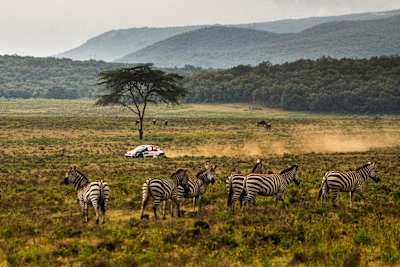
Global: WRC races on four continents
© Jaanus Ree/Red Bull Content Pool
05
What happens at a WRC rally?
The World Rally Championship is truly global, taking place across four continents and on a variety of surfaces from asphalt to gravel to dirt and snow. Drivers compete in temperatures from as hot as 42°C to as cold as -30°C. A rally is also a long event, starting with…
Recce: Usually two days, where the crew practise the route at a limited speed to make detailed pace notes. In circuit racing, drivers lap the track 200 times during the weekend, but rally drivers may see a stage once a year. Recce helps them to determine their approach and exit speed, and make a note of such hazards as water, rocks and jumps.
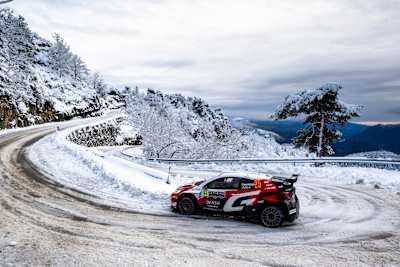
A chilly start to the 2026 season at Rally Monte-Carlo
© Jaanus Ree/Red Bull Content Pool
Shakedown: Thursday morning is a full-speed test where teams fine-tune the setup of their cars to suit the surface. Extremes would be chunky tyres, high ride height and maximum play in the suspension for bumpy gravel stages and thin tyres, low-ride and stiff suspension for Tarmac.
Super Special Stage: Thursday evening is the ceremonial start, followed by a crowd-pleasing Super Special Stage in the host city. The SSS take a variety of formats, but among the most popular are head-to-heads, where two cars race around a looping circuit, or a sprint around a course with a selection of surfaces and obstacles.
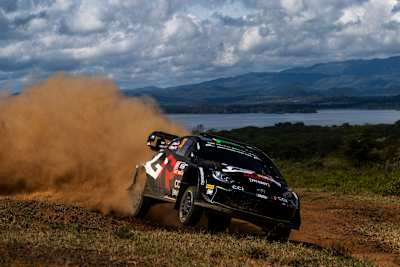
Elfyn Evans in action at the Safari Rally
© Jaanus Ree/Red Bull Content Pool
Rally: Friday and Saturday comprise two long days of special stages, pushing cars and crews to the limit. The crews drive to the liaison at the start of the stage. Three zero cars – like pace cars in F1 – go through the stage at speed to ensure it's clear of spectators before the leading car sets its time, followed at three-minute intervals by the next fastest.
Power Stage: Sunday features another full morning of rallying and a final Power Stage in the afternoon to bring the weekend to a close. The drivers then return to the host town for the podium and closing ceremony.
06
What happened to the 48-hour sprint format?
WRC experimented with shorter, more compact rally formats in recent seasons, but the championship continues to use traditional four-day events in 2026. While organisers remain focused on improving efficiency and reducing costs, rallies are still contested from Thursday to Sunday, with the FIA also introducing mandatory crew rest periods for 2026.
07
How to win the World Rally Championship
Crews score points at every round based on their overall rally result. The top 10 finishers receive points on a 25–17–15–12–10–8–6–4–2–1 scale. Additional bonus points are available on Sunday, with the five fastest crews across the day's stages earning 5–4–3–2–1 points in the Super Sunday classification. The rally-closing Power Stage also awards 5–4–3–2–1 bonus points to the five fastest crews. As a result, a driver can score a maximum of 35 points from a single event.
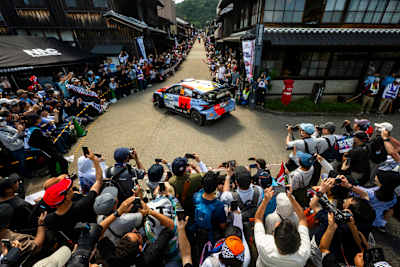
Hayden Paddon at Rally Japan
© Jaanus Ree/Red Bull Content Pool
In the Manufacturers' Championship, teams score points based on the performances of their nominated crews at each rally. Meanwhile, drivers and co-drivers are racing against the clock, with the winner being the crew that records the lowest cumulative time across all stages.
08
The 2026 Rally World Championship calendar
The 2026 WRC calendar spans 14 rallies and some of the toughest terrain in motorsport. From the icy mountain roads of Monte Carlo to the rough gravel tracks of Kenya, the flat-out forests of Finland and the demanding stages of Greece, crews face a huge variety of challenges throughout the season. Newer additions such as Rally Islas Canarias, Rally del Paraguay and Rally Saudi Arabia continue to expand the championship's global reach, with the title fight set to be decided at the season-ending finale in Saudi Arabia.
Event
Date
Rally
Location
1.
January 22–25
Monaco
2.
February 12–15
Umeå
3.
March 12–15
Naivasha
4.
April 9-12
Rijeka
5.
April 23–26
Gran Canaria
6.
May 7–10
Matosinhos
7.
May 28–31
Aichi
8.
June 25–28
Loutraki
9.
July 16–19
Tartu
10.
July 30–August 2
Jyväskylä
11.
August 27–30
Encarnación
12.
September 10–13
Concepción
13.
October 1–4
Olbia
14.
November 11–14
Jeddah
09
A quick history of the WRC
French marque Alpine were the first champions and its stunning A110 was the star. The winning drivers? At first, that was less important than the car. It took until 1977 for a prize to be awarded to the winning driver and co-driver, but there wasn't a drivers' World Rally Champion crowned until Björn Waldegård in 1979. With ABBA topping the charts and Borg winning the tennis, 1979 was a great year to be Björn.
Since the championship began in 1973, 16 drivers have been crowned world champion. Two French legends top the record books: Sébastien Loeb and Sébastien Ogier, who each have nine world titles. Their remarkable achievements have helped define modern rallying and set the benchmark for future generations.
Today's WRC features a mix of established champions and emerging stars, with drivers such as Thierry Neuville, Kalle Rovanperä, Elfyn Evans and Takamoto Katsuta continuing the fight for rallying's biggest prize.

2 min
Animated history of rallying
Dive into the history of the World Rally Championship in this animated guide.
10
The development of World Rally cars
Since rally began, the cars have evolved as manufacturers road-test the latest developments for production cars. In the first decade, it was rear-wheel drive cars such as the Ford Escort RS, the Fiat 131 Abarth and the head-turning Lancia Stratos. In the '80s, the new Group B rules saw the introduction of turbos, which lead to the game-changing four-wheel drive Audi Quattro.
The stunning hot-hatches of Group B ushered in the glory years of WRC, but two serious accidents in 1986 spelled the end of the era and the advent of Group A. This new generation were more closely based on production cars and cheaper to produce, opening up the championship to new teams and crews. Lancia led the way with the Delta Integrale and by the '90s, the championship was dominated by the Subaru Impreza, Mitsubishi Lancer Evolution and Toyota Celica GT4.
With manufacturers struggling to make street-legal rally cars, the WRC introduced World Rally Cars in 1997, ushering in an era of dominance first for Citroën with the Xsara, C4 and DS3, and then VW and the Polo R WRC. The rules were tweaked for 2017 to give the cars much more power and more aero components to keep them planted.
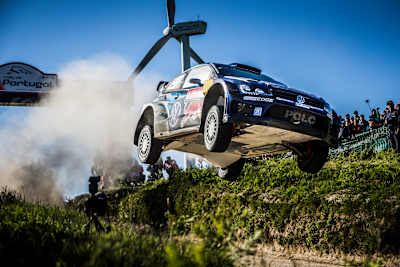
Sebastien Ogier pilots the VW Polo R
© Kin Marcin/Red Bull Content Pool
In 2022, WRC ushered in greener hybrids with the power to the fuel-efficient engines boosted by a 100Kw electric engine, boosting output to more than 500bhp. In 2025, they made way for simpler and sturdy turbocharged 1.6L engines to reduce costs and increase competition in the championship.
11
The rules of WRC
Bouncing over jagged rocks and huge jumps, the cars take a lot of punishment, and the driver and co-driver need to be able to carry out running repairs such as a quick tyre change or bending bodywork back in shape. The rally car is loaded with basic equipment, including various tools, duct tape and a jack to lift the car. No one else can work on the car, but fans can help push a car back onto the road or tip it back onto all four wheels – a perk of being a spectator.
Crews can’t tinker with the set-up of the car or anything that might affect performance without getting a time penalty. That can be a calculated risk but major work has to be carried out by the mechanics in the Service Park. Even then, it has to be within strictly regulated periods of 15 minutes in the morning, 30 minutes at lunchtime and 45 minutes in the evening. Overnight, the cars are locked up and stored.
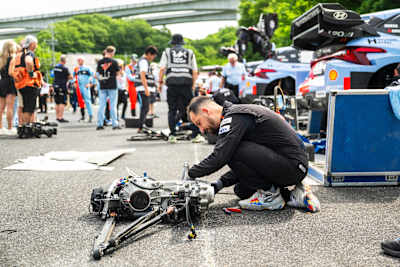
Mechanical work on the cars is strictly regulated
© Jaanus Ree/Red Bull Content Pool
If the cars can’t be fixed on stage, they can be towed back to the Service Park, and if the team can fix it, the crew can restart the next morning with a 10-minute time penalty. It’s not unheard of for teams to still pick up points after a restart from a high finish or a power stage.
If a rally car – or one of the crew – is damaged beyond repair on stage, it is retired.
12
What's new for 2026?
Away from the cars themselves, the FIA has introduced mandatory rest periods for crews and team personnel in 2026, following concerns over the increasingly demanding nature of modern rally weekends. The change is designed to reduce fatigue and improve wellbeing across the championship, while helping teams manage the long hours required during events.
Much of the attention is also beginning to shift towards 2027 and the arrival of WRC's next-generation regulations. Designed to lower costs and attract new manufacturers, the new rules will usher in a new era for the championship. That makes 2026 a significant season: the final opportunity for drivers, teams and manufacturers to add to their Rally1-era legacy before the sport enters its next chapter.
13
The WRC support series
As well as the main championship, a WRC rally incorporates several support classes that act as a proving ground for talent looking for a seat in the premier championship.
WRC2: The Rally2-spec cars are the equivalent of the R5 cars, with competitive cars like the Ford Fiesta, Skoda Fabia R5 and Citroen C3, Toyota GR Yaris and Hyundai i20 N. Crews can enter up to seven rallies in the season with the best six results counting toward their championship. Limiting the number of rounds keeps costs down and creates more opportunities for drivers: in 2024, there were 50 crews competing in WRC2.
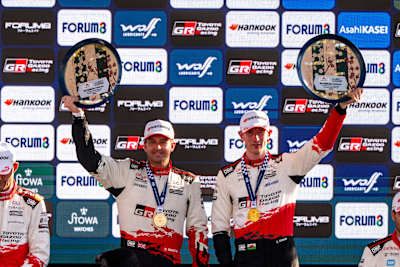
Celebrating on the WRC podium is the dream of many young drivers
© Jaanus Ree/Red Bull Content Pool
Junior WRC: This is where the future drivers of the WRC hone their skills at the major rallies in the championship and alongside the top crews and teams. Graduates include Sébastien Ogier, Elfyn Evans and Thierry Neuville. In this case, Junior is a pretty broad term, as drivers up to 30 years old are eligible to compete. To keep costs down, they drive the same Fiesta Rally3s models used in WRC3. The championship-winning crew wins free entry to compete in WRC2 at four European WRC rounds at the wheel of a Ford Fiesta Rally2 prepared by M-Sport.
Part of this story
