
100 hours, 7 summits and almost no sleep: Michael Strasser’s epic challenge
Solo, unsupported and with very little sleep: Michael Strasser conquered seven Austrian summits, 1,100km and 20,000m of elevation gain in record time.
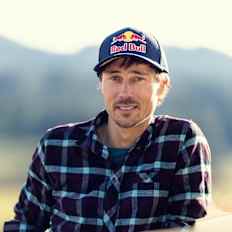

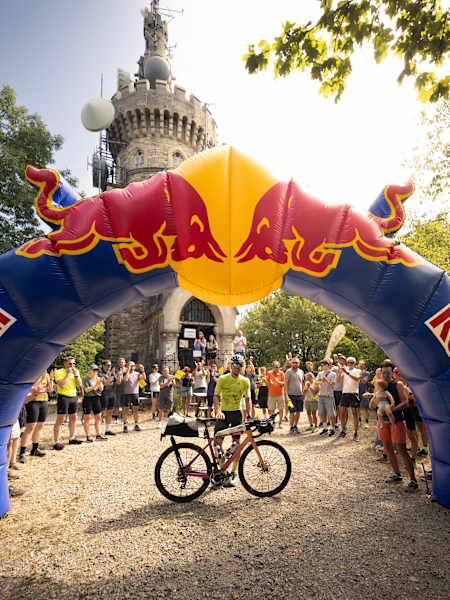
Four days, four hours and 40 minutes – that's the new Fastest Known Time (FKT) for Seven Summits Austria. Michael Strasser, an Austrian extreme athlete and endurance adventurer, has linked the highest mountains in all nine Austrian federal states entirely on his own, travelling by foot and bike. Starting in Vorarlberg with an ascent of Große Piz Buin, he reached the Hermannskogel in Vienna after 100 hours and 40 minutes, beating the previous record by 11 hours.
“I wasn’t sure whether I could even beat a ‘supported’ record on my own. After all, the previous record-holder, Christian Bruckner, had a team of 30 people with him,” said Strasser. “I refuelled at petrol stations, the bike was heavy because of the panniers, and I couldn’t take any time-saving shortcuts over the mountains. I could only manage it by tackling the climbs quickly, minimising the time spent on the bike and, above all, getting as little sleep as possible.” For the first three nights, he slept for just three hours each night, followed by a 35-minute power nap on the final night. “It was definitely the greatest sporting achievement of my life.” That's quite a statement from a man who's crossed Africa from Cairo to Cape Town and travelled almost 23,000km from Alaska to Patagonia.
01
What does ‘unsupported’ mean?
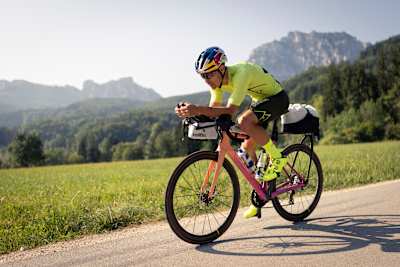
Michael Strasser carried all his own equipment
© Markus Frühmann/Red Bull Content Pool
One-hundred percent solo – in endurance sport terminology, this particular type of challenge is known as ‘unsupported’. The FKT rules are strict: family, friends and fans are permitted only at the start and finish. Everything in between must be done alone, relying entirely on your own resources. There's no support vehicle, no food prepared, no spare wheel and no crew making decisions along the way. Strasser carried everything he needed himself, which meant his bike was heavily laden. And every extra gramme counts when you're cycling thousands of metres uphill. Even with around 20 years of experience in endurance and mountain sports, and a long list of extreme challenges behind him, the project pushed the 43-year-old far beyond his comfort zone.

Michael Strasser celebrates completing the challenge
© Markus Frühmann
It was definitely the greatest sporting achievement of my life
And the clock never stopped – not while eating, not while sleeping and not even while organising supplies at a petrol station. After every summit ascent, Strasser also had to return to his parked bike before continuing. Every minute counted. “I could only manage to beat the ‘supported’ record by making quick ascents, minimising the time spent on the bike and, above all, getting as little sleep as possible,” he explained.
Seven Summits Austria in figures
02
The Seven Summits Austria route
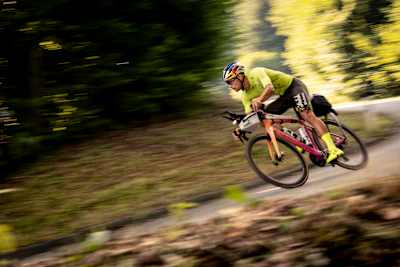
Michael Strasser had to minimise time spent on the bike
© Markus Frühmann
The Seven Summits Austria route runs from Vorarlberg in western Austria to Vienna in the east, linking the highest mountains in all nine Austrian federal states. Because the Großglockner and Dachstein each lie across the borders of two federal states, the challenge features seven summits in total: Große Piz Buin (3,312m), Großvenediger (3,657m), Großglockner (3,798m), Hoher Dachstein (2,995m), Schneeberg (2,076m), Geschriebenstein (884m) and Hermannskogel (542m).


Between the mountain ascents, Strasser cycled around 1,000km, climbing approximately 11,000m of elevation. He then covered another 100km on foot, with a further 9,000m of elevation gain. In total, the challenge amounted to roughly 1,100km of travel and 20,000m of elevation gain – completed solo, unsupported and against the clock.


03
Why Michael Strasser’s record matters
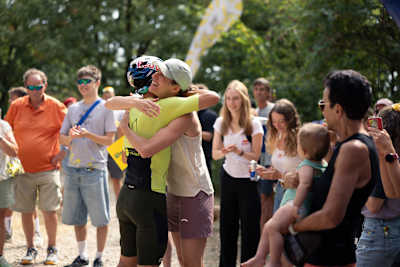
Michael Strasser's new record stands at 4 days, 4 hours and 40 minutes
© Markus Frühmann
For Strasser, however, completing Seven Summits Austria unsupported in record time was about more than simply setting a new sporting benchmark. Fans were able to follow his progress live on Strava, watching almost unbelievable numbers accumulate over four days, four hours and 40 minutes. Minimal sleep, night-time ascents, technical mountain terrain, severe thunderstorms and hundreds of kilometres on public roads created an extraordinary test of endurance – particularly after Strasser suffered a serious cycling accident in 2022.
The project was also a personal test of his limits and an opportunity to rebuild his confidence in long solo rides on public roads. “Climbing the Dachstein alone at night demanded all the experience I’ve gained over the past two decades,” Strasser said, reflecting on the mental and physical demands of the challenge. On the final night, after sleeping for just 35 minutes, he continued cycling for another 470km and climbed almost 4,000m despite heavy thunderstorms. That final push towards Vienna alone demonstrates the extraordinary physical and mental resilience required to complete the challenge.
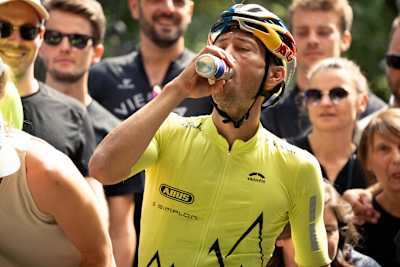
The final hours of the challenge became more of a collective effort
© Markus Frühmann
And although Michael Strasser was riding unsupported, he was far from unnoticed. More and more people followed his progress through live GPS tracking, turning up along the route to cheer him on. During the final hours, what had begun as an intensely solitary attempt at the Fastest Known Time became something altogether different – a collective push towards the finish and a shared celebration of an extraordinary record.