








Gaming
Esports
Step 1 to becoming a Red Bull Flick master: getting your comms on point
Have you found your Red Bull Flick team-mate yet? If so, it's now time to master communication and G2's NiKo and huNter are here to help you nail it.
With the Red Bull Flick qualifiers getting underway, it's important to understand one of the most important parts of a Counter-Strike: Global Offensive match – communication. Even when it's just the two of you, it’s still important to have your communication figured out. Feeding each other the right information at any given moment can win you games. If you’ve never played a high-level CS:GO tournament before, worry not – we've got the perfect two players to help you.
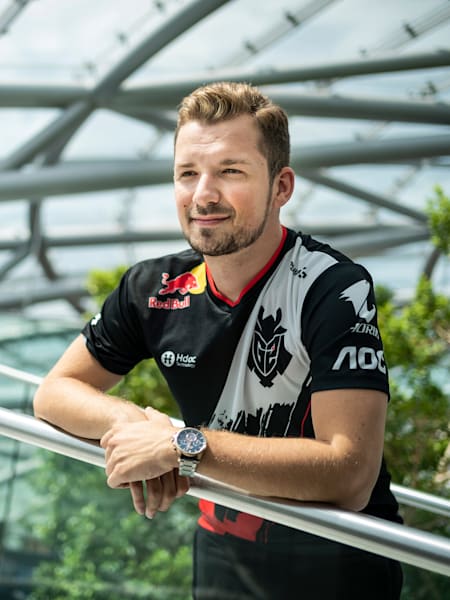
Cousins Nikola 'NiKo' Kovač and Nemanja 'huNter' Kovač have been playing Counter-Strike together since they were young. Now they play professional CS for world-class team G2 Esports, and are here to teach you the baseline of good communications in Counter-Strike: Global Offensive, so you can perform better in your Red Bull Flick qualification.
The in-game leader
The in-game leader is the shot caller. This person's role is to call out plays and strategies, and to mix them up mid-round. NiKo says it's probably the most important role in the team. "It requires the most work and a lot of dedication," he says. "Not everyone can be an IGL. It's not that easy to learn, you've got to have it in yourself and it's not only about calling strats, but you've also got to be a good leader, a guy that everyone in the team looks up to and listens to."
A common misconception is that the in-game leader is the only player that's speaking during rounds, but NiKo says that player is just the one who talks the most, "especially during freeze times when they have to make a call."
In professional CS:GO the in-game leader is the one that helps the coach create the strategies that win the round. However, huNter tells us that other players have an important role, too: "Feedback from other players in the team are helping the IGL with making better decisions and calls."
With just two players, would you need an in-game leader? NiKo thinks so. "However, it also depends on what kind of map/mode you're playing. If you're playing a normal map, where you still need to have a team play and you have to throw some grenades on certain timings, then you need an IGL. If you play on an aim_map, though, then I guess you can play without."
Feeding information
Now that you've decided on an in-game leader (or not), it's important to understand that there are different ways of feeding each other information. NiKo says that the most important and effective method of giving other players information is to be very precise and sharp with it: "Don't over talk, you've got to be clean and, most importantly, you shouldn't stress too much and you shouldn’t raise your voice when it's a tense situation."
Keeping relaxed and calm under pressure, even in highly tense situations (like the ending of a round), helps keep the comms clear. huNter says that giving information when you die is also an important part of Counter-Strike. For example, telling your team-mate how much health your opponent has left (so that they don't have to aim for headshots) and the location where you died is vital.
In some high-tension situations, like clutches, it's also important to keep quiet to give your team-mate the chance to hear footsteps and concentrate. "Unless you notice that your team-mate didn't hear some steps of the opponent, or he somehow didn't see him because he's too focused on his crosshair," NiKo adds.
First steps
So, now that you know the baseline, it's time to take the first steps in creating a proper communication channel with your team-mate. For NiKo, the first step is to make sure that you and your team-mate know all the callouts and positions of every map. "You've got to know how to give info, so your team-mate knows exactly where the opponent is," he explains.
Rookie mistakes
Of course, there are also a lot of rookie mistakes that you and your team-mate will make. Luckily, the G2 cousins list them here, so you don’t make them in your qualifiers.
"You should never fight with your team-mate when you're playing a match and you shouldn't talk about unnecessary things in the mic whenever you are dead," begins NiKo. hunTer adds that screaming is bad, "because it creates bad tension in the team. If you die you should try to stay calm and not to rage, smash the table or do something similar."
NiKo says that it's also bad to not be precise in your callouts, or not give your team-mates critical information like leaving an angle open. "When you play with more than one team-mate, you should say the name of your team-mate when you're talking to them directly, because they might not be aware that you're talking to them, while that information was the most important for them."
Now that you’ve got your basic communication network down, it's time to dominate in the qualifiers. Make sure you sign up here.
