
Music
How Pakistani Electronic Music Scene is Becoming Somewhat… Super
From Faisal Baig and Dalt Wisney to SomeWhatSuper and Talal Qureshi, electronic music is on the rise in Pakistan and like Thanos’ destiny, its eventual boom is inevitable.
Electronic music has been around, in one form or another, for the last several decades. Many artists, going all the way back to Pink Floyd have been said to have included electronic elements in their music. However, the ‘electronic music’ (EM) or rather its more focused sub-genre ‘electronic dance music (EDM) as we know it today, is vastly different.
Consisting of loops, synth, samples, beat drops and minimal lyrics, EM has seen a wildfire growth, especially in the last decade or so. Tiesto, Armin van Buuren, Skrillex, Diplo, Avicii, David Guetta, Marshmello and Deadmau5 are only few of the top EM artists who have literally brought the house down with their music.
In comparison, Pakistan, however, is a different market altogether. Where the masses relate to and have subsequently been fed pop, Sufi and qawwali music, it’s difficult to other genres to get the same recognition or even come forth in the limelight.


But artists, even in the darkest periods of the local music industry, have continued making music. Therefore, besides the mainstream pop music promoted through branded platforms, the underground scene has kept going for a long time, silently keeping the experimentation alive with packed crowds in small rusty basement setups, private parties and jam sessions.
Electronic music as well has been around longer in Pakistan than one would believe. Techno DJ Faisal Baig, the duo of Zeeshan and Sajid, Dalt Wisney, Rudoh and Mole were some of the early names who pioneered the early local electronic music scene, “svelte in a very Kung Fu Fighting tracksuit, swaying from side to side, hand cupped around ear, pudgy fingertips smoothing vinyl like it was chapatti,” as H.M. Naqvi described his friend DJ Jumbolaya in his acclaimed debut novel Homeboy.
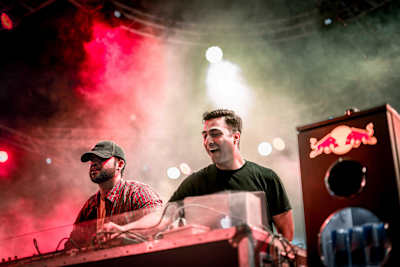
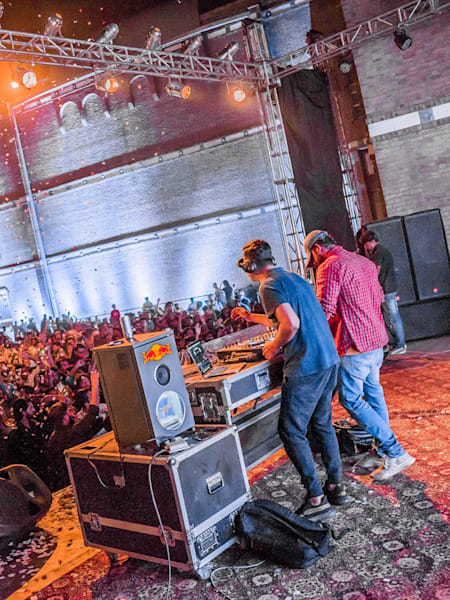
SomeWhatSuper at FACE Music Mela 2019
© Abuzar Mir
The aforementioned names did serve as the precursor to the likes of SomeWhatSuper, Mughal-e-Funk, Talal Qureshi and the new teenage sensation Abdullah Siddiqui. Today, the local electronic music scene is more vibrant than ever.
The new generation of EM artists have upped the game. We not only see branded shows promoting this exciting genre of music, but it’s also that social media has helped these, and many more artists find their audience.
We also see international EM and EDM artists coming to Pakistan and attract large crowds. Diplo, as part of his Major Lazer duo, performed at the first Mad Decent Block Party in Islamabad in 2018, which also brought a huge lineup of EM artists. French duo SamiFati recently toured Pakistan and performed in Karachi as well as Islamabad.
Major music festivals such as Lahooti Melo and FACE (Foundation of Arts, Culture and Education) Music Mela are inviting EDM artists to play to a variety of crowd who might not be familiar with this genre of music but are responding positively to it. So much so that the 2019 FACE Music Mela, held in the second week of March, dedicated a whole day where the lineup mostly consisted of electronic music artists.
Natasha Humera at FACE Music Mela 2019
© Abuzar Mir
DJ Maverick, Sunny K Durrani, Stupid Happiness Theory (Natasha Ejaz), Sway Dance Project, Fake Shamans, Talal Qureshi, Shamoon Ismail, DJ Practical Lady, Rudoh, SomeWhatSuper and SamiFati made the lineup and played the crowd to their beats.
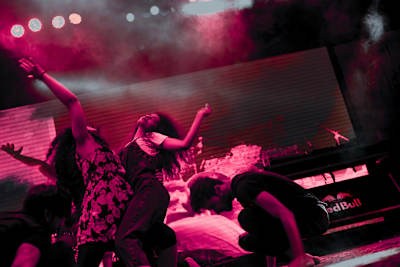
Sway Dance Project at FACE Music Mela 2019
© Abuzar Mir
FACE founder and president Zeejah Fazli is rather enthusiastic about the rise of electronic music in Pakistan.
“It is no more, in my opinion, a niche. People, especially the youth, tend to lean toward electronic music. This genre is growing, and it seems like it’ll take over other genres in the future. This time, we had around six to eight thousand people and they were all dancing.”
He stresses that it wasn’t EDM per se, more like EM with some acts consisting elements of dance music. “We did this last year as well. It is a safe bet. We don’t particularly go for EDM as there are some other acts as well, like Shamoon Ismail (who mixes EM elements) and Natasha Ejaz.”
“We also did some collaborations because we are not only promoting one genre. As an organization, we need to understand the future of the music industry. The purpose was to bring out and introduce the indigenous instruments, which are part of our cultural heritage and are dying. Zulfiqar Faqeer is the last Borindo player in Pakistan and so is Ejaz Sarhadi, the last Sarinda player,” says Fazli.
“The organization’s vision is to promote our indigenous instruments and we thought this would be the best way so that the youth, while listening to electronic music, can be introduced to these instruments.”
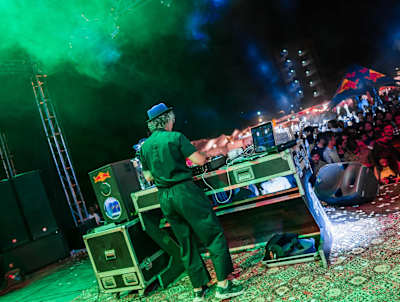
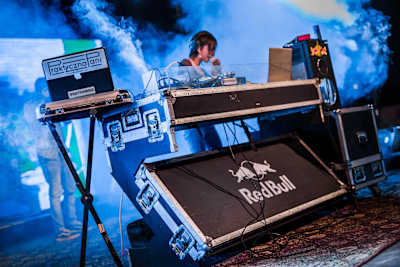
DJ Praktyczna Pani at FACE Music Mela 2019
© Abuzar Mir
Thus, FACE’s approach not only provides a platform to electronic music but also makes sure to highlight the local endangered instruments. “When international musicians come to Pakistan, they interact with the audiences, they also get introduced to these amazing local musicians and they get a chance to collaborate with them. So, it had a dual effect.”
Polish DJ Practical Lady, who is the first female to win the Polish national DJ title and a finalist of Red Bull 3style World Championship, collaborated with Borindo player Faqeer.
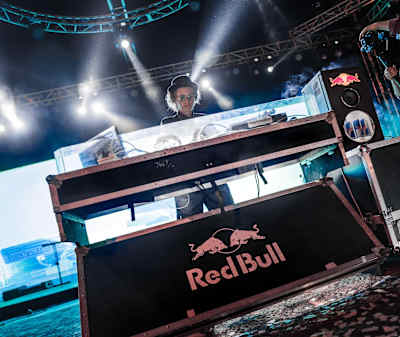
DJ Praktyczna Pani at FACE Music Mela 2019
© Abuzar Mir
Fazli says it was one of the highlights of the day, along with SomeWhatSuper and the main event of the show, SamiFati who collaborated with Sarinda player Sarhadi. “The house was full; people were dancing, and they related to the music. It wasn’t completely new for the people because of the touch of local instruments.”
SomeWhatSuper has become a success in recent years with numerous hits, including The Sibbi Song featuring Abid Brohi. They have touched the right chord with the modern, fist-pumping, head-banging, beat-loving generation. Their electric combination of sharp drops and retro Pakistani music samples have shot them to popularity amidst the youth.
Talha Dar, one-half of the duo, had a fantastic experience playing at FACE Mela, where they have been performing for three consecutive years. “It’s growing with each year. The audience is into this kind of music and this genre is getting bigger each day.”
Tracing the history of EM in Pakistan, he says it started in the 80s with Nazia Hassan, and later Ahmed Jahanzeb, and even Junoon incorporating electronic elements into their music.
“But the actual electronic DJ music took off around 2008 and 2009. And now it’s not just EM artists producing EM, but other artists are also incorporating it and mixing it with other genres. And as our masses are mostly exposed to pop and qawwali music, I think if it sees a boost, it’s going to be in combination with one of these genres.”
This viewpoint coincides with the idea of collaborations laid forth by Fazli. Although different in ideology, it serves the same purpose: elevate all genres and familiarize audience with fresh styles of music.
However, the perception of this genre of music being associated with rave and drug culture seems to hinder its growth in Pakistan. Fazli agrees. “That’s the image we need to break out of. Several festivals and EDM nights are being cancelled because of this fact. Hence, we want to create a softer perception of it by tying it to indigenous instruments. We are not tagging it EDM, but EM so that we take out the ‘drug’ part of it,” he says.
The festival founder is also aware that EM is not a leading genre in the country yet. Therefore, neither are most EM artists in a position to break out big time.
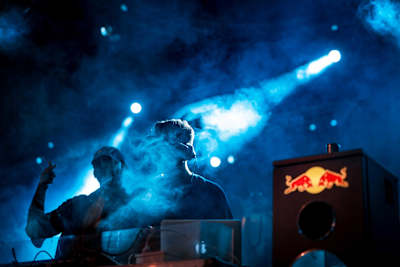
SomeWhatSuper at FACE Music Mela 2019
© Abuzar Mir
“SomeWhatSuper is a good example. They know their audience and have made their place in the industry. But I think we will know for sure some years down the line. As of now, an EM artist can’t ask for five to eight million which an A-list popstar can. EM or EDM is not getting the ATL (above the line) recognition. At the moment, ATL is still for the megastars like Atif Aslam and Ali Zafar. It will take time and I’d say it’s never going to be the top of the line genre because it doesn’t have much lyrics (which our local audience can connect to). It’s more about the experience.”
Dar echoes the sentiment but feels it’s because no electronic music artist wants to come to the mainstream. “I don’t know why, but we have been deeply involved in it and content with being in the underground. But yes, the youth is embracing this genre of music and there are more artists producing electronic music (EM) now than ever.”
Yet, Fazli remains optimistic that this genre will eventually see a big boom. “I think the future of music is toward electronic. And as SamiFati mix violin with electronic. In future, I think we could fuse rabab, tabla, and sitar with electronic and we could come up with fresh music. It’s going towards that and the musicians feel that the standalone traditional form of displaying their art is for the older generation. The new generation of music consumers is more experimental, and they need more of the contemporary electronic sound. I believe musicians will lean towards that down the road and yet of course, there will remain a certain audience who will go for pure traditional music. But electronic music is growing and there’s a space for it.”
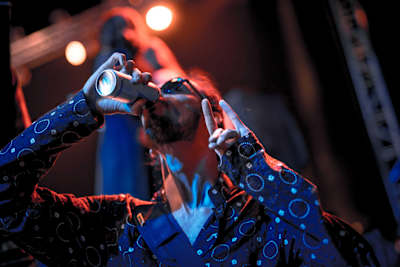
Spectator enjoying the show
© Abuzar Mir
Take any EDM track and one will feel the tension and energy building with the pitch and frequency of the looped notes rising until your heart feels like it’s in a mixer. Then the beat drops and the blows the roof off. Consider this phase the buildup to the imminent drop because when it does, it will not be somewhat, but absolutely super(b).