While the dust is just settling on a memorable Tour de France, the WorldTour road cycling calendar continues at pace with the third and final Grand Tour of the year – La Vuelta a España – starting on Saturday, August 22.
The three-week race is shaping up to be one for the history books as the main general classification contenders Tadej Pogačar and Primož Roglič - assuming the latter recovers from his recent training crash in time - chase individual records. But as the most unpredictable and surprising Grand Tour of the trio, neither can take anything for granted.
La Vuelta, or to give it its full title, La Vuelta Ciclista a España, is one of men’s road cycling’s three Grand Tours alongside the Giro d’Italia and Tour de France. The only three-week stage races in the annual WorldTour calendar, these three Grand Tours are considered road cycling’s toughest tests.
First held in 1935, like the other two Grand Tours, La Vuelta was started by a daily newspaper, Informaciones. Its history hasn’t been plain sailing though, and the race suffered a number of pauses in its early days – during the Spanish Civil War (1937-1940), Second World War (1943-44) and various breaks (1949, 1951-1954) – which is why the 2026 edition is only the 81st La Vuelta in its 91-year history.
Initially held in April, it shifted to its late summer scheduling in 1995 so as to avoid clashing with the Giro d’Italia in May, and has seen its star rise on the international scene ever since. Today, it vies with the Italian race as the next-best Grand Tour to the Tour de France and is used by riders as ideal preparation for the end of season UCI World Championships or to bounce back after injury or disappointment in previous races.
02
What makes La Vuelta different?
Unlike the longer alpine ascents tackled at the Giro and the Tour, La Vuelta’s parcours favour shorter, steeper climbs. This is why over the last 20 years, the Spanish Grand Tour has tended to be head and shoulders above the others in terms of elevation gain, while predominately shorter stages means all that climbing is crammed into fewer kilometres of road, leading to unpredictable and aggressive racing.
In addition to the route, the startlist of La Vuelta is another reason why it often delivers unpredictable outcomes and breakthrough performances. Arguably the Grand Tour with the least pressure, it's often used by teams as a way of helping younger riders gain experience at a three-week race without throwing them in at the deep end, but the race is also seen as a quick way for riders to redeem their seasons after a poor showing or withdrawal through injury at the Tour de France.
While it’s unable to rival the storied French climbs of L’Alpe d’Huez or Mont Ventoux, or the romanticism and relentlessness of Italy’s Stelvio, there are a number of Spanish ascents that have taken on legendary status thanks to their appearance at La Vuelta.
The most famous of them all is the Angliru. Situated in northern Spain’s Asturias region, the 12.4km brute rises 1,266m at an average gradient of 9.7% and has even been described as ‘inhumane’ courtesy of early ramps that edge close to 24%. First featured at the 1999 La Vuelta, it has become the centrepiece of any edition it appears in since (most recently in 2025), and is regarded as the mountain where general classification bids are given the sternest test.
Asturias is home to not one but two iconic climbs, and 100km east of the Angliru lies Lagos de Covadona. After its debut in 1989, the 13km climb has appeared in 23 editions of La Vuelta (most recently in 2024), with winners on its summit finish including Primož Roglič, who secured a stage win en route to third in GC at the 2021 race.
A climb doesn’t have to have featured numerous times to take on legendary status, as La Bola del Mundo proves. La Bola del Mundo has only appeared three times at La Vuelta since its first showing in 2010, but has cemented its status. In 2010, Vincenzo Nibali lost the stage by one second to GC rival Ezequiel Mosquera, but confirmed the red jersey on the penultimate day. Last year, the mountain provided more fireworks with Jonas Vingegaard quashing any doubts about his first La Vuelta title, while Tom Pidcock ensured a first Grand Tour podium was his.
The final of the famous four is Sierra Nevada – a 30km slog at 5.8%. The Granadan ascent has featured 15 times since its debut in 1979, most recently in 2022, but its iconic status extends beyond the Spanish Grand Tour. Famed as a location for high altitude training camps, it was used by Red Bull - BORA - hansgrohe’s Remco Evenepoel to help him prepare for his second-place finish at the 2026 Tour de France.
04
What do the La Vuelta jerseys mean?
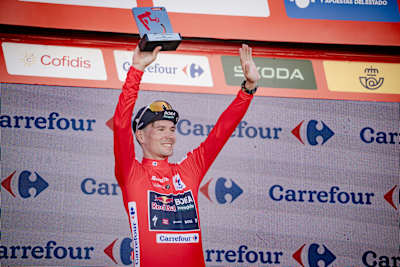
Red jersey for overall leader
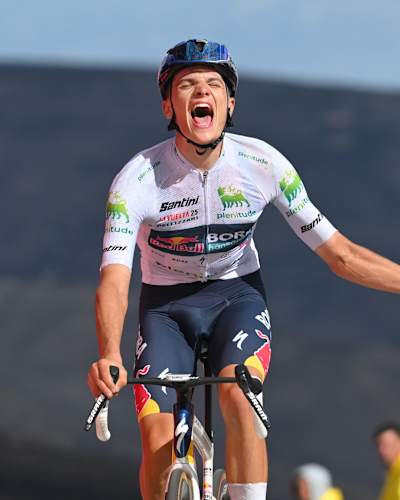
Roglič celebrates a record-equalling fourth Vuelta victory
The jersey worn by the overall leader of the general classification, it signifies the rider with the lowest cumulative time. The jersey has only been red since 2010 though, and was a variety of other colours including orange, yellow and gold during the race’s earlier history.
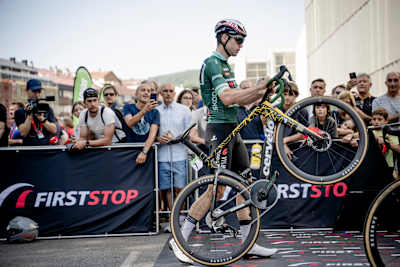
Green jersey for points leader
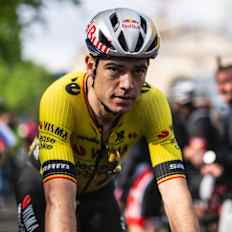
Wout van Aert wore the green jersey for much of 2024
Like at the Tour de France, the points classification leader wears a green jersey. Points are awarded for stage finishes and intermediate sprints, and the classification is usually contested by the race’s best sprinters.
Blue-and-white polka-dot jersey for mountains leader
While the points classification rewards the sprinters, the blue and white polka dot jersey does the same for the race’s climbers, with a varying number of points on offer for leading the race at the top a climb – the harder the ascent, the more points on offer.
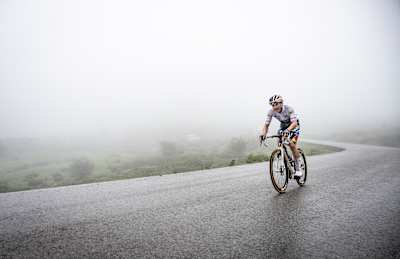
White jersey for best young rider
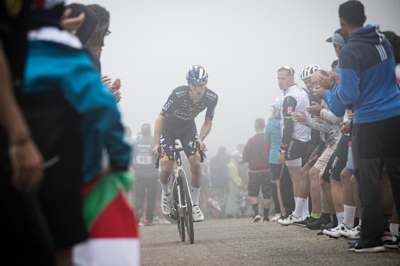
Florian Lipowitz rides through the Covadonga mist in the white jersey
A sub-category of the general classification, the white jersey is worn by the highest-ranked rider born after January 1 1999.
Team classification
The team classification takes the top three times from a team and combines them to determine who is the fastest overall. There is no jersey for this classification, but riders in the team who are leading the classification will wear red race numbers.
With its ascent-heavy parcours, climbers tend to excel at La Vuelta, where previous winners include the out-and-out mountain goats Nairo Quintana (2016), Roberto Heras (2000, 2003-04, 2005) and Sepp Kuss (2023).
That said, this year’s edition is shaping up to hopefully be a battle of the Slovenian general classification greats with Tadej Pogačar going toe-to-toe with Primož Roglič if he recovers in time. For Pogačar, a win would add even more evidence to his claim as the greatest of all time with the 27-year-old becoming only the ninth rider to win all three Grand Tours. Victory for Roglič though would make him the most successful La Vuelta champion ever with five titles.
Outside of the potential Pogačar vs Roglič battle, Mattias Skjelmose is entering La Vuelta after a strong showing at the Tour de France, where he finished sixth, while Felix Gall starts his second Grand Tour of 2026 after finishing runner up to Jonas Vingegaard at the Giro d’Italia.
Historically, La Vuelta has acted as a springboard for future stars of cycling (for example, Pogačar finished third at his debut Grand Tour in 2019). Riders to keep an eye on at this year’s edition include Matthew Brennan, who's a one-day specialist making his three-week race debut, and Gall’s team-mate Matthew Riccitello, who finished fifth at the 2025 La Vuelta and won the youth classification.
Finally, its timing in the calendar means that La Vuelta is often used by riders seeking redemption after earlier disappointments in the season. Wout van Aert is a rider with a point to prove after being forced to miss the Tour de France with an elbow injury; the Belgian also has unfinished business at La Vuelta after he abandoned the 2024 edition on Stage 16 while leading both the points and mountains classification. Jay Vine is another who will be targeting big things having retired from the Giro d’Italia when he crashed on Stage 2.
06
La Vuelta's memorable moments and records
Primož Roglič is always a contender when he takes part
La Vuelta has been won by some of cycling’s biggest names over the years, with Roberto Heras and Primož Roglič the most-successful riders in the race’s history with four wins each. Other iconic winners include the home favourite Alberto Contador (three wins), while Chris Froome (two wins), Bernard Hinault (two wins), Jonas Vingegaard and Eddy Merckx have all been victorious at the Spanish Grand Tour.
Of those winners, two could be considered to have achieved historic comebacks at the race. Alberto Contador’s victory in 2012 is the most legendary – the Spaniard launching an audacious solo attack 13.6km from the summit finish of Fuente Dé on Stage 17 and turning a 28-second deficit to Joaquim Rodríguez into a 2-minute-28-second advantage to take the red jersey with four stages to go. Roglič’s record-equalling win in 2024 was a comeback in other ways as the Slovenian returned to La Vuelta after fracturing his back and withdrawing from the same year’s Tour de France and overcoming a stomach bug on the penultimate stage to win a fourth title.
The closest GC battle meanwhile is the tightest a Grand Tour has ever finished – Éric Caritoux beating Alberto Fernández Blanco by just six seconds in 1984.
The most stage victories record is held by Delio Rodríguez, who won 39 stages at five editions between 1941-47.
La Vuelta matters more than ever and the youngest of the three Grand Tours grows in stature year on year.
Its timing as the final Grand Tour of the season provides an opportunity for riders to salvage or elevate their year, with some like Wout van Aert also using it as good preparation for the UCI Road World Championships in September.
The fact that there's less pressure and intensity surrounding La Vuelta than the other two Grand Tours also means it acts as a platform for future stars of the sport, with Pogačar, Remco Evenepoel and Tom Pidcock all finishing on its podium in recent editions.
08
La Vuelta 2026: Fast facts
La Vuelta FAQs
La Vuelta is a three-week stage race held in Spain in August and September each year, and it is regarded as the last of the three Grand Tours.
There are 21 stages at La Vuelta.
The red jersey is worn by the rider with the lowest cumulative time and is therefore leading the general classification.
Roberto Heras and Primož Roglič have both won La Vuelta four times.
While the Tour de France is generally longer and raced at a faster average speed, La Vuelta often leaves its French counterpart in the shade when it comes to total elevation gain and average per stage.
Race organisers actively seek out the toughest terrain around, making the most of Spain’s wall-like ascents for the entertainment of those watching at home.
Charlie is a freelance contributor based in London, UK. He covers a variety of two-wheel disciplines, including road cycling, mountain biking and BMX, and also writes about cycling for publications such as Rouleur, Bike Radar and the Guardian. When not writing about it, he's a keen cyclist and runner himself, and has completed iconic events such as the Paris Roubaix Challenge sportive and London Marathon.