
Music
From the streets to the symphony: the rise of Brazilian funk
From Rio and São Paulo’s urban communities to dance floors and stages around the world, Brazilian funk has become a global force. Red Bull Symphonic Brazil showed just how far the movement has come.
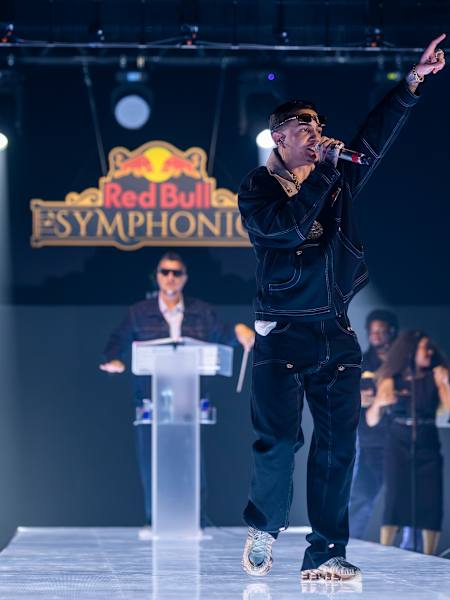
When MC Hariel took to the stage at São Paulo's sold-out Auditório Simón Bolívar on August 8, 2026, Brazilian funk was entering new territory. Backed by conductor Xuxa Levy and 56 musicians, the genre was at the heart of Red Bull Symphonic for the first time.
But the moment was also a sign of just how far Brazilian funk has come. From its roots in Rio and São Paulo's urban communities to becoming one of the world's fastest-growing music movements, here's how funk helped shape Brazilian culture and started making waves around the world.
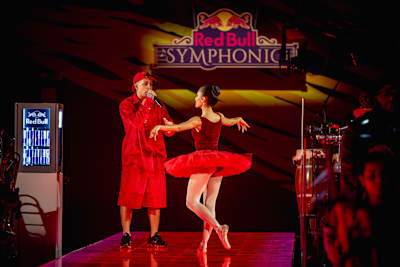
Blending music and culture at Red Bull Symphonic Brazil
© Marcelo Maragni/Red Bull Content Pool
Brazilian funk found its own beat
First things first: Brazilian funk isn't simply Brazil's take on the American funk of James Brown and the 1970s, although the connection is indeed there. Rio de Janeiro's Black dance parties of the 1970s were filled with US soul and funk, before sounds such as Miami bass, freestyle, hip-hop and electro began making their way into the mix.
Brazilian producers took those influences and started pulling them apart and rebuilding them. Heavy bass, syncopated percussion and call-and-response vocals became central to a new electronic sound where the beat could be just as important as the melody. Eventually, funk developed rhythms that were unmistakably its own.


One of the most important was the tamborzão, the percussion-heavy groove that became a signature of funk carioca in the late 1990s. Research has also linked some of its rhythmic foundations to Afro-Brazilian traditions including congo, capoeira and maculelê. The result was music that could absorb influences from elsewhere while still sounding completely at home in Brazil.
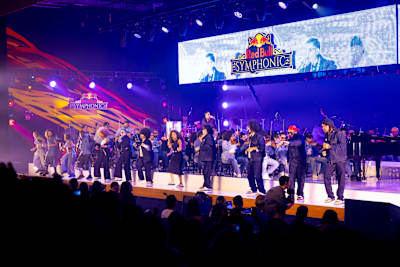
Red Bull Symphonic – where musical worlds collide
© Fabio Piva/Red Bull Content Pool
It became much bigger than music
To understand funk's rise, though, you need to look beyond the speakers. For generations of young Brazilians, particularly those growing up in the urban peripheries, funk became a way to tell their own stories.
Different styles emerged to talk about almost every part of life. Funk consciente tackled social issues, while funk ostentação explored money, ambition and social mobility. Other strands dealt with romance, sexuality, faith, family, neighbourhood, grief and transformation.
Being part of funk culture could say something about who you were, where you came from and the community you belonged to, and the influence quickly moved beyond music.

MC Hariel shines at Red Bull Symphonic in São Paulo
© Felipe Gabriel/Red Bull Content Pool
There's Passinho, the lightning-fast dance style born around Rio's funk parties. There's the Mandrake aesthetic, with its sharp haircuts and carefully chosen sportswear, and the wider Brasilcore trend that turned Brazilian football shirts and national colours into a global fashion statement.
Then there are fluxos – the street gatherings where funk lives in São Paulo's peripheries – and rolezinhos, the mass meet-ups organised through social media that brought young people into shopping centres and sparked a much wider conversation about class and who gets to occupy certain spaces.
Funk wasn't just providing the soundtrack. It was helping shape the culture around it.
MC Hariel is helping tell funk's story
That makes MC Hariel a fitting artist to take funk into Red Bull Symphonic. One of the leading voices in Brazilian funk, Hariel has built his career around telling stories from the perspective of the people who live the culture every day. His Symphonic show wasn't designed to tell only his story either.

MC Hariel took centre stage, but says it's not all about him
© Felipe Gabriel/Red Bull Content Pool
It isn't about hype, it isn't about fame. Every guest is there for a reason
MC Don Juan, Neguinho do Kaxeta, Tasha & Tracie, MC Ktrine, MC Marks, Menor da VG, Menor JP and SUBMUNDO 808 all joined him on stage, with each guest representing a different part of funk's journey.
Together, they reflected everything from the Baixada Santista, where funk paulista developed, to funk consciente, the women who helped create space for a new generation of female artists and the people who opened doors for Hariel himself.
“It isn't about hype, it isn't about fame,” Hariel explained. “Every guest is there for a reason.”
It meant the show could look backwards and forwards at the same time – celebrating the people who built the culture while making room for those taking it somewhere new.
So, how do you turn funk into a symphony?
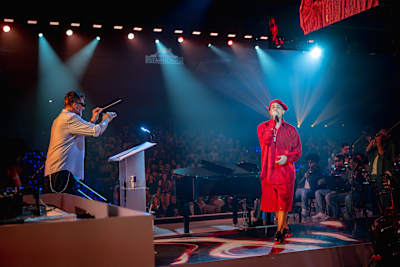
Conductor Xuxa Levy in full flow at Red Bull Symphonic
© Marcelo Maragni/Red Bull Content Pool
That was the challenge facing producer and conductor Xuxa Levy. Rather than use an existing orchestra, Levy created one specifically for the project, selecting musicians for both their technical ability and genuine connection to funk.
The resulting 56-piece Orquestra de Fluxo was predominantly young, black and female, reflecting the culture it represented. Its name comes from the fluxos – the street gatherings at the heart of São Paulo funk – and that idea shaped the stage too. Instead of a traditional concert-hall setup, the musicians lined a catwalk-style stage with a corridor through the centre and the audience on either side.
I feel like I'm dropping into a 30-metre wave at Nazaré
Rebuilding the music was another challenge. Musical director NAVE described it as “archaeological work”, recreating around 19 beats using audio separation tools and his own archive, while seven arrangers produced some 1,800 scores for the show.
For Levy, it meant immersing himself in a whole new world. “I feel like I'm dropping into a 30-metre wave at Nazaré,” he said. “It's a deep dive into a culture I didn't know.”
Brazilian funk is going global
The world is increasingly diving in too.
In 2025, funk was the fastest-growing genre globally on Spotify, while TikTok says posts using #brazilianfunk grew 34 percent in Europe between February and May 2026 compared with the previous four months.

Dutch footballer Memphis Depay attended the show in São Paulo
© Marcelo Maragni/Red Bull Content Pool
Its influence can increasingly be heard outside Latin America too, feeding into pop, electronic music and K-pop and reaching international audiences through artists and collaborations involving names like Drake, Cardi B, M.I.A., Beyoncé, Tove Lo and Anitta.
What's striking is that funk doesn't need to leave its identity behind to travel.


That was ultimately what made Red Bull Symphonic Brazil such a fitting snapshot of where the genre stands today. Funk went from the streets to a concert hall accompanied by 56 musicians, but the street remained right at the heart of the performance.
The stage may be getting bigger, but Brazilian funk is still moving to its own beat.