




Bike
MTB
What is cross-country mountain biking? The complete guide
What is cross country mountain biking? This guide covers everything from XCO, XCC and XCM race formats to modern XC bike setup, power-to-weight training and technical skills.
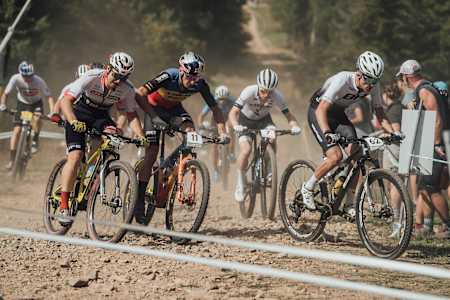
Get a breakdown of what's involved in XCC and XCO racing in this guide on the ins and outs of UCI World Cup Cross-Country Mountain Bike racing.
For those who are new to the sport of mountain bike cross-country, seeing a huge bunch of riders set off at the same time – battling it out lap-after-lap, for over an hour – can be slightly confusing. Everyone knows that the first rider to cross the finish line is the winner, but what happens in-between the start and the finish at a Mercedes Benz UCI Cross-Country Mountain Biking World Cup race? What decides the start order and how many laps they're actually meant to do? Read on to learn everything you need to know about the discipline.

4 min
What is XCC and XCO Mountain Biking?
Wondering what on earth XCC and XCO racing are? Canadian National Champion Emily Batty runs us through the ins and outs of UCI World Cup Cross-Country MTB racing.
So, what is cross country mountain biking, exactly? At its simplest, cross country – or XC MTB – has been a professional sport since 1990 and is built around speed in both directions: unlike trail riding, which is mostly about the downhill with technical climbs just to earn it, cross country mtb is a repeated, all-out effort both up and down the same piece of terrain, lap after lap. That distinction is what makes it as much a fitness discipline as a bike-handling one.
More on the Mercedes-Benz UCI Mountain Bike Cross-Country World Cup
01
What is XCO?
XCO, short for Cross-Country Olympics, is a UCI off-road mountain bike race format held over undulating, mainly dirt-based circuits that riders must complete several times. Courses should be as natural as possible, but can have man-made features in them, too. Riders start at the same time in a mass start, racing between an hour and 20 minutes and an hour and 40 minutes in the elite men and women's categories. Under 23s and juniors will race for shorter time periods than the elites, due to their age.
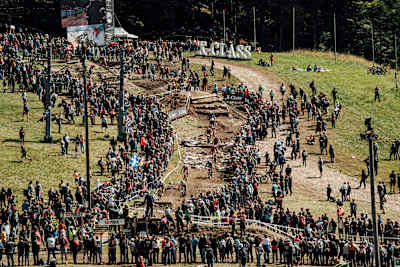
In cross-country racing, you take the rough with the smooth
© Bartek Wolinski/Red Bull Content Pool
It's the discipline most people mean when they ask what is cross country mountain biking – XCO is the Olympic format and the one that headlines every World Cup weekend.
02
How long is an XCO course and what does a typical course look like?
A course circuit can be between four and 10km long, with the racers riding laps of a circuit. The amounts of laps each category of riders do is set to match their overall race time. A venue that has a shorter track will have more laps and vice versa. Generally, races tend to be five to seven laps long.
Although the XCO courses vary in technical difficulty and can look (and ride) very differently, they all have to be designed in a similar way. For example, they have to include a significant amount of climbing and descending, paved/asphalt roads cannot exceed 15 percent of the total course and extended singletrack sections must have pass sections. A typical course has steep climbs, technical descents, forest trails, rocky paths and obstacles contained within it.

One of Albstadt's many painful climbs
© Bartek Wolinski/Red Bull Content Pool
03
The World Cup is the premier competition for XCO
The UCI, the governing body of cycling, organizes a World Cup series of races, with rounds happening all around the world. Racers have to adapt to different courses, terrain and climates wherever they go. There are usually six or seven rounds of competition per year on average. For 2022, there are actually nine rounds.

8 min
UCI 2022 venue guide
Find out everything you need to know about the destinations for the 2022 UCI Mountain Bike World Cup.
04
What is XCM? Marathon format explained
XCM, or Marathon, is the endurance end of cross country racing – and the one format not held under UCI World Cup rules, run instead as standalone marathon events and a UCI World Championship of its own. Where XCO is a short, high-intensity circuit race, XCM courses run anywhere from 60km to well over 100km point-to-point or large-loop routes, with race times stretching to three hours or more for the elites. There's far less mass-start jostling than XCO – positioning still matters early on, but pacing and fuelling become the deciding factors over that kind of distance, closer in feel to a road race than a technical lap race.
Winning a World Cup race is a big thing! There's some nominal cash to be won, but more importantly you get points. Get more points than anyone else and you win the overall World Cup title. Finish in the top-38 in a World Cup race and an athlete will get points, so it's important to finish and fight for position when competing.
Points per position for the top-5 podium places are as follows:
- 1st = 250
- 2nd = 200
- 3rd = 160
- 4th = 150
- 5th = 140
The athlete who heads the overall XCO standings after each round gets to wear a special white jersey as series leader when they participate in the next round of the World Cup.
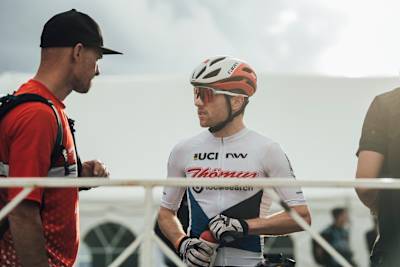
The white jersey of the overall World Cup leader
© Bartek Woliński
05
A good start is essential
Positioning is a key aspect of XCO racing. Getting a good start is all-important, so having a good start order position at the start gate is really beneficial. A top-ranked rider doesn't want to be stuck behind a bunch of riders on a track a few meters wide if they want to win the race. Valuable time can be lost to a rival or the leader in this way and the gap may never be recovered. Read on for how the start order for an XCO race is determined.

Having a good start gives an advantageous position into the first corner
© Craig Kolesky/Red Bull Content Pool
06
How is the XCO start order determined?
All riders (from the same category) start together. The start line is always eight meters wide and so there are usually eight riders per line. Cross-Country Short track (XCC), was a race format introduced in 2018 to shake up how the starting order for the main XCO World Cup race was determined. Basically, riders have to race XCC to have a chance at a good start spot in XCO.
If a rider finishes in the top-24 of the XCC race, their finishing position means that they occupy the front three starting rows of the XCO race, the first eight finishers being on the front row and so on. Spots after the top-24 are determined by UCI XCO individual rankings and for the unclassified riders by drawing lots.

Riders have to give the XCC race their full on commitment
© Bartek Wolinski/Red Bull Content Pool
07
What does an XCC race look like?
XCC consists of a 1km to 1.5km circuit course, with the race lasting between 20 and 25 minutes and having on average six to eight laps. Each lap is around two to three minutes long. A XCC circuit typically uses the XCO start/finish straight and may use parts of the XCO course, but can also be entirely separate. It's a great entry point if you're new to watching xc mtb – shorter, punchier, and easier to follow than a full XCO race.
The XCC race takes place on the Friday evening of a World Cup weekend, ahead of the XCO race on Sunday. As the event determines who occupies the first three rows in the main XCO race, nearly all of the top riders in the field will have to participate.
There are also World Cup points on offer for the XCO overall standings for those who finish the race (another reason why it's in the interests of riders to compete). The winner of an XCC race gets 80 points, the second gets a 60, the third gets 50 and so on. Points are awarded right down to 40th place.
The points from the XCC race that go towards the XCO overall standings have been reduced somewhat from previous seasons. This is because from 2022 onwards the XCC will have its own World Cup series, where a competitor will win an overall title and get a shiny trophy for doing so.

Women's XCC racing at the Snowshoe round of the World Cup
© Bartek Woliński
08
How do the standings for the XCC World Cup overall work?
Following the success of XCC racing, the UCI decided that XCC should have its own World Cup series with an overall World Cup winner for the format. So, as well as determining the start order for the main XCO race and earning points for the XCO World Cup overall as mentioned above, the XCC will have its own overall standings. The points earned from winning an XCC race and the top five podium places are:
- 1st = 250
- 2nd = 200
- 3rd = 160
- 4th = 150
- 5th = 140
09
In-race tactics in both XCC and XCO
With XCC you're basically going all-out for a short period in a bid to keep your position in the pack of racers. There's little time for recovery and athletes are close to their maximum heart rate almost from the start of the race. Really big efforts are usually contained until the final lap when a short, sharp advance in speed can break the field apart.
In the longer XCO races, opening laps can be very frantic, as riders jostle for position. The middle laps are where the riders tend to race within themselves and are careful in conserving energy. The last two laps are where the racing really hots up, with riders starting to attack each other to try and gain time gaps and move positions in the race. Mind games are always at play between the competitors. Racing at World Cup events can be full-on and it's what makes XCO an exciting and hugely spectator-friendly sport. Sprint finishes in both XCC and XCO in particular gets the adrenaline running and the fans hyped.

11 min
The best XCO sprints ever
Sit back and enjoy as we look back on some top XCO sprint finishes in recent UCI MTB World Cup history.
This is exactly why cross-country deserves more credit as a spectator sport than the casual “spandex and fire roads” stereotype suggests. It's mud, sweat and tactics for the best part of two hours, often decided by a sprint finish after riders have already gone deep into the red – there's little that's more dramatic in mountain biking.
10
Modern XC bike anatomy: What do XCO mountain bikes look like?
Today's XCO mountain bikes have an aggressive geometry that seats the rider directly over the cranks for maximum power through the pedals. They have a lightweight frame and components for efficiency, plus big 29er wheels to help carry rolling speed over all surfaces. A modern XCO mountain bike is around about eight and a half to nine kilograms in weight. Most of the pros ride dual-suspension now. Hardtails (suspension at the front only) are occasionally still used, but it depends on the venue. The bikes have to be incredibly light.

It's all about harmony
© Bartek Woliński
The UCI have a rule for the World Cup when it comes to the use of an XCO mountain bike for racing. You have to use the same bike you choose for XCC for the XCO race, so the choice on whether to ride hardtail or dual suspension becomes very important to the athletes.
The biggest change in the last few years has been suspension and geometry converging with trail bikes: most World Cup-level cross country mtb race bikes now run around 120mm of travel front and rear, up from the 80-100mm that was standard not long ago, paired with slacker head angles (roughly 67-69 degrees) for stability on faster, rougher descents. Dropper posts, once rare or banned outright in XCO, are now close to universal at the top level – typically 100-125mm of drop – letting riders get low and confident through technical sections without slowing to adjust their saddle. None of this has come at the cost of weight: top race bikes still land close to 9-10kg thanks to lighter carbon frames and components.
11
The power-to-weight engine: How XC racers train
Cross-country racing rewards riders who can produce a lot of power relative to their body weight and sustain it for over an hour – which is why XC training looks closer to road cycling or running than most other mountain bike disciplines.
VO2 max intervals
Short, brutally hard efforts – typically three to five minutes at or near maximum sustainable power, with equal recovery between reps – build the top-end engine riders need for race starts and late-race attacks, where being able to hit red-line and hold it for a couple of minutes decides positions.
Sustained climbing endurance
Longer efforts of 20 minutes or more at a hard-but-sustainable pace build the aerobic base that lets riders repeat effort after effort, lap after lap, without their power dropping off in the closing stages – arguably more decisive over a full XCO race than raw top-end power.
Fueling for race day
At XCO intensity, riders can burn well over 800 calories an hour, so getting 60-90g of carbohydrate per hour from gels, drink mix or bars is standard practice for anything over 90 minutes – under-fueling shows up as fading power in exactly the closing laps where the race is usually decided.
12
Technical flow masterclass: Carrying speed on a steep-angled bike
The steep seat and head angles that make an XC bike efficient for climbing work against you the moment the trail points down or gets technical – which is why carrying speed through rock gardens and switchbacks on a cross country mtb is its own skill, distinct from riding the same features on a slacker trail bike.
In rock gardens, the instinct to slow down and pick through every rock costs more time than it saves – momentum helps the bike skim over smaller chatter that would otherwise throw you off line. Staying light on the bars, letting the front wheel deflect off smaller rocks rather than fighting every one, and picking one clean line through the largest obstacles keeps speed up without a death grip on the brakes.
Tight switchbacks reward late, committed braking and a dropped outside pedal with weight driven through it, using the same cornering principles as trail riding but with less margin for error on a twitchier, steeper-angled frame – which is exactly why the dropper posts covered above have become so valuable even in a discipline built around climbing speed.
13
What makes a good XCO rider and what riders should you look out for in a World Cup race?

9 min
Everything you need to know about UCI MTB cross-country 2022
Find out what's new for XCO in 2022 and hear from the title contenders as we await another season of racing.
One thing that's common with athletes who compete in XCO is that they tend to be skinny, slight and light in weight. Power is derived from the big leg muscles.

Tight racing amongst the women
© Bartek Wolinski/Red Bull Content Pool
For over a decade this section would have opened with one name: Nino Schurter. The Swiss rider retired from racing in September 2025 after his final World Championships, closing out a career of 10 elite men's XCO world titles and an Olympic gold in Rio 2016 – arguably the most decorated cross-country racer ever. With Schurter gone from the start line for the first time since 2009, the men's field is genuinely open: Tom Pidcock is the two-time defending Olympic champion (Tokyo 2020 and Paris 2024) and one of the sport's biggest names, while Alan Hatherly heads into 2026 as reigning World Champion after topping the 2024 World Cup overall. Watch too for Fabio Püntener, who joined Schurter's old Scott-SRAM team in 2025 and enters 2026 as the number one ranked men's XC rider – the early favourite to fill the gap Schurter left behind.
On the women's side, Pauline Ferrand-Prévot finally completed her Olympic set with gold at Paris 2024 on home French soil, after three previous Games without a cross-country medal. She heads a stacked field that includes Puck Pieterse (Netherlands), Haley Batten (USA), and Switzerland's Alessandra Keller, the 2024 World Cup overall champion – all regular podium threats at any given cross country mtb World Cup round.
Download the free Red Bull TV app and catch the MTB action on all your devices! Get the app here
