
Tennis
Emma Navarro on the true cost of her rapid rise through the tennis ranks
As her results soared, the American tennis ace says her health was moving in the opposite direction. She reflects on under-fuelling, pushing herself to the limit and learning to put health first.


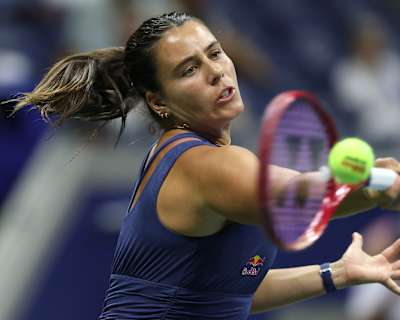
After an impressive career in the juniors, Emma Navarro enjoyed a seamless transition to the professional ranks. In her first full year on the WTA Tour in 2023, the American regularly featured in the latter stages of tournaments and ended the season ranked inside the world’s top 40.
The following year was even more impressive. Navarro won her first WTA Tour title, reached the quarter-finals at the Australian Open and Wimbledon, enjoyed a memorable run to the last four at the US Open, and rose to eighth in the world.
However, the 25-year-old has now revealed that throughout this period of her career, she was struggling with long-running health problems that caused weight loss, fatigue and dizziness. She also describes “feeling deep internal anger" on the court.

“As you all may know. I have faced some health challenges recently. What you probably don't know is that these challenges began almost three years ago and were heavily influenced by the choices I made early in my professional career relating to training, fuelling, competing and recovery,” she revealed via a lengthy post on Instagram.
01
Success on court came at a cost
Navarro believes the issues began to arise during the 2023 season when she played 88 matches across the ITF Circuit and WTA Tour. The hectic schedule required intense training but it appeared to be paying off as she won numerous challenger titles and established herself on the main Tour.
Yet, while success was arriving, she recalls being constantly hungry and losing 14kg in weight during 2023 and 2024.
“Being new to professional tennis, I was doing what my team and I thought was best, and pushing myself to the limit was always my MO," she added.
"And it worked. From the outside, things looked great. I continued to achieve tennis milestones that far exceeded my expectations, my ranking was rising, my level continued to improve, I continued to get faster and more athletic on the court, and I looked to be the strongest, fittest version of myself I had ever been."

Navarro enjoyed a hugely successful 2024 and climbed to eighth in the world
© Robert Snow / Red Bull Content Pool
Despite the warning signs, Navarro was excelling on court. In 2024, she reached the semi-finals in Auckland and the following week won her first WTA Tour title in Hobart. However, that proved to be a bittersweet moment for the American.
"I was off. I was experiencing emotions I had never experienced before, at least not to this severity. Irritability, frustration, perfectionism, worry, and bizarrely for me, anger," she said.
"I remember feeling deep internal anger on the court that week in Hobart, like I wanted to smash every racket in my bag (something I had never done or wanted to do).
Despite these feelings, Navarro was able to hide her struggles and firmly established herself as one of the world’s leading players in 2024.
“From the outside, things looked great. I continued to achieve tennis milestones that far exceeded my expectations, my ranking was rising, my level continued to improve,” she explains.
“I must be doing things right, I thought, otherwise I wouldn’t be having this success. Of course I feel tired and a little out of it. Every athlete struggles with this stuff. I can’t change what I’m doing now.”

Emma Navarro won the Girls' Doubles at the 2019 French Open
© Julian Finney / Getty Images
I must be doing things right, I thought, otherwise I wouldn’t be having this success

But it wasn’t just her physical issues that were causing concern. “Everything began to annoy me. My team, other people, anything that didn't align with my specific preferences or routines, any imperfection on the court, every mistake, every point I lost. But I tried my hardest to not let people see how I felt, to keep it together. Additionally, I was hungry. Every hour of the day, I was hungry."
02
Turning the focus to recovery
It was during the 2025 season that Navarro recognised that the symptoms were becoming increasingly difficult to manage. Not only was there feelings of exhaustion and hunger, but also bouts of dizziness, disrupted sleep and headaches.
At the Billie Jean King Cup in September, she recalls one particularly difficult moment. “I broke into tears on the court during my match at the September 2025 Billie Jean King Cup, devastated to be representing my country in this state of exhaustion and hunger and confusion, and not being able to properly honor our flag.”
Towards the end of the year, Navarro finally got some answers when she was diagnosed with with relative energy deficiency in sport (RED-S) and subsequently found out she was suffering with the autoimmune disorder Hashimoto's hypothyroidism.

Navarro in action at Red Bull BassLine
© Chris Tedesco / Red Bull Content Pool
By November, after working with doctors, nutritionists and other specialists, it was established that she had been under-fuelling for almost three years.
It was from this moment that the recovery process began. “Over the past year, I have gone all in. Changing my diet, increasing my energy intake, blood draws, medicine prescriptions and tweaks, visiting different doctors and nutritionists, monitoring blood sugar, logging symptoms, searching for patterns.
“We worked to properly address a hypothyroid condition that had also worsened over time. And although it took a while to start feeling better, I gradually made progress. I began eating what my body needed to recover from the deficit I had been in. A few months in, I began sleeping through the night more consistently.”


These changes began to make a difference and Navarro noticed changes both physically and mentally.
“My mind slowly started to quiet down,” she added. “My emotions calmed. My mental bandwidth expanded. My cognitive function improved. In the past few weeks, I felt able to play tennis as myself again, to see the ball moving, to move without thinking, to swing without cueing, to compete without it taking the life out of me.”
03
Rethinking what performance means

Emma Navarro broke into the top 10 for the first time at the 2024 US Open
© Robert Prange/Getty Images
While Navarro is missing the Asian swing to focus on her recovery, the time away from competition has allowed her to adopt a different perspective on performance.
For years, her improving results made it easy to believe that the work she was putting in was taking her in the right direction. Now, progress is about far more than results.
"I gained some weight this year. But I also gained my life back. I have enough energy to seize every day, to train or compete as hard as I want to, and to live a life outside of tennis,” she said. "There is no weight on the scale or leanness in your limbs that is more valuable than your health or your well-being."