


Wintersports
Skiing
How to carve on skis: Step-by-step guide for beginners
Carving on skis brings a new level of control and thrill to the slopes. Learn how to harness your edges, smoothly turn, and link movements to carve confidently.
Carving is one of the most satisfying ski moves. Unlike basic turns, carving is all about letting your ski edges cut through the snow, giving you precision, control, and a feeling of flow as you glide downhill. Whether you’re starting fresh or looking to refine your skills at events like the Red Bull Cascade, carving opens up a new level of confidence and speed on the slopes. Learn the essential steps on how to carve on skis for beginners, with tips that advanced skiers can apply to level up their skills.
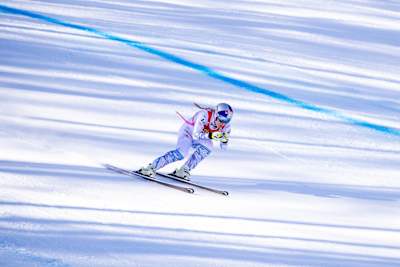
Lindsey Vonn during the Downhill Race at FIS Alpine Ski World Cup in 2019
© Erich Spiess / ASP / Red Bull Content Pool
01
What is carving?
Carving is a skiing technique where you turn using the edges of your skis, allowing them to cut smoothly through snow. Unlike skidding, where your skis slide across the slope, carving keeps your skis on track with minimal sideways movement. To carve, you'll bend the outer ski into a downhill arc, turning the skis into a curved path.
For those with one foot in the skateboarding world, carving will remind you of home. It’s as if you’re skiing on rails. This results in smooth, controlled turns and a dynamic riding style that feels both powerful and fluid. Plus knowing this skiing term lets any beginner come off as an expert skier.
Why try carving turns on skis?
Mastering ski carving techniques offers multiple game-changing benefits.
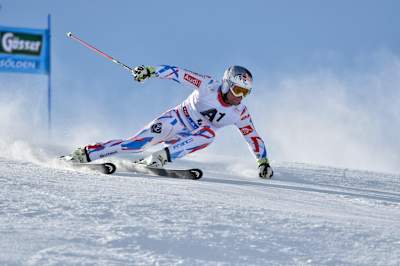
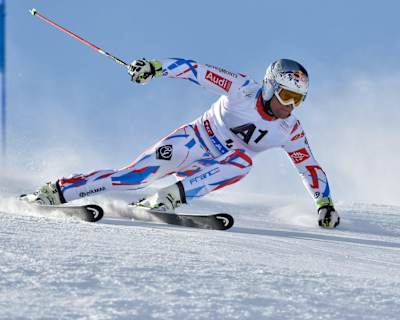
Alexis Pinturault carves a turn in Soelden
© Erich Spiess/ASP/Red Bull
- Improved control: Carving helps you maintain a better grip, especially on icy or steep slopes, by engaging your ski edges.
- Enhanced speed and precision: Carving is efficient and lets you keep up the pace without unnecessary friction or skidding.
- Better balance and stability: When you carve, you naturally find your footing and feel secure, which helps build confidence on the slopes. Since you’ll be turning your skis on their side to carve, you’ll learn to balance every way your body turns.
- Conserves your energy: Carving reduces the work needed to maneuver turns since your skis glide with minimal resistance.
02
How to carve ski turns, step-by-step
1. Start with the right stance
The foundation of carving starts with a balanced and athletic stance. Stand with your knees slightly bent, shoulders relaxed, and feet hip-width apart to give yourself a stable base. The skis should be parallel with your shins pressed toward the front and hands forward.
Avoid leaning back or forward too much. Leaning back can cause you to lose control while leaning too far forward can make you feel unsteady. Keep your weight centered over the middle of your skis for the best balance. Aim to feel even pressure across the front of your feet and outside ski, allowing you to shift your weight smoothly during turns.
2. Engage your ski edges
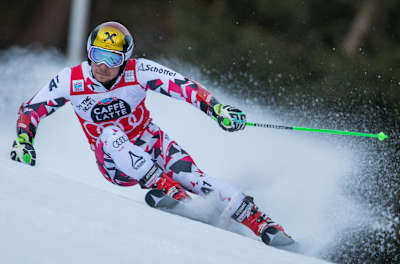
Marcel Hirscher carves up the course at Alta Badia
© Erich Spiess/ASP/Red Bull
Carving relies on the edges of your skis to grip the snow and guide your turn. Instead of letting your skis skid across the slope, press the edges into the snow to create clean, controlled lines.
To engage your edges effectively, keep your skis parallel to each other. As you begin the turn, roll both skis slightly onto their edges. This will prevent skidding and help you maintain a smooth arc-shaped motion. Keep practicing on gentle slopes to get used to the feel of your edges cutting into the snow.
3. Shift your weight correctly
Proper weight distribution helps guide your turn and gives you control of the slope and speed. As you start a turn, shift more weight onto your downhill ski — the ski that’s pointing toward the direction you’re turning.
Keep your upper body facing down the slope, even as you turn. This positioning helps maintain balance and prevents over-rotation, which can disrupt your flow. Think of your outside ski as the main driver of the turn; shifting more weight onto it allows the edge to grip securely and guide you smoothly through each turn.
4. Maintain edge control through the turn
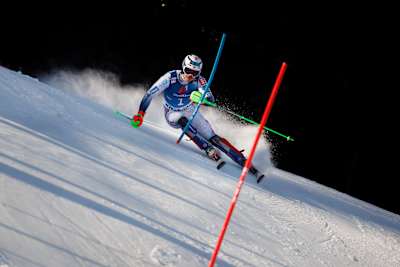
Henrik Kristoffersen carving through Kitzbühel's slopes
© Samo Vidic/Red Bull Content Pool
Carving requires edge control from start to finish. The angle of your ski edges against the snow determines how tight or wide your turns will be, so gradually adjust this angle to suit the slope’s demands.
Start with a shallow edge angle. As you feel comfortable, increase it slightly to achieve sharper turns. This is especially useful on steeper slopes where precision is essential. Building gradual edge control also prevents sudden, jerky movements that can cause you to lose control mid-turn.
5. Complete the turn smoothly
Finishing each turn is crucial to maintaining flow on the slopes. When you complete a turn, allow your skis to come back to a parallel position naturally without forcing them.
Avoid any abrupt motions as you exit the turn. Instead, focus on a smooth transition. To do this, gradually release pressure from your downhill ski as you complete the turn. Smoothly transitioning between turns will help you stay balanced, avoid skidding, and feel a rhythmic flow as you link multiple turns together.
6. Practice linking turns
Once you’re comfortable with individual turns, work on linking them together. This will give you the ability to carve down a slope seamlessly without pausing between turns.
Linking turns takes practice, so be patient and focus on maintaining a steady rhythm as you transition from one turn to the next. With time, you’ll find yourself carving down the slope with a sense of fluidity.
Begin on gentle terrain to build confidence, then progress to steeper runs. Start by practicing slow, wide turns, gradually shortening the arc as you improve to draw an “S.” Sharper linked turns will create a “Z” but still give you the same end result of combining turns.
7. Control your speed while carving
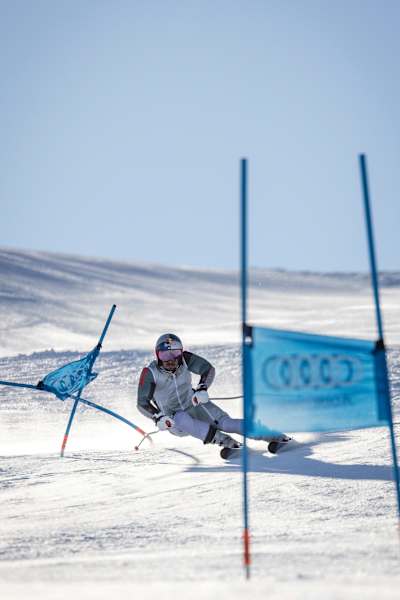
Marcel Hirscher at Roundhill Ski Area, Tekapo, New Zealand
© Miles Holden / Red Bull Content Pool
Carving can quickly build momentum, so it’s important to learn speed control as you progress. Depending on the terrain and your skill level, certain slopes may feel too fast, making it harder to maintain control.
Begin with wider turns if you’re picking up too much speed. This allows you to slow down gradually. You can also reduce your edge angle to ease off speed. Carving on more moderate slopes is ideal for beginners to practice speed control. As your skill and confidence grow, you can tackle steeper runs while keeping your speed manageable.
03
Correct common carving mistakes
Learning to carve involves recognizing and correcting mistakes that may hold you back. Here are some frequent issues and ways to address them:
- Leaning too much: Shifting your weight backward throws off balance and reduces edge grip, making it harder to carve. Instead of leaning backward too deeply, lean into the turn facing downhill. Carving is more than a proper lean. You’ll need to add pressure for an easy carve.
- Skidding instead of carving: Skidding usually happens when the ski edges are not fully engaged. Keep your skis parallel and focus on engaging the edges from the start of each turn.
- Too much upper body movement: Exaggerated or aggressive upper body movement can destabilize you. Keep movements controlled, focusing on your legs and lower body for carving. Keep your upper body straight, facing the slopes.
Carving with confidence
Learning how to carve on skis can transform your skiing experience. By mastering the basics and practicing each step, you’ll find yourself carving turns with greater confidence and control. As you improve, these skills open the door to advanced skiing techniques that will make your time on the slopes even more thrilling.
