
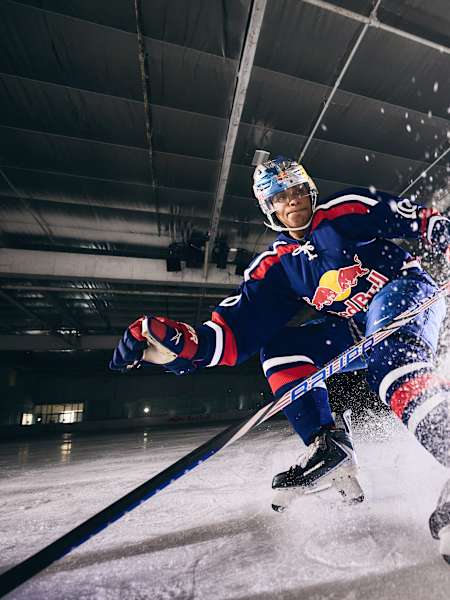
Ice Hockey
Who does what on the ice? Every ice hockey position explained
New to hockey? Here’s what every player on the ice actually does - from game-saving goalies to play-making centers and hard-hitting defense.
Part of this story



Ice hockey is one of the fastest and most exciting sports in the world. Mastering it starts with understanding the key player positions. Like any true team sport, every role in hockey has a purpose, from controlling the puck and setting up plays to blocking shots and defending the net.
It’s also the ultimate team sport. Wins and success depend on every player working together toward a common goal. While individual players can make a difference, no one wins alone. To become victorious, teams must trust, communicate and understand their roles. The five skaters and the goalie have to move as one unit, cover for each other, create space and react quickly. Great teams win not just with skill, but with chemistry, effort and a shared commitment. That’s how championships are earned.
Today’s veterans like Hilary Knight and U.S. Women’s National Hockey phenom Laila Edwards, show just how much skill, speed and strategy go into every shift on the ice. The NHL season officially begins in October, making it the perfect time to put your knowledge to the test. Whether you’re watching the pros or learning the basics for yourself, knowing how each hockey position works is essential to following the game and appreciating the talent it takes to compete at the highest level.

01
Players on the ice

Laila Edwards, the 2024 Bob Allen Women's Player of the Year
© Koury Angelo / Red Bull Content Pool

Hilary Knight, Olympic Gold medalist and three-time Olympic Silver medalist
© Kyle Lieberman
In the NHL, an active roster can have up to 23 players, but only 20 players dress for a game: 18 skaters and two goalies. Each team has six skaters on the ice at a time:
- Three forwards: center, left wing, right wing
- Two defensemen: left and right
- One goalie
02
Goalie
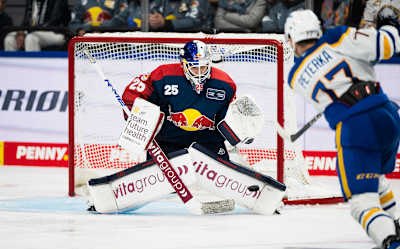
Goals are small in ice hockey
© Red Bull München/City-Press/Red Bull Content Pool
The goalie is the backbone of any ice hockey team. They’re responsible for stopping shots and directly play in their zone. They’re the last line of defense and need to have lightning-fast reflexes and unshakeable focus.

The goalie’s main job is easy to define but tough to execute: keep the puck out of the net. Goalies face slapshots, deflections, breakaways and chaotic scrambles. To handle it all, they wear specialized gear like pads, gloves, a stick to block, catch or deflect shots.
Beyond making saves, they also have to communicate with their defense, control rebounds to limit second chances and help start offensive plays.
Teams dress two goalies per game:
- Starting goalie - 1
- Backup goalie - 1
03
Defensemen
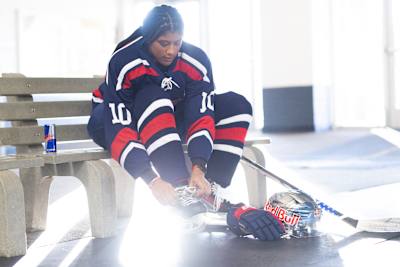
Laila Edwards can play both as defense and forward
© Red Bull
Defensemen are responsible for protecting the defensive zone, blocking shots and stopping the opposing team from scoring. In addition to that, they also help transition the puck up the ice, support offensive plays from the blue line and create scoring chances.
They play in left-right pairs, working together to control their side of the ice. They’re crucial to both ends of the ice as they are the bridge between defense and offense. A strong defensive pairing can shut down forwards and kill penalties.
Typical game-day lineup:
- Left defensemen - three to four players
- Right defensemen - three to four players
04
Forwards
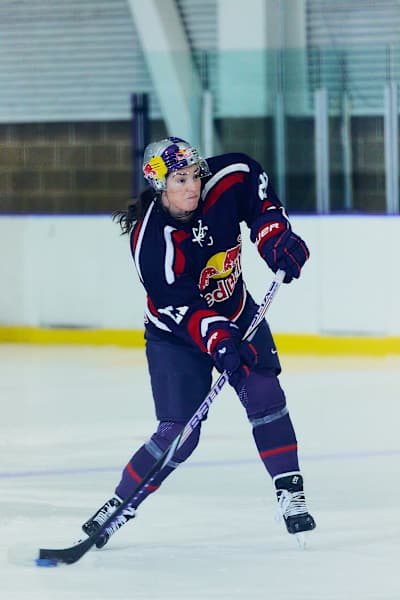
Hilary Knight, the veteran forward
© Kyle Lieberman
Forwards are the primary goal scorers and playmakers. They apply pressure in the offensive zone, create scoring chances and also contribute defensively when needed. There are three forward positions, each with a specific role:
- Center: Leads faceoffs, sets up plays and supports offense and defense
- Left wing: Plays on the left side, focuses on scoring and pressuring the opposing defense
- Right wing: Plays on the right side with the same offensive and defensive duties
Together, all three forward positions drive the team’s offensive attack, apply and maintain pressure and support their teammates in all zones of the ice. Forwards are rotated frequently in shifts to keep the pace high and energy up throughout a game.
Typical game-day lineup:
- Centers - four to five players
- Left wings - four to five players
- Right wings - four to five players
05
Why it all matters
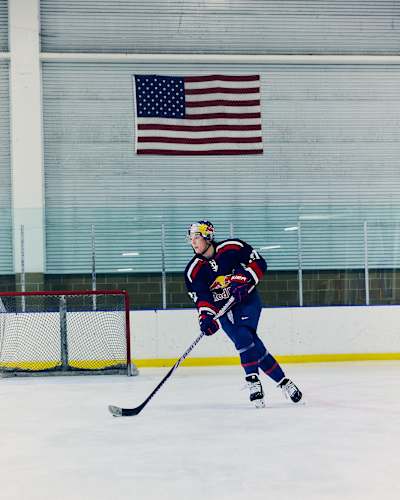
Hilary Knight, Olympic Gold medalist and three-time Olympic Silver medalist
© Kyle Lieberman
Understanding each position – forward, defensemen and goalie – gives you a deeper appreciation for everything that happens on the ice. For a league like the NHL, where teams battle through an 82-game season, players must know their roles and rely on each other night after night.
At every level of the game, from youth leagues to the pros like the NHL and U.S. National Teams, great hockey is built on players knowing their roles and working together to win.
Part of this story