






Gaming
Gaming
Meet the new Twitch rival, Smashcast
From the ashes of Azubu and Hitbox comes Smashcast, and it apparently won’t make the same mistakes.
Azubu and Hitbox were two struggling Twitch rivals that both had a few issues. Hitbox had the tech but failed to get the big names onto their service, while Azubu shelled out a lot of cash to secure the big names, but controversies ruined their reputation. A change was sorely needed, and fortunately one came, when Azubu decided to purchase Hitbox.
Since the news of the acquisition, everyone involved has been pretty quiet, but now the two services have combined and returned, although they are pretty unrecognisable. Smashcast is the new streaming platform to come out of the two companies, and it combines the best parts of both Azubu and Hitbox as well as adding in a few new features.
With a new look, some impressive tech and hopefully some big name streamers, Smashcast is positioned to become a real competitor to Twitch and YouTube, when before neither Azubu or Hitbox could realistically claim that. To find out more about this new player in the scene, we managed to grab a word with Smashcast’s CEO Mike McGarvey.
Tell us what Smashcast is, where it's come from and why it's different to any similar sites?
Smashcast is the new live competitive gaming platform that has emerged from the combination of the Hitbox and Azubu platforms. With a 10M-plus user base, the combined entity becomes the largest independent eSports broadcaster outside of Asia. Smashcast takes a community-first approach to eSports and now features highly-engaged competitive gaming markets around the globe – from France and Germany to Poland, Russia and Brazil. The company’s focus is on optimizing engagement and retention tools for the broadcaster-to-viewer relationship and to produce its own high-quality content to supplement and grow its viewer base.
Why did you decide to create a totally new brand instead of just merging Hitbox into Azubu or vice versa?
We ultimately felt that the Smashcast name best represented the direction in which we want to go in the worlds of competitive gaming and eSports. By getting laser-focused on the broadcaster-to-viewer interaction loop, we might best carve out our unique place in this burgeoning industry. To us it’s all about generating smash hits with content on our platform, whether that be through our new production studio in Vienna or through platform tools that better help identify and perpetuate top quality streams driven by highly motivated and engaged broadcasters. And while this focus was already a component of the Hitbox culture it wasn’t wholly defined by it, so we believed a new brand might best represent our interests and that of our community moving forward.
What are the key differences between Smashcast and the old Hitbox and Azubu sites?
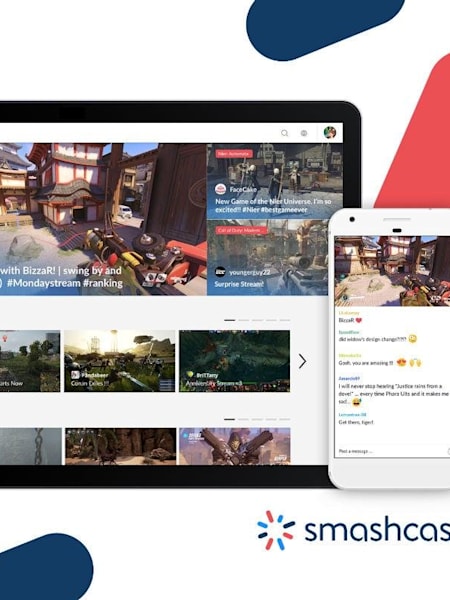
The first thing you’ll notice is the new look and feel of the platform, reflected largely in the user interface. As both sites’ store of content expanded, it became clear to us that resetting for better viewability, not to mention discoverability, would be required moving forward. We’ve gone from Hitbox and Azubu’s darker background schemes to a lighter one which is easier on the eyes.
We’ve also begun rolling out our new palette of broadcaster-to-viewer deep engagement tools to enhance that focal point of our market position. The new Hype-o-Meter function, which creates stronger emoji and graphical interaction between broadcasters and viewers, is an early example of that. We’ve also added the Micro Video Player feature so users could participate in interacting with the new broadcaster feed and chat functions along with other viewers, without being taken out of the broadcast experience. Smashcast also includes a Discord integration that the other platforms did not have, which serves to enhance the broadcaster-to-viewer engagement and interaction loop as well.
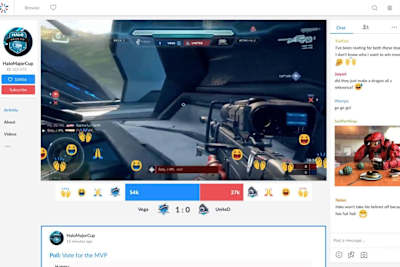
Smashcast’s new site looks very pretty
© Smashcast
You have also launched a studio to create content, why do this? Why not just let your streamers create all the content?
We believe investing in our own studio creates two distinct advantages. The first is controlling the quality and output to the platform of content areas we want to target moving forward. In turn, we believe the quality we showcase directly will serve as a benchmark for new broadcasting partners on the level of quality we expect on our platform. As we learn new techniques in content creation and streaming, we are simultaneously developing tools and processes to share these learnings with our broadcast partners. Secondly, we feel that having the facility to generate our own high-quality content creates increased appeal for publishing and league partners, who need additional resources in this area, and opens up the opportunity for us to develop wholly owned IP rights in specific content scenarios.
We’ll produce everything from tournament action, news and highlight reels, player and team interviews and community hints and tips from the outset. A huge benefit to having the studio is being afforded the opportunity to develop and experiment with new content types as the industry evolves over time.
Are you going to rely on people signing up and streaming or will you actively go out and secure partnerships with events and big streamers?
It’ll surely be a combination of both. That said, our historical advantage has been in supporting small to medium sized communities that often emerge organically as new broadcast talent develops. While we competed historically with all the big players to secure stream and events rights, going forward, we’ll be focused on mining new opportunities and proliferating our own content offerings. That said, we’ll continue to partner with the traditional industry players in cases we believe are likely to generate a reasonable return.
It’s fair to say that Azubu has had a pretty bad rep for a while, with delayed payments and other controversies. Have all these issues been resolved? Has everyone been paid?
Yes, we’d have to agree that Azubu, particularly, has gotten a bad rap for delayed payments and mismanagement of broadcast partners and, to be honest, much of it deserved. The reality is that early management over-invested in licensing arrangements without having a solid sense of any return mechanic which, not surprisingly, netted out in a cash flow crisis of sorts. That said, much has been done in the past year to bring in new, more experienced management, to right the ship and settle payments. While most cases have been resolved, a few remain open for a number of reasons, so remain in process.
Will Smashcast run into these same issues? What's changed to make sure it doesn't happen again?
The new management team is determined to manage Smashcast in a fiscally responsible way. While no assurances can be given by any young company operating in such a new, constantly evolving market such as live competitive gaming, our intent is to build long-term, mutually beneficial partnerships with all of our broadcast and commercial partners.
Can you realistically beat Twitch?
If the remit to the new management team was “beat Twitch or go home” the reaction would surely have been less enthusiastic than what we’ve seen so far. So, while some broadcaster and viewer crossover between the platforms is to be expected, we see ourselves as positioned to capture a different market in emerging, potentially big, opportunities in eSports vs. going head-to-head with Twitch in ones that already are maturing. Besides, if Twitch is struggling to make money with that approach, why would we want to play in the same space. Our intent is to grow revenue and be profitable as soon as possible. Going head-to-head against Twitch would only serve to severely handicap that initiative.
For more eSports coverage, follow @RedBulleSports on Twitter and Instagram and like us on Facebook.
