

Stockcar
NASCAR scoring explained: Points, stages and playoffs
Curious about NASCAR scoring? Learn how points, stages, and playoffs shape the sport, from eliminations to strategic considerations.
As NASCAR racers like Connor Zilisch attest, motorsports are competitive by their very nature. At just 11 years old, Zilisch won a U.S. race that qualified him to race in 2017’s Mini ROK World Championship in Italy — and he won that race too.
“I went there with low expectations and ended up winning the world championship my first race in Europe,” Zilisch said.

Connor Zilisch
© Daylon Barr / Red Bull Content Pool

NASCAR’s current scoring system focuses strongly on winning races, thus encouraging competition. It’s also pretty complex — but it wasn’t always this way. Keep reading to learn all about NASCAR scoring, from its relatively simple origins to its current structure.
01
Evolution of the NASCAR scoring system
Early years and major revisions
NASCAR’s first official race was in 1948, and from then through 1975, the NASCAR points system changed every few years. During this period, there were 10 different methods used for scoring NASCAR races.
By contrast, the NASCAR points structure introduced in 1975 lasted through 2010, with minor changes every now and again. The race winner earned 175 points until 2004, when this figure increased to 180 points. In 2007, NASCAR increased this figure to 185 points. The system otherwise stayed the same, with second-place resulting in 170 points and last place (43rd place at the time) resulting in 34 points. Additionally, any driver who led a lap under a yellow or green flag earned five bonus points, and the driver who led the most laps got five more bonus points.


Then, in 2011, NASCAR introduced something closer to today’s scoring system, with 43 points for first place, and one point fewer for each driver all the way down to last place. The winner also got three bonus points, and the 1975-2010 lap-leading bonuses were reduced to one point each.

Mike Skinner drives the Red Bull Toyota Camry NASCAR in 2010
© Getty Images / Red Bull Content Pool
This system only lasted through 2015. In 2016, NASCAR introduced a new points structure — and this system existed for just that year. The winner received 40 points, and the last-place driver (now 40th place instead of 43rd place since three fewer cars were allowed on the field) received one point. The bonus points from the 2011 through 2015 system remained intact.
Introduction of the 2017 scoring system
After the 2016 season, NASCAR introduced the scoring system that’s still in effect today. It breaks each NASCAR race into stages and awards playoff points that are separate from regular season points.
Despite playoff points being new to NASCAR scoring, the first NASCAR playoff structure was introduced in 2004. At this time, playoffs comprised 10 drivers, and this structure lasted through 2006. Then, from 2007 through 2013, the playoffs expanded to include 12 drivers. The current 16-driver playoffs were introduced in 2014, with playoff points coming into effect in 2017 alongside a new structure called stages.

02
Structure of a NASCAR race
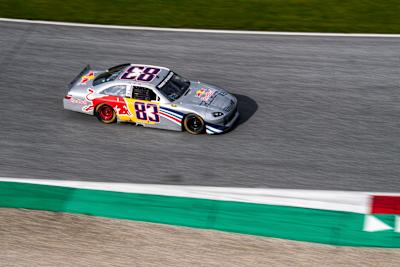
Nascar
© Joerg Mitter / Red Bull Content Pool
Stages
There are three stages in most NASCAR races, though the Daytona 500 and Coca-Cola 600 have four stages. Stage points are earned only for the first two stages since, when the third stage ends, so does the race. For the Daytona 500 and Coca-Cola 600, drivers earn stage points for the first three stages.
In most cases, a NASCAR race’s first two stages comprise 60 percent of the race (often 30 percent per stage). The third stage then makes up the remaining 40 percent.
Stage breaks
NASCAR implemented stage breaks (the periods between stages) to, among other reasons, give drivers strategic opportunities. The average stage is long enough that it can’t be completed on fuel, so pit stops are required. During these pit stops, drivers can, for example, change out all their tires or just two tires. Their decisions can make the difference between finishing in the top 10 during the next stage and not even coming close.
03
Current points allocation

Connor Zilisch at Xfinity Race at Kansas Speedway in 2024
© Daylon Barr / Red Bull Content Pool
Race finishing positions and stage points
Under NASCAR’s 2016 charter system, all drivers on the field earn points at the end of a race. These points vary based on drivers’ race standings: The first-place driver gets 40 points, and the second-place driver gets 35 points. From there, each subsequent driver gets one fewer point — 34 points for third place, 33 points for fourth place, and so on. The drivers in 36th through 40th place, though, get just one point each.
When each stage in a race comes to a close, the top 10 drivers earn points. The first-place driver earns 10 points, the second-place driver gets nine points, and so on down to the last-place driver, who gets one point.
Bonus points
At the end of each stage, the first-place driver gets something called a playoff point, and at the end of a race, the winner gets five playoff points. Additionally, at the end of a season, the champion gets 15 playoff points, and each of the top 10 drivers gets bonus playoff points.
These points come into effect only in the postseason. When each playoff round begins, all drivers have their points reset, and then their playoff points are re-added. In other words, all that great performance from the regular season gives drivers a buffer in the postseason. That said, once the Championship 4 round (more on this later) is set, playoff points are no longer usable.
Playoff points are perhaps the most confusing part of NASCAR’s scoring system, and an example should clear it up. Consider a driver who enters the postseason with 20 playoff points. If each driver’s points are reset to 1,000 at the start of the second playoff round, this driver will instead have 1,020 points. Those 20 points can go quite the distance for this driver since, after the second round’s races, the four remaining drivers with the fewest points are eliminated.
Calculating a driver’s score
Adding a driver’s race finishing points and stage points determines their total score for the race. Suppose a driver comes first in Stage 1 and fifth in Stage 2, then finishes the race in eighth. A first-place Stage 1 placement earns 10 points, and a fifth-place Stage 2 placement earns six points. An eighth-place race finish earns 29 points. The driver’s score for this race is thus 45 points.
Importantly, since the driver came first in Stage 1, they also get a playoff point. This point doesn’t affect the driver’s score for the current race, but if they make it to the playoffs, they’ll add their total playoff points for the season to their postseason points total after every reset.
04
The playoff system

Connor Zilisch
© Daylon Barr
Qualification criteria
After the 26-race regular season, 16 drivers qualify for the playoffs. A driver who wins even one of the regular-season races automatically qualifies for the playoffs even if that’s their only win.
Sometimes, 16 or more drivers have won regular-season races. In that case, the 16 drivers with the highest point totals make the playoffs. Conversely, when fewer than 16 drivers have taken first place in races during the regular season, the open playoff spots go to the drivers with the most points. This rule was important in the 2021 season when Shane van Gisbergen won 14 of the 30 races he completed.
Playoff rounds and elimination process
There are four playoff rounds, after each of which eliminations occur:
- Round of 16. This round comprises the first three playoff races, and all 16 playoff contenders compete. The 12 racers with the most points move on to the next round.
- Round of 12. For the fourth through six races, the remaining 12 racers go head to head, and only eight move on.
- Round of 8. The eight racers left after the Round of 12 compete in the seventh through ninth races, with four making it to the finals.
- Championship 4. This is just one race, the playoffs’ 10th and final. Whoever wins this race wins the NASCAR Cup Series.
The start of each of these rounds is when a racer’s points total is reset, meaning it’s when playoff points come into play.
05
Impact of the scoring system on race strategy
Some NASCAR aficionados say that the current NASCAR scoring system pushes drivers to try out strategies that can sometimes be risky. After all, since even one regular-season win automatically qualifies a driver for the playoffs, hitting the finish line first is more important than ever.
For example, some racing teams might diverge from how they usually go about pit stops to gain more ground. Other teams might encourage drivers to push their driving to the limits so that they make the most of every second. With the current scoring system, racing isn’t just about speed — it’s about adaptability, resilience, and rapid thinking.
Understanding NASCAR scoring: the key to championship glory
Even if the current NASCAR scoring system is a bit complicated, it’s the sport’s current structure. That alone makes it worth understanding, both in terms of how it works and how it shapes drivers’ strategy. And if it does change, one thing will remain the same: Motorsports races are among the greatest thrill rides around.