

Surfing

Surfing
Surfboard leash 101: What it is and when you need one
Stay connected to your board and ride with confidence! Dive into the essentials of surfboard leashes, their purpose, and tips to find the perfect fit for your surf style.
Paying attention to every detail is a huge component of surfing, as world-famous surfer Ian Walsh puts it.
“Attention to detail is absolutely non-negotiable,” Walsh said. “We’re a long way removed from land… I want to be with people who are thinking things through and are really set up and well-dialed in so that we can push ourselves with confidence knowing that we’ll be looked out for.”
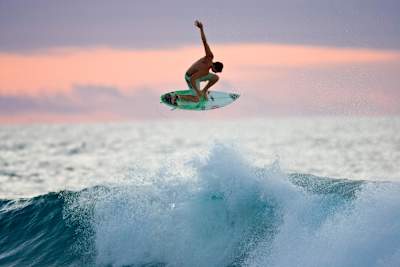
Ian Walsh
© Brian Bielmann/Red Bull Content Pool
For many, a surfboard leash is just as important a detail as the board you’re using and the wetsuit you’re wearing. This piece of surf gear keeps the board tethered to you and within reach if you fall off. But the surfboard leash wasn’t always an accepted part of the sport — in fact, its introduction was quite controversial. Let’s dive in to learn more.
01
History of the surfboard leash
The surfboard leash as we know it came about in the 1970s, but there’s no single agreed-upon origin story. Some say that surfer Tom Blake first tested out the idea with a cotton rope in the 1930s, an idea that was initially rejected. Most credit Pat O’Neill, of the O’Neill surf brand fame, for commercializing it in the 1970s. In either case, this piece of surf gear was not universally accepted.
At first, some surfers believed that leashes were dangerous, particularly because the first leashes were made from stretchy material that could hurt the wearer if it stretched too far and snapped back. This happened to iconic surfer Jack O’Neill, who lost an eye from such an incident, and drove many surfers in the ‘70s to turn their backs on the idea.
Surfboard leash designs improved over the decade, consequently driving more widespread adoption. For example, one of the biggest changes was moving the cuff from the wrist to the ankle, which minimized the risk of injury. As their safety improved, surfers have come around to the role this gear plays in the experience while riding waves anywhere in the world.
02
Benefits of using a surfboard leash
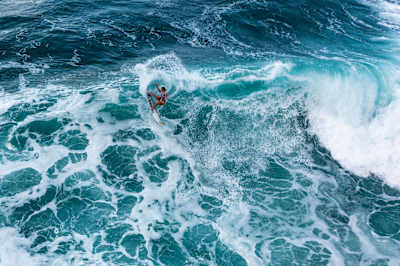
Carissa Moore surfs at Haleiwa in Haleiwa, Hawaii
© Trevor Moran / Red Bull Content Pool
Here are a few reasons it’s worth it to embrace the security of a surfboard leash:
- You won’t lose it. If a big one comes your way, you’re way less likely to lose your board to the depths of the ocean (or the wave pool).
- You’re less likely to ding it. With better board control, you can better protect it from damage while riding the waves.
- You protect other surfers: If you do lose your board, it won’t hit another surfer nearby, reducing everyone’s risk of injury.
- You won’t need to retrieve it. No more swimming to find and grab your board if it ends up far from where you started out.
- You’ll stay focused: Instead of worrying about losing your board — especially if a big wave comes along — you can channel your concentration into riding the wave.
03
Components of a surfboard leash
When it comes to the anatomy of a surfboard leash, these are all the parts included:
- Cuff: This is the part that attaches to your body. It uses a hook-and-loop closure for easy wear and adjustable placement. The cuff is typically padded to prevent irritation, and some models may have a secure slot to put a small object like a key.
- Cord: This is the rope that makes up the main component of the leash. They come in lengths as short as 4 to 5 feet and as long as 12 feet. The cord can come in varying thicknesses as well; ¼”, 3/16”, 5/16”, and ⅕” are some of the sizes you’ll find.
- Leash string or rope: This is a small, strong piece of rope that threads through your surfboard’s leash plug which attaches the rail saver to the board.
- Leash plug: This is where you mount the leash string or rope to the surfboard.
- Rail saver: This is a soft, flexible piece of fabric, typically made from nylon, that attaches the leash rope to the cord. The rail saver is wide enough to gently glide along your board during movement, protecting the edge of your board during wipeouts.
- Swivel: This piece connects the cord to the rail saver. Just like its name implies, this joint lets the rope move around. This prevents tangling and enables freedom of movement while in use.
04
Types of surfboard leashes
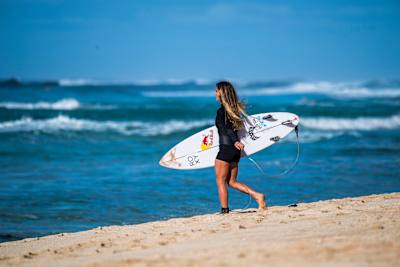
Caroline Marks surfs at Haleiwa, Hawaii
© Ryan Miller / Red Bull Content Pool
These are the main types of surfboard leashes you’ll find when shopping around:
- Shortboard leashes: Designed for smaller boards, a shortboard leash is typically around six feet long or perhaps a little shorter. You can find this model in a number of styles depending on the style of surfing you enjoy.
- Longboard leashes: These are meant for larger surfboards. The cords are longer to accommodate for the bigger board size; it’s recommended to get a leash that’s no more than a foot longer than your board for best results. Like the shortboard leashes, you’ll find longboard leashes in different thicknesses depending on the waves you plan to ride.
- Big wave leashes: These leashes are best for riding big waves in the overhead to double overhead range. They’re made with thicker, less flexible cords that are more likely to withstand the intense waters. You can find big wave leashes in shortboard or longboard lengths.
05
How to put a leash on a surfboard
- Locate the hole on your board for surfboard leash placement; place a plug if there isn’t already one. Separate the leash string from the leash.
- Feed the leash string or rope through the plug. Loop it through itself and pull it tight. Test to make sure the string is the right length by pulling it down toward the edge of your board and ensuring the knot in the leash string does not rub along the board’s outer edge. You want the knot to make contact with the board surface.
- Unhook the rail saver, feed it through the leash string, and close it up. Test to make sure the rail saver is hitting the right spot by gliding it along the edge of your board. You want the rail saver to glide along the board’s edge.
06
How to choose the right surfboard leash
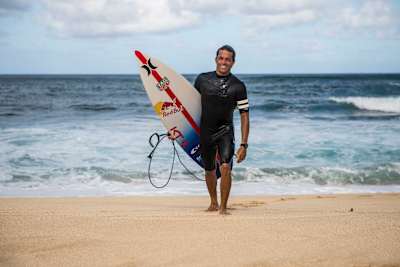
Kai Lenny at Haleiwa, Hawaii
© Ryan Miller / Red Bull Content Pool
Surfboard leash length
Length is dependent on the type of waves you plan to ride. Generally, shorter leashes are good for smaller waves, while longer leashes are good for bigger waves.
Overall, though, your leash should be about as long as your board. Try not to use a leash that’s more than a foot longer than your board, especially if you’re riding smaller waves, to reduce risk of entanglement or hurting other surfers. If you’re riding big waves, though, a longer leash may be useful in the event of a wipeout.
Choose the cord thickness
A thinner cord is more flexible, but it’s less likely it is to hold up to tougher surf conditions. Thicker cords are more durable, but you give up flexibility for the tighter hold. The right cord thickness depends on your surfing experience, where you plan to surf, and other factors.
Know your surfing abilities and goals
Skill level and purpose shape your choice of leash. Thinner and shorter leashes are good for competitions because they cause less drag. If you’re new to the sport, though, they’re not recommended because the board could hit you faster and harder when you fall.
Ankle vs. calf cuff
Some models replace the ankle cuff with a calf cuff. The calf cuff can decrease the chances of the leash tangling on longboards and allows for a better range of movement when walking up and down the board. Some surfers don’t find the calf cuff as comfortable as the ankle cuff.
07
Surfboard leash maintenance and replacement

Italo Ferreira is seen in Baia Formosa, Brazil
© Marcelo Maragni / Red Bull Content Pool
Maintenance involves rinsing your surfboard leash with fresh water on a regular basis. Detach the leash from your board when you’re not in the water. It’s also a good idea to keep the leash out of direct sunlight for prolonged periods, as this can make the materials more brittle over time.
The average surfboard leash should last you a few seasons, but that depends on how it’s taken care of and the conditions you surf. Riding smaller beach waves means your leash will have more life, but rougher conditions will wear it out faster. You’ll know it’s time for a new leash when the elasticity begins to wear out.
The essential surf companion
From a controversial beginning to a proper place in surfing history, surfboard leashes are an essential accessory for riding the waves. They keep you and other surfers safe from being hit by the board and protect your investment by making boards easier to find if you fall off. Designed for a range of surf conditions and skill levels, cord thickness, length, and cuff comfort work together so you can stay focused on conquering the wave ahead of you.
